Would you Rather Solve Senior Housing or Health Care for Older Adults?
As of 2021, there were nearly 56 million seniors in the United States. By 2034, this population is expected to outnumber the 18-and-under population for the first time in U.S. history, indicating many millions will need to decide where to live as they age.
Well, what if you didn’t have to choose? For 40 years and counting, senior housing owners and operators have prepared for and responded to the housing needs of aging adults. This market, which includes assisted living and independent living as well as memory care and nursing homes, has seen immense growth. But two problems remain: affordability and integration with comprehensive health services. These issues will persist for future generations if we don’t start solving them today—to allow our grandparents, parents, and eventually ourselves to live in the settings we choose with the appropriate set of health care services we need to age with dignity.
As of 2021, there were nearly 56 million seniors in the United States. By 2034, this population is expected to outnumber the 18-and-under population for the first time in U.S. history, indicating many millions will need to decide where to live as they age. Foreshadowing my own personal decision, I will have to consider which setting supports my holistic health needs including my physical, mental, and financial health, as well as my social support needs.
Housing and health care shouldn’t be an either/or — it needs to be both.
For the past few years, NORC’s Health Care Strategy team (HCS) has produced ground-breaking research supported by The National Investment Center for Seniors Housing & Care (NIC) and The SCAN Foundation. We are currently engaged in a multi-year research portfolio with NIC to understand the individual health events precipitating a move into congregate living. Our research will also highlight the potential value of senior housing as it relates to the longevity and health of older adults. What we’ve found thus far is that in the year prior to moving into a senior housing property, people experience an escalation of adverse events and conditions that increase their level of medical complexity, often referred to as “frailty,” as defined by the Harvard claims-based frailty index. Hospitalizations, trips to the ER, accelerated cognitive decline, exacerbations of chronic conditions like diabetes or kidney diseases, combined with the loss of a spouse or partner increase a person’s likelihood of experiencing further deterioration in health and independence.
But we found improvement—even a potential reversal of sorts. In 2019, about 97,000 people moved into senior housing properties tracked in the NIC MAP Vision database. In the year after move-in, frailty levels of residents improved—there was a 10 percent decline in frailty relative to peak levels. While we might be inclined to attribute that health improvement to their move into a senior housing property, we know that correlation is not causation. Today, HCS is digging into the reasons for this marked improvement in a comprehensive health measure like frailty. Over the next few months and into 2024, HCS will produce research that analyzes longevity and health outcomes for residents of senior housing. We aim to better understand the correlation between senior housing and health outcomes.
This research portfolio will provide invaluable insights for myriad audiences and stakeholders including our loved ones, and ourselves, who will soon make decisions about where to spend our golden years. Likewise, other stakeholders, like payers and health plans, and increasingly providers, will need a plethora of solutions to manage risk. Senior housing needs a seat at the health care table, aligned incentives, and payer/provider partnerships.
Housing and health care shouldn’t be an either/or—it needs to be both. A comprehensive solution allowing comfort, care, and dignity to seniors needs to be readily available and affordable so that more people aren’t forced to choose if they’d rather have housing or health care.
—
This commentary originally appeared in NORC Views, a health care strategy newsletter published by NORC at the University of Chicago.
PEO Solutions for Senior Care: An Interview with Paychex’s Melissa Bollinger
Looking for ways to reduce time loss, and increase profitability and efficiency? It all starts with an effective HR strategy. NIC Senior Principal Ryan Brooks recently talked with Melissa Bollinger, Senior Enterprise Business Consultant at Paychex about the tangible benefits organizations can realize through strategic HR partnerships with Professional Employer Organizations (PEO). Here is a recap of their conversation with key insights on fostering growth, improving retention plans, and keeping employees happy and healthy in the senior care industry.
Looking for ways to reduce time loss, and increase profitability and efficiency? It all starts with an effective HR strategy. NIC Senior Principal Ryan Brooks recently talked with Melissa Bollinger, Senior Enterprise Business Consultant at Paychex about the tangible benefits organizations can realize through strategic HR partnerships with Professional Employer Organizations (PEO). Here is a recap of their conversation with key insights on fostering growth, improving retention plans, and keeping employees happy and healthy in the senior care industry.
Brooks: A lot of people see the name Paychex and might think your offerings are limited to payroll, but there’s a lot more to the organization than just payroll processing. So, to kick us off, can you tell me a little bit more about Paychex and the resources that are offered?
Bollinger:Paychex offers a wide variety of solutions and services for all sizes of organizations. Whether your business is looking for basic payroll services, or your organization is growing and has more comprehensive HR needs like employee benefits or PEO, Paychex has a suite of services for you. I serve as a Strategic Business Consultant in our PEO division.
Brooks: You mentioned PEO – Professional Employer Organization – as a resource that Paychex offers. Seeing as that might be a new term for our audience, could you tell me what a PEO is and what they do to support owners and operators in this space?
Bollinger: Absolutely. A Professional Employer Organization allows business owners to engage in a co-employment relationship, to mitigate the liability and risk of employment to the experts in Human Resources (that’s us).
Brooks: What separates Paychex’s Senior Living PEO from other PEOs?
Bollinger: Experience. Over the last 10 years, Paychex has made a number of strategic acquisitions in the PEO space. Those acquisitions came with talent that is exclusively focused on respective industry verticals, such as senior living. When a business decides to join the Paychex Senior Living PEO, they can be assured that all of their designated resources have senior living experience. Our specialists are experienced with senior living payrolls, shift differentials, and comprehensively understand applicable laws and policies impacting senior living staff. Our human resource business partners are experienced with senior living operations and procedures. The suite of designated services is tailored to the senior living experience.
Brooks: What are some of the common problems that organizations approach you with?
Bollinger: I call them “the big three.” Staffing Issues. Growing Pains. Administrative Burdens. As a former operator and early adopter of PEO in the post-acute care space, these three issues are the hat trick of time loss, profitability, and efficiency.
Brooks: What kind of savings can organizations realize when partnering with a PEO?
Bollinger: Every organization is different, but one of the most valuable functions of a PEO is the ability to pool resources and stabilize long-term costs such as Worker’s Compensation, EPLI, and Major Medical. Organizations often save both money and time with some of our included services such as end-of-year WOTC, or ERTC programs, not to mention the endless discounts and special programs offered to all employees of the PEO.
Brooks: The senior housing and care sector is comprised of both property companies (PropCos), which own the real estate, and operating companies (OpCos), which manage the operations that take place on-site. How does that divide impact the attention that human resources receives?
Bollinger: Great question! Operating companies often have very lean management strategies, and property companies are very rarely involved in the day-to-day operations. As you can imagine, HR has a ton of administrative burdens associated with it such as onboarding, unemployment claims, benefits, and taxes. Those duties and responsibilities often fall on an executive director or business office manager in each community. Neither of those folks are likely to have extensive formal training or experience in human resources or employment. It raises the question: Who’s managing the management? Outsourcing HR to a PEO allows the rapid deployment of resources and trained professionals to not only develop systems and policies and procedures that assist, but also allow for extra hands on deck when there is a crisis or employment issue.
Brooks: Staffing has always been a hot topic for the senior housing and care industry, but even more so in recent years given how the COVID-19 pandemic exacerbated labor shortages. In what ways does Paychex help address these challenges? Employee recruitment? Retention?
Bollinger: I don’t know of an organization that hasn’t been permanently impacted by the changes we have seen inside of the workforce since COVID. The most proactive and beneficial thing any community can do is to develop and deploy a recruiting plan. Our Senior Living HR Business Professionals at Paychex, work side-by-side with our clients to help develop those plans, make market adjustments in a timely manner, and deploy recruiting techniques to help our clients make better hires. According to the National Association of Professional Employer Organizations, employers working with a PEO see a 20% average decrease in turnover and an immediate increase in existing retention rates.
Brooks: How has the performance management changed in a post-pandemic operating environment?
Bollinger: I think organizations have begun to value the contributions of their employees differently. We are seeing a lot of proactive policy changes, increased flexibility, permanent remote work environments, and the use of software and automated processes to help manage overall performance.
Brooks: What about when it comes time to have a difficult conversation with an employee, whether that be for a job performance issue, employee disengagement, or time and attendance? These conversations can often make people uncomfortable, but not addressing these issues can lead to greater problems. What are the most important considerations when planning a difficult conversation?
Bollinger: The biggest mistake any organization can make is to avoid difficult or uncomfortable conversations. This is my favorite question because it allows me to talk about one of my favorite books. A long time ago I read the book Fierce Conversations by Susan Scott. In it, Susan illustrates a concept of C=R. Plainly, The Conversation = The Relationship. Relationships are at the heart of everything, especially in senior living. Communities have relationships with their markets. Staff have relationships with residents. Leadership has a relationship with the front line. Property companies and management companies have relationships, and all of those relationships are made up of conversations. Not unlike recruiting, you need a plan.
Brooks: What is the role of HR in these conversations? How can the approach be structured in a way that these conversations will be productive and achieve the desired goals?
Bollinger: Evaluating your human resources strategy is the first step to deciding which conversations might be missing in your organization. Having access to a designated and experienced human resource business professional allows you to plan these conversations, examine the intent behind them, and focus on language and messaging in advance. Often, simply discussing and deciding upon a desired outcome in advance, can steer the conversation in a mutually beneficial direction.
Brooks: How do you gauge the long-term success/effectiveness of difficult conversations when they occur?
Bollinger: You can judge your conversations by your relationships, and vice versa. Are your relationships stronger and more meaningful because of the conversation? Has there been a change in behavior after the conversation? Are all parties more mindful of the desired goal? A successful conversation should lead you to an enriched relationship. An effective conversation should result in meaningful change.
Brooks: Is there anything else you’d like our audience to know?
Bollinger: There is always an extraordinary amount of room for growth and improvement. Taking a look at human resource strategy, the relationships your employees have, and the additional steps we can take to keep employees happy and healthy will be the differentiator in every single market in 2024.
Senior Housing and Care’s Premier Event Delivers Connections and Actionable Insights
The NIC conference theme, “Accelerating Change” provided a timely framework to address the disruptions that continue to be felt throughout the U.S. economy, the healthcare services sector, the labor and capital markets, and the evolving preferences of aging consumers.
With the senior housing and care sector at a crucial inflection point, the 2023 NIC Fall Conference convened a cross section of industry stakeholders to network, learn, and identify strategic opportunities.
The NIC conference theme, “Accelerating Change” provided a timely framework to address the disruptions that continue to be felt throughout the U.S. economy, the healthcare services sector, the labor and capital markets, and the evolving preferences of aging consumers.
“Transformational disruption demands a pivot,” said NIC Board Chair Susan Barlow, co-founder and managing partner at Blue Moon Capital Partners. “With the pain comes great opportunity for the industry.”
The conference was held October 23-25 at the Sheraton Grand Chicago. Highlights included:
An economic keynote conversation with former Speaker of the U.S. House of Representatives Paul Ryan on the influence of policy and economics in today’s global risk environment.
The welcome return of “NIC Talks,” the 12-minute Ted-style talks that offer innovative insights and creative solutions to industry challenges from visionary thought leaders.
A skilled nursing keynote with Phil Fogg, Jr. on the headwinds and tailwinds driving the sector.
A multi-layered market analysis from CEO’s of the sector’s top REIT investors—Dabra Cafaro and Shankh Mirta.
Deep dives into the challenges facing the capital markets and what’s ahead.
An update from executives at the Alzheimer’s Association—Dr. Dr. Joanne Pike and Robert Egge—on encouraging medical breakthroughs that will change the course of memory care.
Multiple daily, formal and informal, networking opportunities.
The conference drew 2,800 attendees, with 74% comprised of C-suite and executive decisions makers. Operators, developers, and capital providers represented 72% of attendees, a mix that supports conversations to promote housing access and choice for older adults.
Networking Opens Professional Opportunities
Attendees enjoyed multiple occasions to engage in results-oriented meetings with other industry stakeholders including several well-attended receptions, with one for first-time conference attendees. A Women’s Networking Meetup drew several hundred women who exchanged ideas and made connections.
NIC Board Chair Barlow spoke to the women’s meetup and relayed her own story of how she and Kathryn Sweeney shared a cab ride after an industry meeting and then decided to launch their company, Blue Moon Capital Partners. “This gathering is an actionable event,” said Barlow. “Identify opportunities in your organization and ask yourself what you are doing to move forward. Get involved.” She added that her participation in NIC had prepared her to succeed throughout changing business cycles.
NIC hosted a reception for college scholars who are currently enrolled in senior living programs and attended the conference via conference scholarships sponsored by Welltower. NIC Co-Founder and Strategic Adviser Bob Kramer spoke at the reception. He emphasized that senior living offers excellent career opportunities for those inspired to “do well by doing good.”
Experts Discuss Relevant Topics
The conference offered 10 stand-alone educational sessions. Many of the discussions addressed both the tailwinds and headwinds faced by the industry. (High quality videos of most educational sessions are available to attendees in the conference mobile app for conference attendees. Click hereto access the app.)
A standing-room only crowd packed the ballroom for the keynote session with former U.S. House Speaker Ryan. He held a conversation on stage with Bob Hillis, chairman, CEO and founder of Direct Supply/Aptura.
Known for his policy expertise, Ryan expects capital to be more expensive for a longer period of time. He said that the massive amount of U.S. Treasury debt offerings coming due will need to be refinanced at attractive yields which will keep interest rates high.
Ryan also pointed to positive tailwinds for the industry, including a healthy jobs market and an aging population. The discussion also covered the regulatory environment, technology, immigration, and the current political landscape. Ryan noted that it was never a good idea to bet against free enterprise.
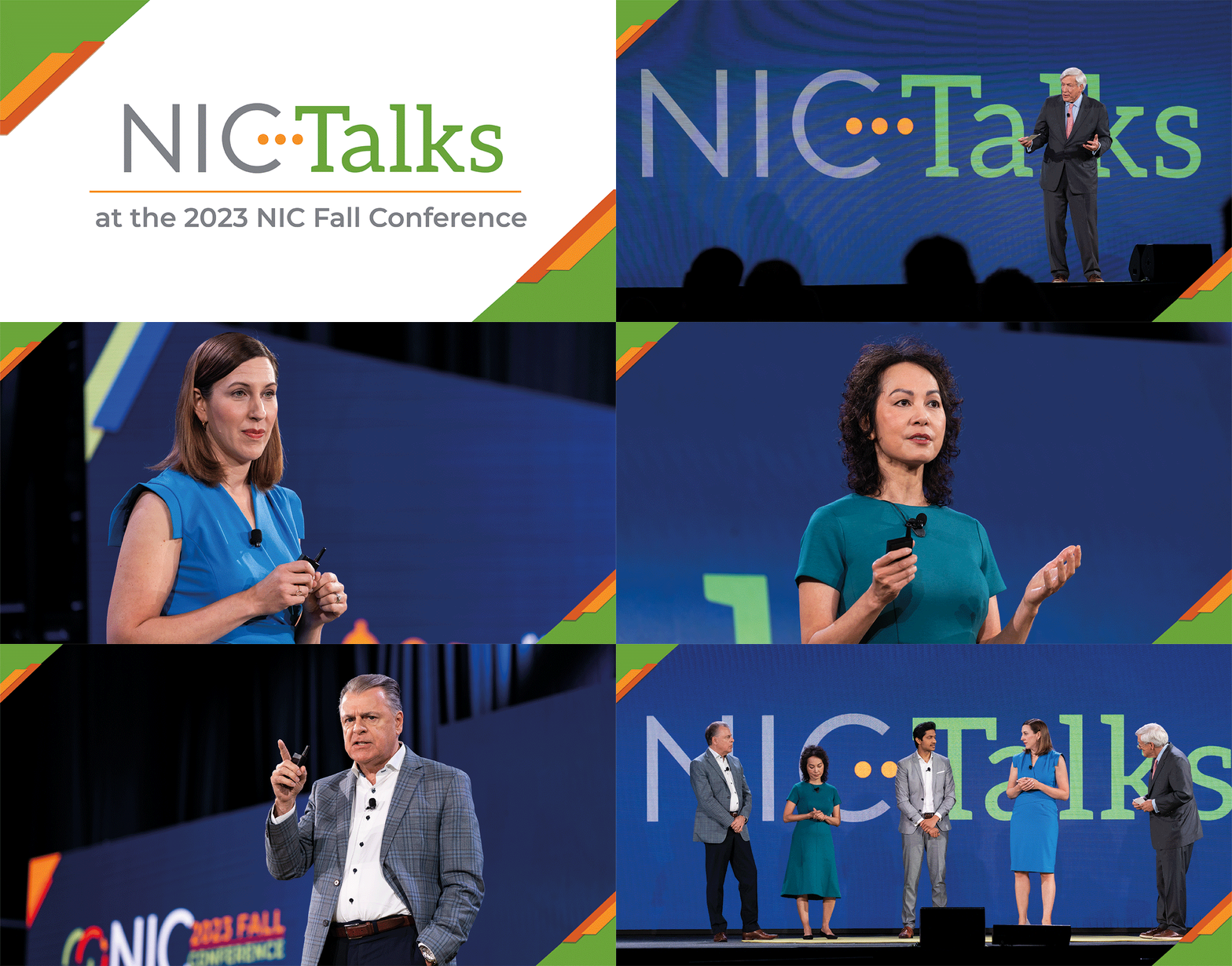
NIC Talks featured four main-stage speakers. The session was curated by NIC’s Kramer. “These speakers inspire us to think differently about senior housing and care,” he said.
Caroline Pearson, executive director of the Peterson Center on Healthcare challenged the audience to embrace the integration of healthcare and senior housing. “Think about ways to locate healthcare services in your community,” she said, explaining that healthcare is both a need and a want of residents.
Former Apple executive Dhaval Patel provided a roadmap on how to sort through various technology offerings and select the right ones. His advice: Ask yourself if the technology is solving the right problem.
Other provocative topics presented by NIC Talks speakers Hanh Brown, Founder and CEO of ThinkA16, and Gerard van Grinsven, CEO of Van Grinsven Hospitality Group, included the impact of artificial intelligence on senior living and how to delight and surprise consumers.
Capital Markets Under Strain
Several sessions addressed the state of the capital markets and financing challenges. However, the panelists agreed that a huge wave of new demand from aging baby boomers will change market dynamics.
The opening panel discussion paired Ventas Chairman and CEO Debra Cafaro and Welltower CEO Shankh Mitra. The session was moderated by Randy Richardson, former CEO, president and strategic advisor at Vi Living.
Out of control construction prices and the dramatic spike in the cost of capital will continue to dampen new development, according to Mitra. Cafaro said that a big company with staying power helps to ride out commercial real estate cycles.
A deep dive into the debt market and a separate session on valuations illustrated the challenges faced by investors. Arick Morton, CEO at NIC MAP Vision provided some perspective on market fundamentals. Occupancy is recovering and rent growth has caught up with wage growth. Demand is strong.
The final day of the conference kicked off with a keynote discussion titled, “Navigating the Current Skilled Nursing Environment.” Phil Fogg Jr., CEO at Marquis Companies, was interviewed by Steve Monroe, editor at large at Irving Levin Associates.
As immediate past Board Chair of the American Health Care Association, Fogg gave a thorough analysis of the skilled nursing sector. He is concerned about proposed regulations that mandate new staffing minimums. But Fogg expects providers to have more negotiating power with payers in the next 3-5 years.
Attendees also heard from experts on promising Alzheimer’s research, the alignment of management companies and owners, and how to establish inclusive labor practices.
During a session on how to appeal to the new consumer, moderator Helen Foster, principal at Foster Strategy, challenged attendees to experiment. “Baby boomers will change our industry,” she said. “So many solutions are needed. True innovators are looking to outside sources for inspiration. We have to take risks.”
###
Mark your calendar! Join us March 5-7 at the 2024 NIC Spring Conference in Dallas. Registration opens November 29th!!
Senior Housing Occupancy: A Tale of Recovery and Rank Reversals
NIC MAP Vision released October 2023 intra-quarterly data on November 9, 2023. The following NIC analysis highlights the ongoing occupancy recovery overall and includes market-level insights from the data.
NIC MAP Vision released October 2023 intra-quarterly data on November 9, 2023. The following NIC analysis highlights the ongoing occupancy recovery overall and includes market-level insights from the data.
Key Takeaways:
Senior housing occupancy for the 68 NIC MAP Secondary Markets has fully recovered, buoyed partly by majority assisted living properties’ performance.
Recovery trajectories and timelines continued to be uneven, resulting in notable shifts in occupancy rankings among metropolitan markets.
Market dynamics have evolved recently; once-dominant markets now display lower occupancy rates, while others that previously ranked at the bottom have climbed.
Senior Housing Occupancy by Markets Aggregate. The all-occupancy rate for senior housing for the NIC MAP Primary Markets increased to 84.9% in the October 2023 reporting period, up 0.5 percentage points (pps) from the September 2023 reporting period on a three-month rolling basis, according to intra-quarterly NIC MAP data, released by NIC MAP Vision. From its pandemic record low of 77.8% in June 2021, senior housing all-occupancy increased by 7.1pps and remained about 2pps below pre-pandemic March 2020 levels of 87.1%.
By comparison, the all-occupancy rate for senior housing for the NIC MAP Secondary Markets was up 0.5pps from September 2023 and 8.2pps from its nadir in March 2021. At 86.7%, senior housing occupancy for the Secondary Markets bounced back quicker and had fully recovered, at only 0.1pps below the March 2020 benchmark level.
By majority property type. At 86.5%, the all-occupancy rate for majority independent living (IL) properties for the NIC MAP Primary Markets increased 0.4pps from September 2023 but remained 3.0pps below March 2020 levels. For majority assisted living properties (AL), the all-occupancy rate for the NIC MAP Primary Markets was up 0.7pps to 83.2% from September 2023 and is now 1.4pps below March 2020 levels. Occupancy for AL continued to recover relatively fast compared with IL. From June 2021 – the pandemic-related low – all-occupancy for AL increased by 9.3pps, 4.3pps more than IL (up 5.0pps since June 2021).
In the NIC MAP Secondary Markets, the all-occupancy rate for IL stood at 88.2% in October 2023, having recovered 5.8pps from its pandemic low. It is now just 1.1pps below the March 2020 level. Occupancy for AL properties was 85.1%, about 1pps above the March 2020 level.
Recovery trajectories and timelines continued to be uneven, resulting in notable shifts in occupancy rankings among metropolitan markets.
The past three years have been a period of notable change for the senior housing market. The occupancy rankings tell a story of a market in flux, responding to a complex interplay of economic forces, supply and demand dynamics, and regional attractiveness. The exhibit below compares senior housing occupancy rankings from March 2020 to October 2023 across the 31 NIC MAP Primary Markets.
Notable shifts include San Jose’s fall from the top spot to seventh and Los Angeles’s steep decline from fifth to 22nd place. These suggest a cooling in California’s once red-hot markets. Conversely, Riverside improved from 23rd to sixth, and Dallas from 25th to nineth, suggesting balanced supply and demand dynamics in these markets (relatively higher absorption-to-inventory velocity – AIV ratio).
Houston remained at the bottom of the occupancy pack (31st position) and did not experience the volatility seen in other markets. Meanwhile, Boston, Baltimore, Portland, Minneapolis, and Tampa not only maintained their top 10 status since March 2020 but also ascended to the leading positions by October 2023.
Occupancy recovery and rankings vary notably by majority property type. All-occupancy increased or remained stable in 26 of the 31 Primary Markets for IL in the October 2023 reporting period compared with September 2023. At 85.2%, Tampa occupancy increased by 1.1pps from September 2023. However, at 85.2%, Tampa IL occupancy, ranking 21st among the 31 NIC MAP Primary Markets, is still 6.8pps below March 2020 level, the second largest gap remaining to fully recover, following Los Angeles. Notably, Tampa was ranked seventh in March 2020.
By contrast, Pittsburgh IL occupancy edged up by 0.3pps in October 2023 to 90.8%. Pittsburgh ranked second in the pack, a significant leap from its 18th place ranking in March 2020. Additionally, Pittsburgh IL occupancy has not only recovered the 6.8pps lost during the height of the pandemic but has also surpassed March 2020 levels by 1.6pps.
All-occupancy rose or remained stable in 28 of the 31 Primary Markets for AL in October 2023 compared with September 2023. San Jose, which was the market with highest occupancy levels in March 2020 among the 31 Primary Markets, experienced a significant drop to 27th place by October 2023. At 79.8%, San Jose occupancy remained more than 11pps below its March 2020 level. Conversely, Kansas City occupancy stood at 87.0% in October 2023, 3.5pps above its March 2020 level. This recovery has improved Kansas City’s ranking from 18th in March 2020 to third in October 2023.
In summary, market dynamics have shifted in recent years. Some of the markets that were dominant before the onset of the pandemic now show relatively low occupancy rates, while others that previously ranked at the bottom have climbed considerably.
Keep track of the timely review of the sector’s market fundamentals and trends. The NIC Intra-Quarterly Snapshot monthly publication, available for complimentary download on our website, continues to provide a powerful and closely watched means to stay ahead of industry trends.
The November 2023 Intra-Quarterly Snapshot report will be released on our website on Thursday, December 7, 2023, at 4:30 pm.
Interested in learning more about NIC MAP Intra-Quarterly data? To learn more about NIC MAP Vision data, schedule a meeting with a product expert today.
2Q 2023 Lending Trends in Senior Housing and Nursing Care Relatively Weak Due to Rate Pressures, Credit Squeeze, and Market Fears
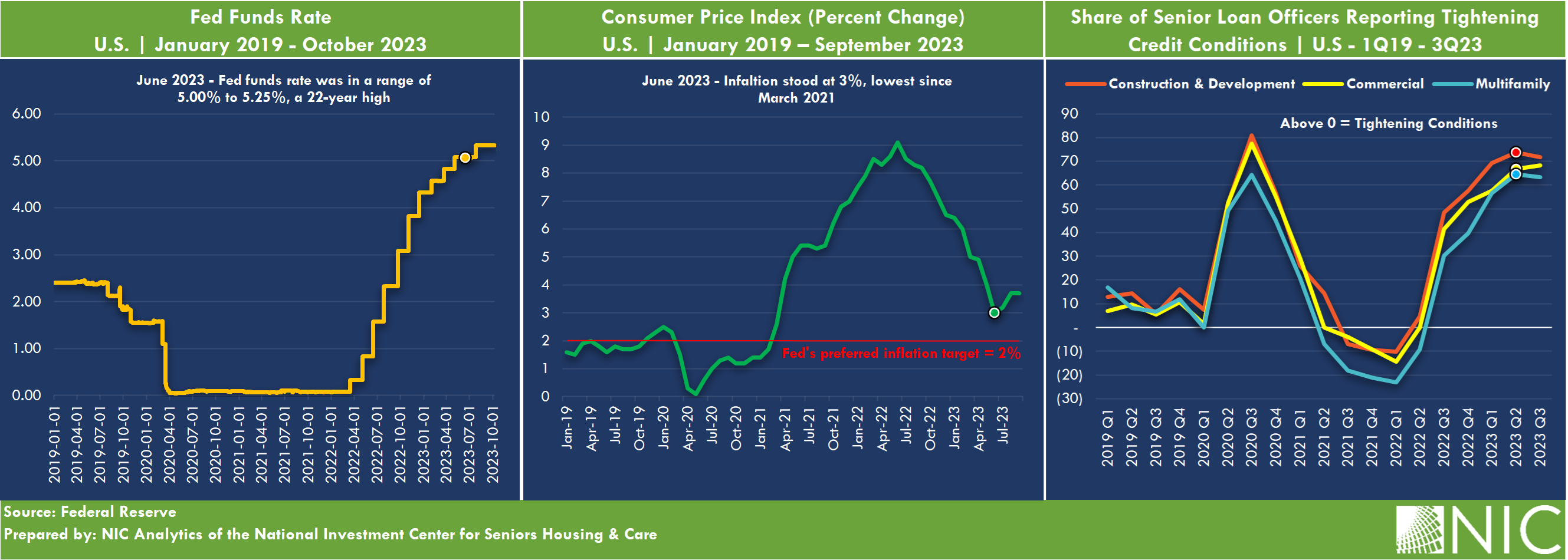
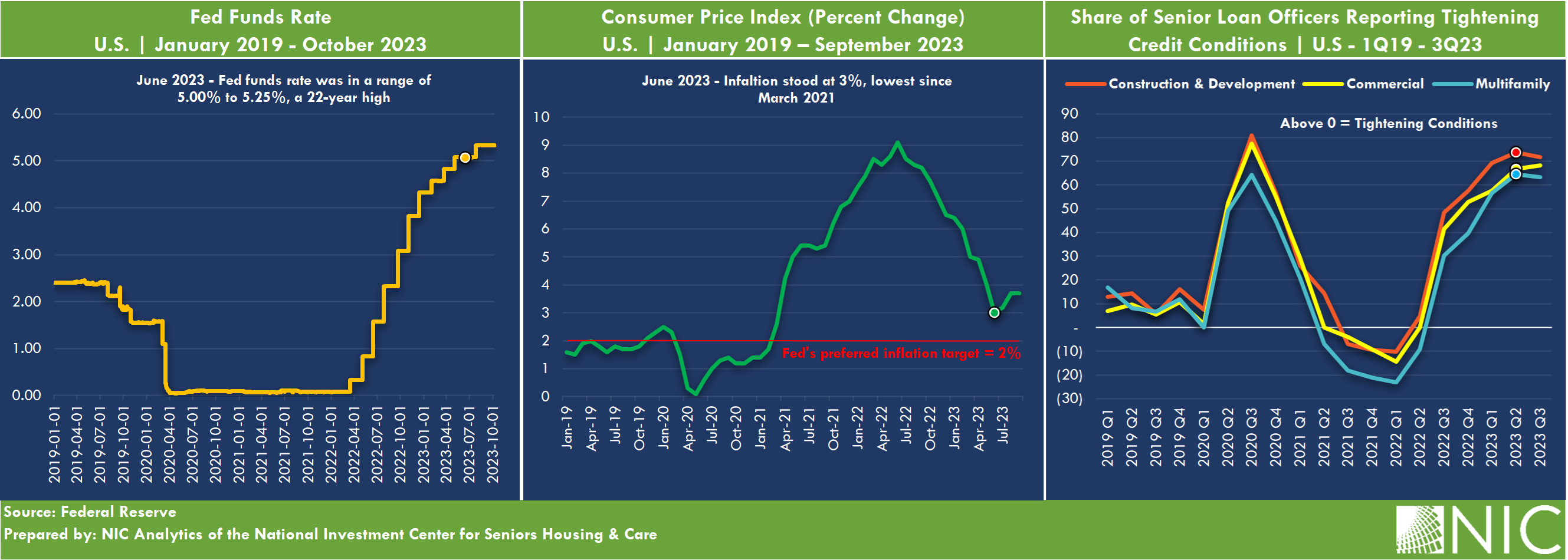
The lending environment continued to tighten through the second quarter of 2023. The Federal Reserve nudged rates higher by another 0.25 percentage points (pps) in May 2023, bringing the federal funds rate to a target range of 5.00% - 5.25%. This was the tenth rate hike since the Federal Reserve’s adoption of a hawkish stance to tame inflation in March 2022. Inflation, as measured by the consumer price index (CPI), has decelerated since June 2022. By June 2023, the rate had slowed for a twelfth consecutive month to 3.1%, marking a considerable decrease from the previous year’s high of 9.1% in June 2022.
NIC Analytics released the 2Q 2023 NIC Lending Trends Reporttoday. The quarterly report, available complimentary to NIC constituents, includes data trends over seven years for senior housing and nursing care construction loans, mini-perm/bridge loans, and permanent loans from 3Q 2016 through 2Q 2023.
Second Quarter 2023: Market Forces Recap
The lending environment continued to tighten through the second quarter of 2023. The Federal Reserve nudged rates higher by another 0.25 percentage points (pps) in May 2023, bringing the federal funds rate to a target range of 5.00% – 5.25%. This was the tenth rate hike since the Federal Reserve’s adoption of a hawkish stance to tame inflation in March 2022. Inflation, as measured by the consumer price index (CPI), has decelerated since June 2022. By June 2023, the rate had slowed for a twelfth consecutive month to 3.1%, marking a considerable decrease from the previous year’s high of 9.1% in June 2022.
The higher interest rate environment since March 2022 has limited the availability of debt and driven borrowing costs significantly higher. Federal Reserve data tracking senior loan officers’ observations of credit conditions across the U.S. showed tighter lending conditions in the second quarter of 2023 in construction, multifamily, and commercial and industrial (C&I) loans. These observations align with the trends identified in the most recent NIC Lending Survey.
Additionally, the disruption to the banking system in the second quarter of 2023 following the failures of Silvergate, Silicon Valley Bank, and Signature Bank, and the sale of First Republic Bank to JP Morgan Chase raised concerns about potential contagion among regional banks.
Takeaways from the 2Q 2023 NIC Lending Trends Report
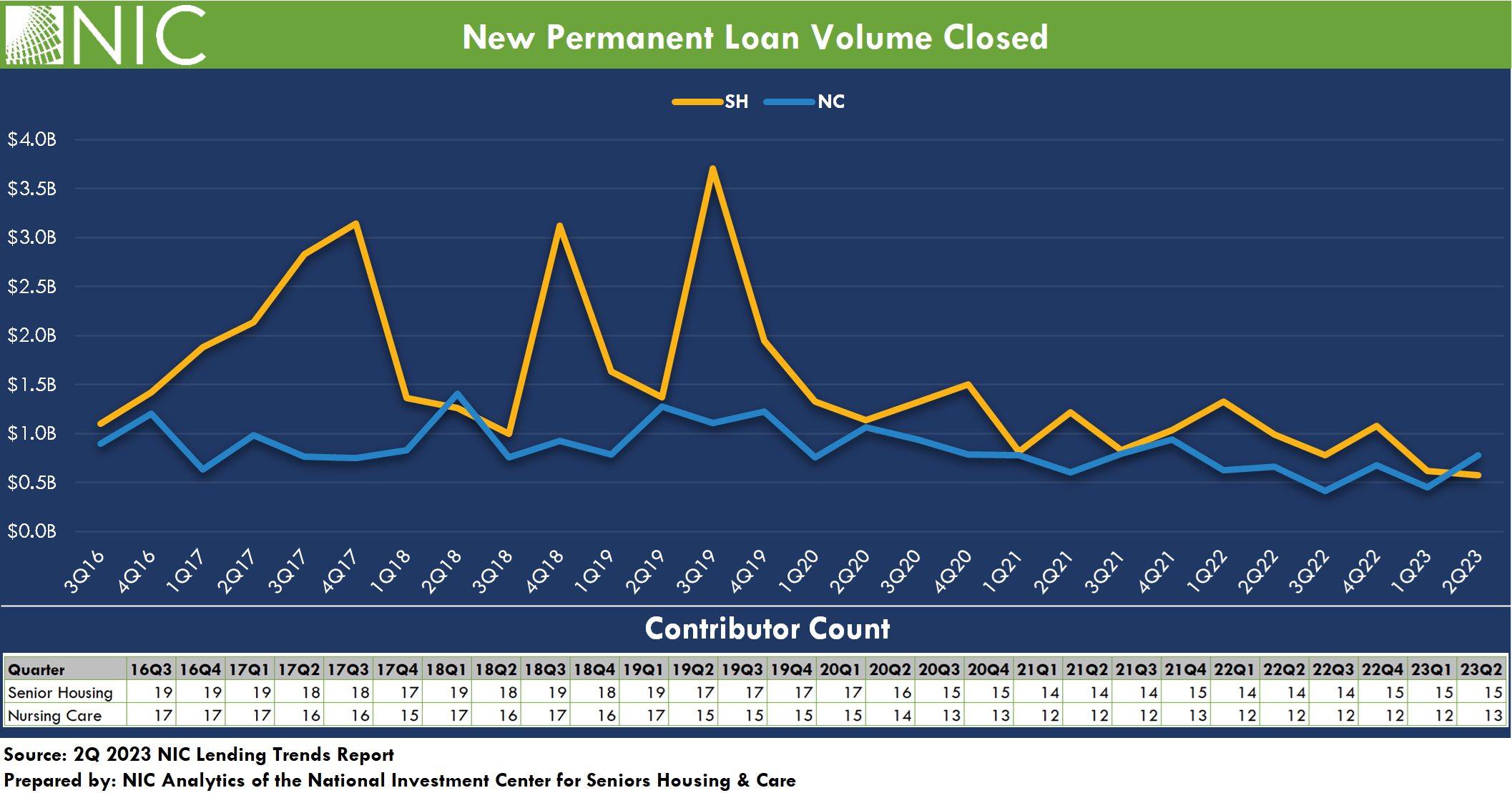
The issuance of new permanent debt for senior housing hit a new low within the time series during the second quarter. Factors adversely limiting the issuance of permanent debt include the disruption in the capital markets, limited debt availability, tightening lending standards, higher interest rates, inflationary pressures, troubles in the banking system, widening spreads (i.e., the amount charged over the risk-free rate to compensate for risk), and reduced loan proceeds. For the sample of lenders in the NIC Lending Trends Report,the volume of new permanent loans closed for nursing care surpassed that for senior housing for the first time since 2018, reflecting a 75% increase versus a decline of 8% for senior housing loan volume from the prior quarter.
The issuance of mini-perm/bridge debt for senior housing dropped further through the second quarter of 2023, and was down by 52% from the prior quarter and 76% from late 2022 levels. Concurrently, nursing care mini-perm/bridge loan closings remained relatively very low and on par with pre-pandemic levels. Borrowers are adjusting to the prevailing “higher for longer” mindset, anticipating sustained rates without a potential decline in the near future. While short-term debt options are limited, those available often come with increased costs and additional credit enhancements e.g., the need for more equity or a repayment guaranty.
New construction loan closings for senior housing remained weak in the second quarter of 2023 compared with historical patterns. Notably, senior housing construction starts remained relatively low in the second quarter of 2023, and the number of senior housing units under construction in the 31 NIC MAP Primary Markets remained near its lowest level since 2015, according to data released by NIC MAP Vision.
As for nursing care, the issuance of construction debt was virtually non-existent for the lenders sampled in the NIC Lending Trends Report. This aligns with the observed pattern of limited debt financing for new nursing care property construction since NIC began data collection in 2016. In fact, there has been limited development of new nursing care properties and overall inventory has been declining for several years.
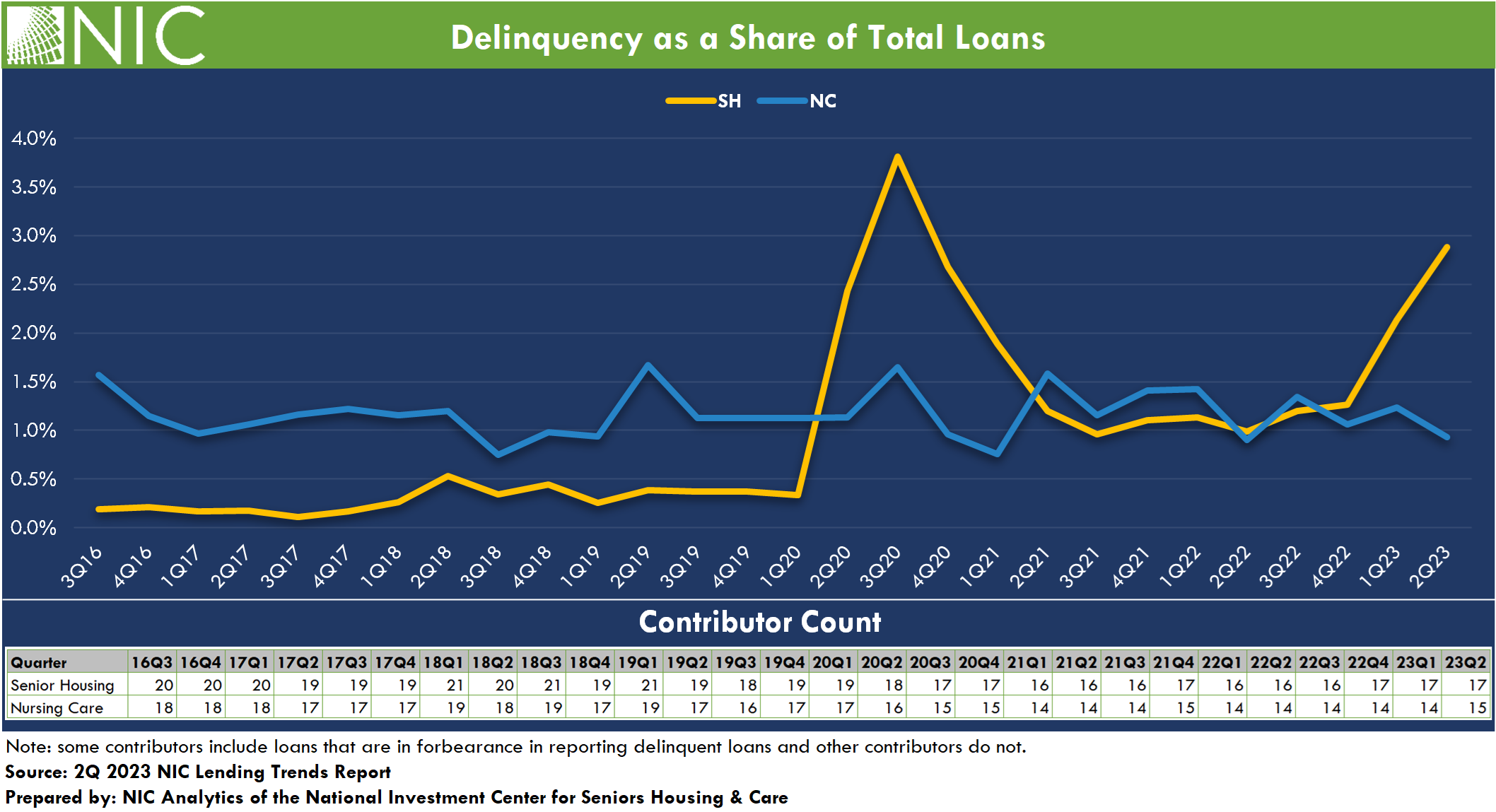
The total balance of delinquent senior housing loans saw a notable increase, although the balance was still lower than the high levels seen in the third quarter of 2020 in the immediate aftermath of the COVID pandemic. Senior housing delinquencies rose by 36% in second quarter 2023, while nursing care delinquencies declined by 24% from the prior quarter. Delinquencies as a share of total loans rose to 2.9% for senior housing, up from 2.1% in the first quarter of 2023. For nursing care, the delinquency rate edged down to 0.9%. Note that loans in forbearance are reported in the delinquent loan data for some debt providers. Also of note, foreclosures were reported for this quarter’s sample of lenders for both senior housing and nursing care, at $14.7M and $71.4M, respectively.
From the Field: 2Q 2023 Survey Comments
For the past two quarters, NIC Analytics has reached out to our network of contributors, asking them questions about the lending environment for senior housing and nursing care. We are asking about their strategies in response to changing capital market conditions, lending patterns with respect to existing versus new clients, and any notable trends they are observing in the market.
In the face of changing capital market conditions, the responses in second quarter 2023 continued to indicate that lenders are reacting to these changing conditions by focusing on strong sponsorship and credits. This trend reflects a reaction to a jump in the SOFR and 10-year Treasury rates, leaner loan proceeds as measured by lower loan-to-value (LTV) ratios, higher equity requirements and tighter spreads. Nevertheless, there was some level of lending activity as shown in the data derived from this survey.
The second quarter of 2023 also saw a focus on long-term relationships with many lenders extending loans predominantly to existing clients. Tightened lending standards and the increase in interest rates and inflationary pressures affected the industry, resulting in fewer new clients being onboarded.
The second quarter of 2023 also witnessed a series of market-shaping events, including Fannie Mae’s revised guidelines focusing on lower leverage loans and higher DSCR requirements, respectively, posing challenges in identifying financing opportunities that fit within debt-service-constrained loans and contributing to a cautious lending environment.
The ongoing rise in interest rates prompted a stronger focus on stabilized senior housing and nursing care properties in proven markets with limited new construction and with proven stability and strong sponsors, as opposed to “riskier” or non-stabilized properties in tertiary markets. Considering these factors, the lending environment is expected to continue tightening throughout the latter half of 2023.
Looking Ahead. As we look beyond the second quarter of 2023, though inflation has decreased significantly from its peak of over 9% last year, the recent months have seen a halt in progress, with inflation still remaining more than a percentage point above the central bank’s 2% targeted rate. The Federal Reserve implemented a 0.25 percentage point increase to 5.25% – 5.50% in July 2023, maintaining stability since then and at its most recent meeting on October 31-November 1. However, the Fed has left open the possibility of another hike, potentially in December 2023.
Download the complimentary 2Q 2023 NIC Lending Trends Report for full details on these and other trends in senior housing and skilled nursing lending.
Note: These data are not to be interpreted as a census of all senior housing and skilled nursing lending activity in the U.S., but rather reflect lending activity from participants included in the survey sample only.
The 3Q2023 NIC Lending Trends Report is scheduled for release in mid-February 2024.
Interested in participating? The NIC Lending Trends Report helps NIC Analytics to deliver on NIC’s mission to enable access and choice by further enhancing transparency of capital market trends in the senior housing and care sectors. We very much appreciate our data contributors. This report would not be possible without them.
If you would like to participate and contribute your data, please contact us at analytics@nic.org. As a courtesy for providing data, data contributors receive this report early before publication on the website. The information provided as part of the survey will be kept strictly confidential. Individual answers will be combined with the answers of all other respondents. Data acquired from this survey will only be reported in the aggregate, and therefore, the resulting aggregated data will not be attributed to you or your company upon distribution.
We use cookies on our website to give you the most relevant experience by remembering your preferences and repeat visits. NIC's privacy policy can be viewed here. By clicking “Accept”, you consent to the use of ALL the cookies.
This website uses cookies to improve your experience while you navigate through the website. Out of these cookies, the cookies that are categorized as necessary are stored on your browser as they are essential for the working of basic functionalities of the website. We also use third-party cookies that help us analyze and understand how you use this website. These cookies will be stored in your browser only with your consent. You also have the option to opt-out of these cookies. But opting out of some of these cookies may have an effect on your browsing experience.
Necessary cookies are absolutely essential for the website to function properly. This category only includes cookies that ensures basic functionalities and security features of the website. These cookies do not store any personal information.
Functional cookies help to perform certain functionalities like sharing the content of the website on social media platforms, collect feedbacks, and other third-party features.
Performance cookies are used to understand and analyze the key performance indexes of the website which helps in delivering a better user experience for the visitors.
Analytical cookies are used to understand how visitors interact with the website. These cookies help provide information on metrics the number of visitors, bounce rate, traffic source, etc.
Advertisement cookies are used to provide visitors with relevant ads and marketing campaigns. These cookies track visitors across websites and collect information to provide customized ads.
 Well, what if you didn’t have to choose? For 40 years and counting, senior housing owners and operators have prepared for and responded to the housing needs of aging adults. This market, which includes assisted living and independent living as well as memory care and nursing homes, has seen immense growth. But two problems remain: affordability and integration with comprehensive health services. These issues will persist for future generations if we don’t start solving them today—to allow our grandparents, parents, and eventually ourselves to live in the settings we choose with the appropriate set of health care services we need to age with dignity.
 Bollinger: