Active Adult Inventory and Penetration Rates

Active adult rental properties serve older Americans who wish to live in a multifamily setting with other residents that are more independent and active.

Active adult rental properties serve older Americans who wish to live in a multifamily setting with other residents who generally are more independent and active than the residents in today’s senior housing offerings. NIC MAP Vision recently released inventory data for active adult  for the fourth quarter of 2022. The analysis presented in this blog post aggregates the inventory and demographics of these active adult communities by market; calculates penetration rates within each market; and identifies where the largest concentration of inventory is located. Note that this analysis simply evaluates the supply side of the active adult market given the availability of inventory data. NIC MAP Vision is scheduled to release performance data such as occupancy and rents later in 2023, which should provide further insight into active adult demand.

How Much Inventory Exists?

NIC MAP Vision tracked 625 active adult properties totaling 87,763 units, as of the fourth quarter of 2022. By geographic location, 345 properties (55% of inventory) comprised of 53,396 units (61% of inventory) are located within the 31 Primary Markets tracked by NIC MAP Vision; 182 properties (29%) comprised of 23,706 units (27%) are located within the Secondary Markets (metro markets 32 to 99); while the remaining 98 properties (16%) comprised of 10,661 units (12%) are located in other markets.

Active Adult Inventory by Number of Properties and Units | All Markets | 4Q 2022

2023 NIC Notes Blog Active Adult Inventory and Penetration Rates Graph 1
Source: NIC MAP® Data, powered by NIC MAP Vision

4Q 2022 AA MAP

Looking at individual markets, Dallas is the largest market by unit count (6,448), followed by New York (4,568) and Los Angeles (4,411). Eight of the ten largest active adult markets are within the 31 Primary Markets tracked by NIC MAP Vision, while Buffalo, NY (2,965 units) and Austin, TX (2,747 units) are Secondary Markets.

Largest 10 Active Adult Markets by Number of Units | All Markets | 4Q 2022

2023 NIC Notes Blog Active Adult Inventory and Penetration Rates Graph 3

Source: National Investment Center for Seniors Housing and Care (NIC) and NIC MAP® Data, powered by NIC MAP Vision  

Largest 10 Active Adult Markets by Percent of Inventory | All Markets | 4Q 2022

2023 NIC Notes Blog Active Adult Inventory and Penetration Rates Graph 4 Source: National Investment Center for Seniors Housing and Care (NIC) and NIC MAP® Data, powered by NIC MAP Vision  

Penetration Rates

Penetration rates are a comparison of housing inventory for older adults within a market to that market’s cohort of older adults. High penetration rates can be positive indicators of product acceptance and operator success and/or negative indicators of elevated competition. This rate can be calculated in a few ways. For senior housing, which is comprised of Majority Independent Living and Majority Assisted Living, NIC traditionally has used total inventory as the numerator and households age 75 and older as the denominator. 

For this analysis, we use active adult inventory in units as the numerator. An alternative method is to use occupied units as the numerator as opposed to total inventory, but as noted above, occupancy data is not yet available. This alternative calculation may prove useful once available, and likely no single method is perfect. For the denominator: 

  • First, we use households age 65 and older (rather than 75 and older) to better capture the demographic make-up of active adult communities in which residents are age-eligible beginning at, for example, 55+, 62+, or 65+ years old, with an average resident age of 72-74 years old.
  • Second, we calculate an additional penetration rate using population age 65 and older (rather than households), which results in a larger denominator and, thus, a smaller penetration rate. 
    Utilizing these two methods, penetration rates appear quite small for the active adult market, ranging from 0.1% to 0.4%. This compares to the 10.9% to 11.7% range for senior housing penetration rates across market classes. 

Penetration Rates by Property Type and Market Class | 4Q 2022

2023 NIC Notes Blog Active Adult Inventory and Penetration Rates Graph 5

Source: National Investment Center for Seniors Housing and Care (NIC) and NIC MAP® Data, powered by NIC MAP Vision  


When ranking individual markets, the highest 20 markets have penetration rates that range from 0.5% in Corning, NY to 2.1% in Dover, DE. Within these markets that comprise the 20 highest penetration rates:

  • Primary Markets include Las Vegas, San Diego, and Dallas
  • Secondary Markets include Buffalo, NY and Austin, TX


20 Highest Active Adult Penetration Rates | All Markets | 4Q 2022
 2023 NIC Notes Blog Active Adult Inventory and Penetration Rates Graph 6


Conclusion

The active adult property type is garnering increased interest from developers, operators, investors, and older adults due to the unique preferences of the baby boomer generation. While some markets contain active adult inventory in the thousands of units, the very low penetration rate relative to traditional senior housing indicates that the active adult product type is still in its nascent stages. Overall, the large number of households and population age 65 and older is significant and growing, and when compared to existing inventory, penetration rates also likely indicate that there is room for new active adult supply from those vying to enter the space.

NIC Teams with Higher Ed to Cultivate New Leaders

With an assist from NIC, universities and colleges are ramping up their senior living programs.

Mullen and Colson Scholars Lead the Way

With an assist from NIC, universities and colleges are ramping up their senior living programs helping to build a robust pipeline of new, committed industry leaders.  

Take, for example, Rebecca Bond. She’ll graduate this spring with a master’s degree in Management of Aging Services from the Erickson School of Aging Studies at the University of Maryland Baltimore County (UMBC). 

Trained as a physical therapist, Bond previously worked at The Village at Rockville, a life plan community (CCRC) in Rockville, Maryland. During the pandemic, she took on more leadership responsibilities and started taking classes at the Erickson School to sharpen her management skills.

With the help of a $5,000 Mullen Scholarship, named in honor of NIC co-founder Anthony J. Mullen, she was able to devote full time to pursue a graduate degree at the Erickson School. “I could not have afforded to attend school full time without the scholarship,” said Bond, who also has a teaching assistantship at the school. Asked about her career goals, Bond said: “I’d like to start a business to help older adults age in place wherever they choose.” 

Kramer Mullen Colson Scholars picture 600x300

Pictured: Rolanda Bragg, Dr. Dana Bradley, Michele Steele, Robert Kramer, and Rebecca Bond

NIC has a long history of working with colleges and universities to raise the profile of the industry and to educate new leaders. As a nonprofit organization with a mission to improve the lives of older adults, NIC has helped to support senior living university programs and scholarships.  

In addition to the Mullen Scholarship, NIC also donated $100,000 to help fund the William E. Colson Scholarship at the Erickson School. It is named for the former president and CEO of Holiday Retirement Corp. Colson, now deceased, matched  NIC’s gift at the time with a $100,000 donation of his own.    

“The industry needs to attract the best and the brightest,” said NIC Co-Founder and Strategic Advisor Robert G. Kramer. He is also Founder & Fellow at Nexus Insights, a think tank advancing the well-being of older adults through innovative models of housing, community, and healthcare. “These scholarships will help meet senior living’s huge leadership and workforce demands.”  

The Erickson School serves 800 students through its program that combines business management, public policy and the study of aging to meet the demand for educated and innovative leaders in the longevity market. The program offers undergraduate and graduate degrees in aging studies, along with merit and need-based scholarships.    

The Mullen and Colson scholarships are both endowments. Donations are invested and a portion of the earnings from the investment are awarded as scholarships. Awards range from $2,500 to $10,000. “We continue to raise money from donations,” said Paul Stearns, assistant dean and chief of staff at the Erickson School.

Spreading the Word 

The professional staff at NIC and its board members have donated hours of their own time to teach classes and speak at various other schools about the senior housing and care industry. They have also helped to develop curriculums to spotlight the field’s sizable opportunities amid a growing wave of older adults.    

To further bolster its educational efforts, NIC’s Future Leaders Council includes a university outreach committee. They work with the colleges and graduate schools they attended and other schools to raise the profile of the field and attract more students to the sector. NIC also offers scholarships to select students currently enrolled in senior living programs to attend its conferences.  

Recounting the history of NIC’s educational efforts, Kramer recalled that it was Mullen who first recognized the need to educate people about the senior living industry. In the 1990s, when the industry was just emerging, many people either weren’t aware of senior living or equated it with the stereotype of old-style institutional nursing homes. “We were an unknown,” said Kramer.  

In 1995, NIC launched an executive development program at Johns Hopkins University. “Mullen drove that program,” said Kramer. “He had a passion for education.” 

The program later moved to UMBC and in 2004 John C. Erickson founded the Erickson School of Aging Studies with the backing of then UMBC President Freeman Hrabowski.  

Well-known in the industry, Erickson was the CEO and founder of Catonsville-based Erickson Living. He helped to establish the school with a $5 million donation which was matched by the state of Maryland. NIC donated $100,000 to help launch the school.  

The NIC executive education program provided the school’s primary enrollment. Mullen and Kramer devoted much of their time to ensure that the curriculum would meet the needs of the next generation of senior housing leaders. 

When Mullen died suddenly in 2018, Kramer led an effort to fund the Anthony J. Mullen Scholarship program in his honor at the Erickson School, raising more than $400,000. A broad cross section of industry leaders and stakeholders contributed to the fund. Brookdale Senior Living made the largest donation to honor long-time CEO Bill Sheriff, now deceased. “Our goal with the scholarship fund was to honor Mullen’s passion for senior living and education,” said Kramer. 

Today, Mullen’s legacy is being realized by students like Demetrie Garner. He is a Mullen Scholar and in his last year as an undergraduate at the Erickson School. Like many students at the school, Garner, age 44, is finishing a degree later in life to make a change.  

Garner’s grandmother had a stroke in her 70s and then suffered from dementia. “That always stuck with me,” said Garner, who spent years struggling with substance use disorder. He enrolled at the Erickson School and continues to work full time in research at a hospital. This year he received a $5,000 Mullen scholarship.  

 “The money is great, but there’s something special about the acknowledgement,” said Garner. With a degree in the management of aging services, he plans to work with older people who struggle with substance abuse and also need treatment for hepatitis C infection, conditions that often go hand-in-hand. “The scholarship gave me a real burst of confidence,” he said.
—-
Note: This is the first in a series of articles spotlighting senior living scholars and the university programs that support them. The stories of these future leaders highlight the personal and institutional commitment that NIC has made to the wellbeing of older Americans.

Senior Housing Unit Mix: An Important Factor for Better Performance

Many factors play a role in determining the performance of an individual senior housing property. One of these considerations is unit mix.

Omar Zahraoui cropped

INTRODUCTION 

Many factors play a role in determining the performance of an individual senior housing property. One of these considerations is unit mix, i.e., the share of studios, one-bedroom, or two-bedroom units within a single property. The unit mix of a senior housing property is a critical aspect of a property that must be carefully planned, managed, and executed upon. Senior housing constituents, both upstream and downstream, understand that the proper unit mix of a property is a vitally important component of maximizing occupancy and minimizing resident turnover as a resident moves through the continuum of care. 

In this article, NIC Analytics examines market fundamentals by unit mix across the senior housing care segments (i.e., independent living, assisted living, and memory care segments) in the 31 NIC MAP® Primary Markets. The exhibit below provides a detailed view of the unit mix distribution, occupancy recovery, supply and demand dynamics, as well asking rate growth across different unit types and care segments.1  

ACTIONABLE INSIGHT 

When planning the unit mix for a senior housing property, it is important to conduct a market analysis to understand the demand and supply factors in the area. Also, it’s a good idea to keep in mind that trends and preferences can change over time. Ultimately, the unit mix should be designed to meet the current and future needs of the aging residents as well as the personal preferences and lifestyle of the target population, while also considering the local market conditions and trends. The unit mix of a property also depends on how large it sizes each care segment, and partly on the sizing of the units within each care segment. 

KEY FINDINGS 

Unit Mix 

The exhibit below shows that unit mixes vary significantly among senior housing care segments and tend to skew toward smaller-sized units (i.e., units with fewer rooms) as acuity increases and residents move through the continuum of care. This trend of older adults in senior housing downsizing from larger units to smaller units is driven by a number of factors, including a desire for less maintenance and upkeep, an opportunity to increase efficiency for residents with mobility impairments, and the affordability aspect associated with meeting higher care expenses.  

Studios are most prevalent among assisted living and memory care segments. Within the NIC MAP Primary Markets, studios account for about 56% of total units within the assisted living segments and 85% for the memory care segments. Studios are typically the most affordable unit type in senior housing, making them a popular choice for single-person households.  

The independent living segment—frequently more of a lifestyle choice than need-driven—generally offers more one- and two-bedroom units but fewer studio units than assisted living and memory care segments. Notably, independent living segments in the NIC MAP Primary Markets have the most diverse mix: 49% are one-bedroom units, 33% are two-bedroom units, and 11% are studios, with an occasional three-bedroom unit or cottage.  

Occupancy Recovery 

In the last decade, independent living segments have generally experienced stronger occupancy rates compared with assisted living and memory care segments. This is mainly due to more restrained supply and development pipelines, more affordable monthly rates, as well as longer length of stay as residents of independent living generally prefer to age self-sufficiently for as long as possible.  

At 85.4%, occupancy for the independent living segment continued to be relatively higher than other segment types in the fourth quarter of 2022 but has the most room left to fully recover and return to its pre-pandemic level (90.0%). By comparison, occupancy for assisted living segments was lower at 81.4%, while occupancy for memory care segments was lowest at 80.7% but has the least room left to fully recover to its pre-pandemic level of 82.6%. 

The exhibit shows that in independent living, as unit room count increases, occupancy rates tend to be higher. However, in assisted living and memory care segments, smaller units tend to have relatively higher occupancy rates compared with larger units. 

In the fourth quarter of 2022, three-bedroom and two-bedroom units in independent living segments had the highest occupancy rates (90.5% and 88.1%, respectively), followed by one-bedroom units (84.3%), and then studios (83.8%). By contrast, in assisted living and memory care segments, one-bedroom and studio units had relatively higher occupancy rates compared with two-bedrooms. At 83.0%, one-bedroom occupancy was the highest in assisted living segments, while occupancy for studio units in memory care segments ranked first at 81.6%.  

These most occupied unit types – larger units in independent living and smaller units in assisted living and memory care segments –  experienced relatively smaller occupancy declines during the height of the pandemic, have maintained higher occupancy rates compared with average occupancy for each respective care segment, and now are closest to full recovery and a return to pre-pandemic first quarter 2020 levels; except for the memory care segment where two-bedroom occupancy is well-above pre-pandemic levels. (As background, occupancy for two-bedroom units in memory care segments has generally been more volatile due the relatively small number of units, but it’s worth nothing that since the pandemic began, supply and demand dynamics showed increasing interest in this type of memory care unit.) 

Demand Dynamics 

In the fourth quarter of 2022, the difference between the occupied stock for independent living segment and that of assisted living segment was the smallest in the timeseries. In other words, the occupied stock for the assisted living segment has been growing at a relatively faster pace than for independent living segment. The same high acuity trend applies when comparing occupied stock for memory care segment with assisted living or independent living segments. 

In independent living, occupied stock across larger units has recovered most of the units placed back in the market. Three-plus bedroom units have recovered 100% of the units vacated during the height of the pandemic, and in fact, exceeded first quarter 2020 occupied stock by 4.0%, followed by 2-bedroom units (71% of units have been reoccupied but occupied stock remained negative 1.4% relative to pre-pandemic levels). Across assisted living, one-bedroom and two-bedroom units have recovered 100% of the units vacated during the pandemic and surpassed pre-pandemic level. This was also the case for studios and two-bedroom units in the memory care segment.  

Supply Dynamics 

Over the period from first quarter 2020 through fourth quarter 2022, the stock of units within the independent living segment increased in all unit types but studios. Three+ bedroom units had the highest pace of inventory growth at 5.8% or 999 units, but one- and two-bedroom units added the largest number of units on a net basis (2,531 and 2,119 units, respectively). Similarly, across assisted living segments and memory care segments, larger units had the highest percentage increase, but on a net basis, smaller units had the largest number of units added to the market. 

Largely due to impact of higher interest rates and capital market dynamics, a slowdown in the growth in senior housing inventory and development activity is helping to bring supply and demand into better balance. In the fourth quarter of 2022, all unit types across senior housing care segments showed a slowdown in construction as percent of inventory, in many cases below 1% and in all cases far below pre-pandemic first quarter 2020 levels. 

While new inventory compounded the downward pressure on occupancy during the height of the pandemic, this trend of construction starts slowing down will serve as a tailwind for the occupancy recovery. In fact, occupancy across the three senior housing care segments recorded six quarters of positive momentum and consistency, suggesting that senior housing is now on a trajectory of rising occupancy rates and better supply/demand patterns broadly. Notably, this is not the case, however, in all geographic markets. 

Year-over-year Asking Rent Growth 

The effects of inflation and rising costs are reflecting on asking rate growth across all senior housing care segments and unit types. From year-earlier levels, asking rates rose to the highest levels in the timeseries across all care segments and unit types in the fourth quarter of 2022. Memory care segments recorded the largest year-over-year increases, ranging from 6.5% for one-bedroom units to 11.7% for two-bedroom units, followed by assisted living segments (ranging from 5.3% for one-bedroom units to 7.3% for two-bedroom units). Growth in asking rates was less for independent living but was still high compared with pre-pandemic year-over-year increases across all unit types. Note these figures are for asking rates and do not consider any discounting that may be occurring.  

In conclusion, the layout and unit mix of a property is an important consideration in occupancy patterns and should be considered in developing or evaluating a senior housing property. The unit mix in turn is driven by market dynamics, including location, demographics, and resident income profile, as well as the vision of the senior housing property owner. While smaller units are currently more prevalent among assisted living and memory care segments, larger units may appeal to a different resident profile in the foreseeable future i.e., middle income residents seeking to share with other residents a larger unit with multiple bedrooms to reduce monthly rates and increase efficiency and socialization. In fact, larger units are relatively affordable (even when compared with studio units) if they house more than one resident, despite the relatively large increases in monthly rates across all care segments.

Exhibit V5

— 

1 Note this analysis only includes properties reporting the unit mixes within the senior housing care segments. This means that properties and segments with unknown unit mixes were excluded from the analysis. This article also uses the segment type designation from NIC MAP, meaning that the data used in this analysis are units that can be located at any type of senior housing property, with respect to segment type. 

Thoughts from NIC’s Chief Economist—A Tale of Two Markets and Many Influences

It’s a tale of two markets and many influencing factors as we move further into 2023. The capital markets remain hostage to the Federal Reserve.

Beth Mace-3It’s a tale of two markets and many influencing factors as we move further into 2023. The capital markets remain hostage to the Federal Reserve which continues its course of tighter monetary policy and higher interest rates. Most pundits believe this will continue through mid-year 2023 until tangible evidence emerges of decelerating inflation, and in particular service inflation. Meanwhile, market fundamentals continue to improve for senior housing, with rising occupancy rates, strong demand patterns, and limited, albeit on-going, inventory growth.    

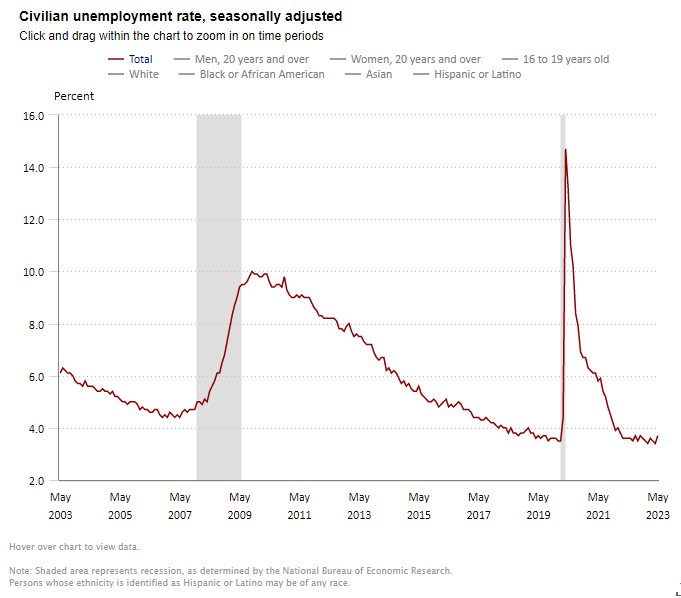
Against this background is the broader economy, beset by uncertainty and risk. Today’s economy is an “economist’s dream of two hands.” On the one hand, there is a relatively strong labor market with January’s unemployment rate slipping back to 3.4%, the lowest rate since 1969, while monthly jobs increased by a very robust 577,000 positions. But on the other hand, an inverted yield curve since July 2022 has been signaling recession warnings. Moreover, recent surveys of professional economists put the probability of a recession in the next 12 months at close to two-thirds. This is a very high percentage and raises a risk of a self-fulfilling prophecy if consumers believe this to also be the case. And at this point, the University of Michigan consumer sentiment survey results remain in recessionary territory, despite an uptick in early January. And, lastly, the residential and commercial real estate markets have weakened sharply. How should one process these mixed signals in the context of senior housing?    

Transactions Market. The transactions market for senior housing and care was weak in 2022, roughly returning to levels seen during the pandemic in 2020, which was the lowest volume of traded deals since the aftermath of the GFC in 2010. Preliminary data suggests that closed volume for 2022 totaled $9.7 billion, down more than 50% from 2021. Like other commercial real estate property types, much of the slowdown in transactions activity occurred in the second half of 2022 as buyers and sellers reacted to the sudden and rapid shock of surging interest rates orchestrated by the Federal Reserve. Bid/ask spreads widened as both buyers and sellers reacted to a higher cost of debt capital, more limited debt availability, and underwriting that has confounded years of standard underwriting assumptions. The shift from virtually free money in a near zero-interest rate environment to more than 4.3% for short-term interest rates such as SOFR, plus widening risk spreads, has stopped many would-be deals in their tracks as preferred investment returns have become unachievable.    

2023 NIC Insider Newsletter Article 3 Quote

It’s very likely that the debt markets will remain restrained through the first several months of 2023 as lenders wait for the so-called “pivot” by the Fed when it will signal that rates are not moving higher. And without debt capital, transactions activity will remain stalled for many, although not all, deals. Those equity providers with closed-end funds that need to execute due to the fund life terms of their contracts and those investors with open-end core funds that have redemption queues may need to transact. In addition, there will be operators that can no longer meet their debt obligations and equity requirements and will be forced to sell, creating a distressed sales buying opportunity for some investors, particularly opportunistic funds. However, the landscape will remain clouded by uncertainty, and a murky environment is not one that business decision makers generally like to operate within.      

Market Fundamentals. Senior housing property market fundamentals continued to improve in 2022. The overall occupancy rate for the 31 NIC MAP Primary Markets increased 2.8 percentage points from year-end 2021 to 83.0% at year-end 2022, according to NIC MAP Vision. On a quarterly basis, the occupancy rate increased for the sixth consecutive quarter in the fourth quarter of 2022, making it 5.2 percentage points higher than at its pandemic-related nadir of 77.8% in the second quarter of 2021.    

While good news, the question remains when will the overall occupancy rate return to its pre-pandemic level of 87.1%, last seen in the first quarter of 2020, and when may it return to even higher levels? At this point, there remains a 4.1 percentage point gap between the most recent occupancy rate and its pre-pandemic level. Holding it back, at least partially, has been ongoing growth in inventory. Despite a slowdown in construction starts for senior housing, the stock of senior housing units continues to expand and has grown by 6.3% (41,000) units since the pandemic began. That has been more than the market has been able to absorb on a net basis, despite relatively strong demand patterns.    

2023 NIC Insider Newsletter Article 3 Quote 2

Indeed, on the demand side the equation, net absorption, or the change in occupied units, has been very impressive since early 2021, with quarterly gains averaging nearly 7,500 units, three times more than its pre-pandemic historical quarterly pattern of 2,500 units. Moreover, the number of senior housing units occupied by older adults has never been stronger and reached a record high in the fourth quarter of 2022. Pent-up need, a compelling value proposition of residing in senior housing, and a relatively strong economy have supported demand.    

Notably, however, demand has not been strong enough to recover the units placed back on the market during the pandemic (45,000 units) plus the new units opened (41,000). Hence, the occupancy rate, which takes supply and demand into account, remains below pre-pandemic levels.  

What’s Ahead? Today’s starts will translate into tomorrow’s inventory growth, albeit with a lag. Fourth quarter starts in 2022 continued to moderate, especially for assisted living, but they were not zero, as some developers were still able to break ground on new projects. Indeed, starts totaled 7,230 units for assisted living on a four-quarter basis in the Primary Markets in the fourth quarter, and 7,435 units for independent living. These groundbreakings will take root and turn into openings in approximately two years and create new supply. And as this happens, inventory growth will exert downward pressure and limit the pace of occupancy rate improvement.  

Regarding demand, the combination of a potential recession anticipated for 2023 (albeit a mild one), along with a collapse in residential home sales, waning consumer confidence, rising interest rates, fear of inflation and eroding purchasing power, and a plunge in the stock market all pose threats to continued strong net absorption patterns.    

Further, the threat of operational reputation risk is growing. Negative performance at a few properties by a limited number of operators has the potential to hurt the entire reputation of the industry and to create ancillary risks for all operators and their financial partners. This may especially be the case for the one-third of senior housing properties in the Primary Markets (1,788 properties) that had occupancy rates below 80% in the fourth quarter. The ability of the operators of these properties to service debt (in a more stringent debt environment), maintain margins (in a very inflationary environment), grow census (in a weakening economic environment), and provide quality resident experiences (of utmost importance) is difficult. The combination of these factors will add further stress to operators despite two years to date of broad pandemic recovery.    

Taken as a whole, it is likely that we will see additional stress on operators in 2023, until at least mid-year, when the Federal Reserve may slow or even stop interest rate increases. At that point, the Fed may have sufficient evidence that inflation, and especially service inflation, is moving back toward its 2% target range. The Fed has indicated that it is particularly mindful of core service inflation less housing. A slowing economy, rising joblessness, employee layoffs, and slowing wage growth will be other considerations of the Fed, should it decide to “pivot” and reverse course on rising interest rates. Already, the most interest-rate-sensitive sectors of the economy have screeched to a halt, including the manufacturing sector which has weakened sharply due to a pullback in consumer demand and the residential and commercial real estate markets.    

Wage Growth Slows, Job Growth Improves. On the plus-side for the senior housing and skilled nursing sectors is evidence of slowing wage growth and improvement in hiring. Indeed, the assisted living industry had recaptured and rehired 100% of the employees who had left the sector as of December 2022 (note that these positions may not be being filled by the same people). For skilled nursing, employment increased during the last eight months of 2022 for a gain of 33,000 positions. This remains well below the pre-pandemic peak, however, with another 13% of those vacated positions still needing to be hired.    

Wage growth is beginning to temper a bit as hiring improves. In November, average hourly earnings for assisted living were up by 7.8% from year-earlier levels, higher than the 4.8% seen for the broader economy, but a sharp deceleration from the 10.7% annual increase seen in May 2022. Similarly in nursing care, wage growth decelerated to 8.0% in November from year-earlier levels, down from 11.7% in March 2022.  

Wrap Up. The ability of the Fed to steer the economy into a so-called “soft landing” to avoid a recession is difficult if history is any indicator. And even if a recession is averted, the pain of rising interest rates and high inflation has been evident already to most businesses, consumers, and workers. For senior housing operators and capital providers, there are certainly near-term challenges, uncertainties, and risks ahead, but there are myriad promising opportunities as well, if the proverbial crystal ball can extend beyond this near-term business cycle.  

As always, I appreciate and welcome your comments, thoughts, and feedback. 

beth-signature

This article has been updated since its initial publication in the February edition of the NIC Insider Newsletter.

Take Action with 2023 NIC Spring Conference Innovation Labs

NIC takes pride in creating conferences that equip attendees with expert-tested tools, concrete connections, and actionable insights they need.

“The topics that are explored and discussed at great length have been very relevant. They allow me to think deeper, pose more questions, but also find other like-mind people who are in the same situations.”

– Katie Perry, Knute Nelson –2022 NIC Spring Conference Attendee 

NIC takes pride in creating conferences that equip attendees with expert-tested tools, concrete connections, and actionable insights they need to increase access and choice for America’s older adults. Unlike trade shows, which can become an endless maze of booths, exhibits, and competing events, NIC Conferences are expertly curated to ensure attendees benefit from a variety of opportunities for efficient networking and learning.

To further achieve this goal, NIC is introducing Innovation Labs at the 2023 NIC Spring Conference—hands-on workshops designed to facilitate collaboration and idea sharing between attendees and the innovators already steeped in the topic. These up-close-and-personal sessions will give attendees the opportunity to learn from early adopters and innovators who are already making healthcare and housing integration a reality.  

Here’s a breakdown of the five Innovation Labs at the 2023 NIC Spring Conference—and why you need be in the room. 

Launching Value-Based Care

How to Begin Your Journey in Value-Based Care will piggyback off of the main stage sessions devoted to value-based care. It’s the answer to your question, “But how do I get started?” The session’s five subject matter experts will give attendees more individualized attention and make it easier to ask questions through polling. The subject matter experts will discuss primary care models that benefit residents’ health and operators’ business models, how you find the right partner, and more. 

A second Innovation Lab on value-based care will walk attendees through the creation of an implementation plan. The seven subject matter experts in Customizing a Value-Based Care Strategy for Operators will split the room into small groups, each with an experienced operator, primary care partner, special needs plan, and/or a value-based care consultant. This gives attendees direct, hands-on support from the subject matter experts as they co-create a plan for implementation and tackle lingering questions. 


Getting Active in Active Adult
 

There has been a lot of talk about Active Adult—the newest red-hot housing segment for older adults—but how do you get started? This session, Active Adult Tools for Success: Market, Product, and Lifestyle, subject matter experts will highlight the top three things operators need to know to become active in the space. First, operators must consider the state of the economy and how supply metrics and construction starts should impact Active Adult considerations. Second, what defines an Active Adult property, what market characteristics to look for, and what makes the product feasible overall. Finally, subject matter experts will outline the lifestyle and healthcare offerings that customers will expect. 

Confronting Operational Challenges & Opportunities 

Economic changes continue to impact the industry. Keepin’ It Real – Let’s Talk Margin will be a frank discussion on the macro impacts of the economy on senior housing and related industries. From the senior housing perspective, speakers will discuss near- and long-term trends related to inflation and unemployment and their effects on supply chains and operating costs. These challenges will be compared and contrasted to the experience of the hospitality industry, and the strategies those leaders have used to overcome occupancy and workforce challenges. 

In keeping with the theme of the conference, What Capital Sources Need to Know About Operators will offer capital providers insights on how to form successful partnerships with operators: the questions they should ask, the qualities to identify, and the top five metrics they should look for in a potential partner. The subject matter experts, divided into Family Feud-style teams, will reveal the top five metrics capital sources should assess in a potential partner. Is it operator to capital relationship, HR community levels, sales and marketing data, or something else? You’ll have to be in the room to find out. 

Over the course of the three-day conference, there will be abundant opportunities for all attendees to leave with concrete, actionable strategies to improve access and choice for America’s older adults. Join us.