NIC Conference Keynote on Policy Offers Candor and Optimism

Journalist Soledad O’Brien moderated a discussion with Mark Parkinson, president and CEO, American Health Care Association (AHCA) and National Center for Assisted Living (NCAL), and Andy Slavitt, senior advisor for The Bipartisan Policy Center and former Acting Administrator of the Centers for Medicare & Medicaid Services (CMS) at the 2020 NIC Fall Conference.

Seniors Housing and Government Can Work Together for a Bright Future. 

One of the attractions of any NIC Conference is the caliber of thought leadership and insight provided in main stage keynote sessions. Typical keynotes, held in large ballrooms, hardly feel intimate. In contrast, much of the 2020 NIC Fall Conference, hosted on a virtual platform that put every speaker and attendee on a face-to-face basis, felt close, personal, and disarmingly genuine. This dynamic was on display for one of the most anticipated keynote discussions of the nation’s most important seniors housing and care event.
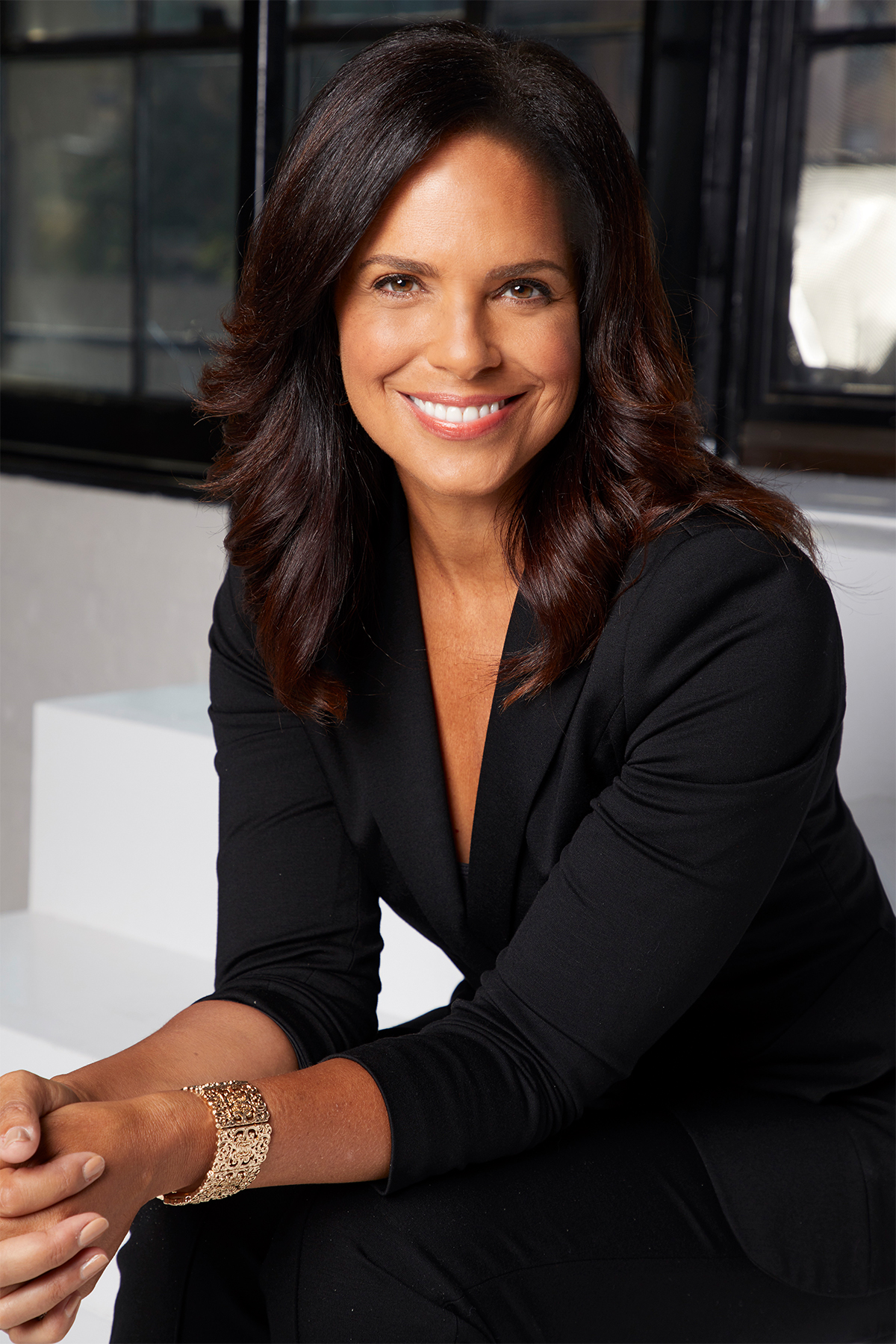
OBrien_Soledad_photo_062620Award-winning journalist Soledad O’Brien adeptly moderated a discussion with Mark Parkinson, president and CEO, American Health Care Association (AHCA) and National Center for Assisted Living (NCAL), and Andy Slavitt, senior advisor for The Bipartisan Policy Center and former Acting Administrator of the Centers for Medicare & Medicaid Services (CMS). Both leaders were frank and forthcoming regarding the impact of COVID-19 on seniors housing and care. Despite coming from the often opposing viewpoints of industry leader and policymaker, the discussion demonstrated that, for seniors housing and care, the pandemic promises to teach industry leaders a great deal – and has created opportunities to work with government to craft a bright future, while delivering better outcomes for America’s frail elders.

Trump and COVID

O’Brien’s first question was for reactions to the news which had just broken, that President Trump and the first lady had tested positive for COVID-19. Parkinson took the opportunity to express his hope that, “As bad as the news is, maybe it will be a wakeup call some people needed, that you’ve got to take this stuff seriously. You have got to wear a mask because anybody, under any circumstance, can get this virus.”

Slavitt_Andy_photo_071720

Slavitt pointed out that, in addition to the President, “43,000 other people were diagnosed with COVID yesterday.” He agreed that while we shouldn’t be politicizing the President’s health, the country might learn two lessons from the news, “One is, a thin piece of cloth would have prevented this from happening…the second lesson is simple consideration. Trump and his staff and his family entered a room, sat around Chris Wallace, were feet away from Joe Biden. None of us know whether we have COVID-19 or not…that’s why we wear masks.” He hoped that, like (UK Prime Minister) Boris Johnson, who fell seriously ill with the virus, Trump would take this more seriously, wear a mask, and encourage others to do so.

The Second Wave

Asked whether the seniors housing and care industry is prepared for a second wave, Parkinson was optimistic. “We are. We were completely unprepared for the first wave.” He explained that the virus’ ability to spread via asymptomatic carriers wasn’t understood at first. That, and the lack of masks and appropriate PPE, “really caused it to spread like wildfire in nursing homes and assisted living facilities across the country…the other thing we needed was testing, and we didn’t have that either.” He pointed to “horrendous policy mistakes made at multiple levels, that created the challenges we had.”
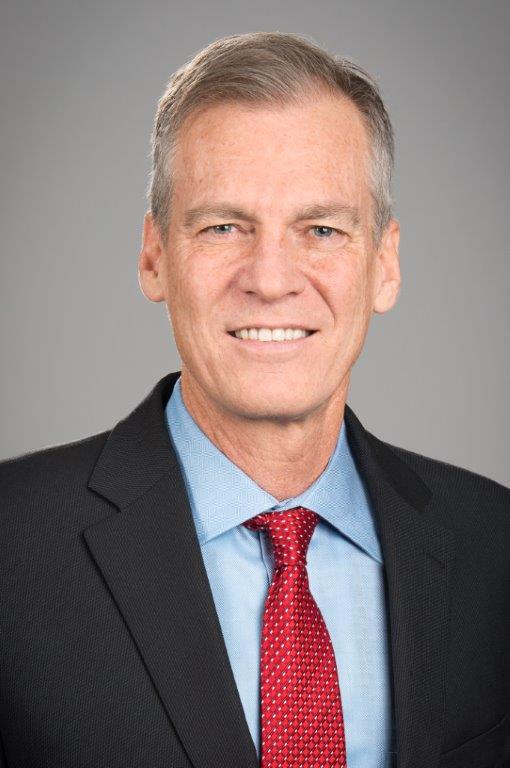
Parkinson_Mark_photo_081720

Parkinson continued, “For phase two we’re in better shape. The policymakers have not done great, but the scientists have. The testing we now have…as well as a little better position on PPE, I think we’re in a much better position. Clinically, we also know a heck of a lot more about how to take care of people, so the mortality rate is down.” Nevertheless, he echoed Slavitt’s frustration with America’s failure to enact simple preventive measures. He said, “We don’t have to have a second wave. What’s so damned frustrating about this is that if everyone would just wear a mask, just that simple, considerate thing, if we would just make a decision as a country that everywhere we go we wear a mask and socially distance, we wouldn’t eliminate this in two weeks – but we would grind it to very low numbers.”

Slavitt raised community spread as another key factor impacting nursing homes. He said, “It is very, very difficult, once there is community spread, to prevent that spread from getting into the nooks and crannies where everybody lives.” While agreeing that the industry today is better prepared to protect frail elders, he appealed to everyone, politics aside, to be considerate of others and help to contain the spread of the virus.

“A Business Disaster”

The discussion turned to the state of the industry, which has seen a fall in occupancy rates and a simultaneous rise in costs associated with fighting the pandemic. Parkinson said that, “My overriding message to the folks who are watching this, who are primarily investors in long term care, is that we’re going to get through this, and this is going to continue to be a good space to invest in and that’s not just hollow cheerleading. I believe there’s good data and good reason to believe that.” He went on, however, to outline how the pandemic has caused a “clinical nightmare and a business disaster.”

Parkinson offered a litany of dismal facts, including over 50,000 deaths in nursing homes, and tens of thousands in assisted living facilities. He pointed to census data that dropped from 85% to 75% in just a “month or two,” and half that in assisted living. He pointed to major increases in expenses, as operators scrambled to acquire PPE, often at “ten times the normal rate” on the black market, while paying ‘hero pay’ to staff and incurring other related expenses.

Asked how he can be optimistic in the wake of such grim realities, Parkinson said, “The good news is the government recognizes that we are an essential service, and thank god for the CARES Act funds, that have now provided nursing homes a combined, probably, almost 20 billion dollars.” He also pointed to long-term demographic advantages, saying, “people need our services. We have a growing demographic, really exploding in the age group that we take care of, and as reluctant as people will be for a while to move into our buildings, which I completely understand, people don’t move into our buildings because they want to, they move into our buildings because they have to. They just can’t be taken care of safely at home anymore. It will be bumpy, and it will take some time, but the demographics are compelling. We will win the public’s confidence back, and I think this will be a good space to be in, eventually.”

The Opportunity to Improve

In agreement with Parkinson, Slavitt said, “industries through time emerge stronger from crises, often, if they do some self-examination, like Mark’s talking about, if they really, genuinely look at what they’re doing and say, ‘here are four or five things that can help us.’” He added, “This is an industry that everybody cares about, every Congress person, every senator, every presidential candidate needs this community to be successful. It’s not too big to fail, it’s too important to fail.” He said, “I love the fact that the industry is opening dialogue, that the industry is talking to the White House and HHS every day, that we’re figuring this out together.”

Parkinson warned industry decision makers not to miss this opportunity to improve. “The knee-jerk reaction for some might be, ‘Hey, let’s just get this behind us and try to move on with business as usual.’ That would be a huge mistake. You cannot ignore the fact that close to 100,000 people have died in long term care facilities. If we don’t use that as a moment of reflection, to not just look at what caused this, outside of our control, but look in the mirror and figure out those things that were within our control that could have slowed some of this down, and what could we do to be better in the future, then we’re missing an enormous opportunity.”

Regulatory Reform

Both panelists agreed in other areas, as well. On the burden of regulations, Parkinson pointed out that skilled nursing is more heavily regulated than “virtually all other healthcare providers,” and stated the “amazing statistic” that “80% of the enforcement budget at CMS is spent on nursing facilities.” He suggested that CMS focus regulations on “things that really matter,” such as infection control, person-centered planning and activities, and other areas where nursing homes can improve care for their residents.

“Mark’s right. You can’t regulate culture,” Slavitt responded, then advocated for “what works best,” which he described as an industry that recognizes what it needs to improve and asks for investment from the taxpayer to get there, as well as the accompanying regulations, which, “would make everybody comfortable, and provide assurances.” He added, “If the industry is able to move itself to that point, I think the industry will find a very ready and willing partner in the government, no matter which government…”

Workforce

On workforce issues, Parkinson said, “We don’t pay our healthcare workers enough, particularly the frontline workers in long term care.” He asked the question, “What do we do to make sure that we not only have enough people to work in our facilities, but that they can do so and take care of their own lives?” He linked the answer to the need for funding, as well as immigration reform. In response, Slavitt again offered some agreement, saying, “Right now, people who spend their day caring for the rest of us, if they somehow don’t have enough money to make ends meet, that is a litmus test that we should address…there’s plenty of resources in this country to do that.”

On immigration, Parkinson advocated for resolving the “dreamer problem,” as well as reviving programs that bring nurses in from foreign countries. “The challenge that economies will face in the 21st century, is where they will get the workers that are needed. The demographics of a declining workforce are very bad across all of the developed world.”

Addressing the politics of immigration, and acknowledging the need for workers, Slavitt said that “there actually is a center point of agreement on a number of these topics.” He explained that while they may not make everyone happy, they offer solutions to “add fairness” and move the country forward. “Sometimes it takes an event, sometimes it takes a new Congress, sometimes it takes a new way of looking at things, but one day, hopefully soon, we can resolve some of these issues.”

Medicare and Medicaid

Another issue that both experts addressed was Medicare and Medicaid. On Medicare, Parkinson acknowledged that the new payment plan, PDPM, initiated under Slavitt’s administration and recently put in place, is working well. He views Medicaid, on the other hand, as a politicized program that is now underfunding care in many states. “We’re going to have to figure out what our priorities are. Instead of just talking about these workers, these heroes, and the greatest generation, are we really willing to put some resources behind that, to give them the kind of care, and the kind of jobs, that they deserve.”

Slavitt responded, “In some point of time, whether it’s before or after the election, we’re going to have to do that [fund Medicaid], or many people who are on Medicaid today are going to face challenges, and payments are going to get even lower.” He pointed to a recent actuarial report that indicated, “Over the last year, Medicare lost two years of the life of its trust fund, and is now projected to turn insolvent in 2024.” What worries him, he said, is that during the next presidential term, the program will become underfunded. He explained that the next President may be in a position either to fund the program or cut benefits and payments under the program.

Towards the close of the discussion, addressing national priorities, Slavitt said, ”What we need is some radical introspection, as a country, into what kind of country we want to be. Part and parcel of this is the question of how we take care of people who need our help; they’re no longer at the stage where they can care for themselves, whether it’s because they have a disability, whether it’s because they’re aged, whether it’s because they’re low income, whether it’s because they’re sick. I think that is an enormous part of our national debate.”
The ‘Essential Virtual’ NIC Fall Conference Concludes – But Remains a Value

For the past two weeks, over a thousand seniors housing and care leaders from across the U.S. have logged on, often from their own home offices, to participate in their industry’s most important event. Of course, ‘the NIC’, in response to the COVID-19 pandemic, is now a virtual experience.

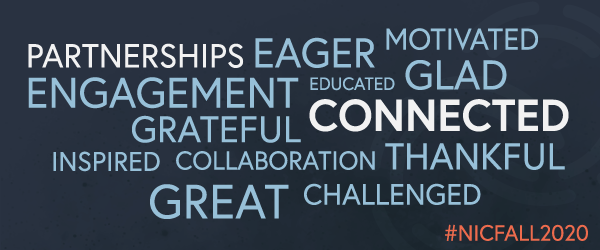
For the past two weeks, over a thousand seniors housing and care leaders from across the U.S. have logged on, often from their own home offices, to participate in their industry’s most important event. Of course, ‘the NIC’, in response to the COVID-19 pandemic, is now a virtual experience. But industry professionals have embraced what it has to offer. Many have discovered that ‘the NIC’ is as rich in thought-leadership and opportunities to connect with other decision-makers as ever – and that in some ways, the ‘essential virtual’ experience offers surprising advantages over traditional events.all_words_cloud-1

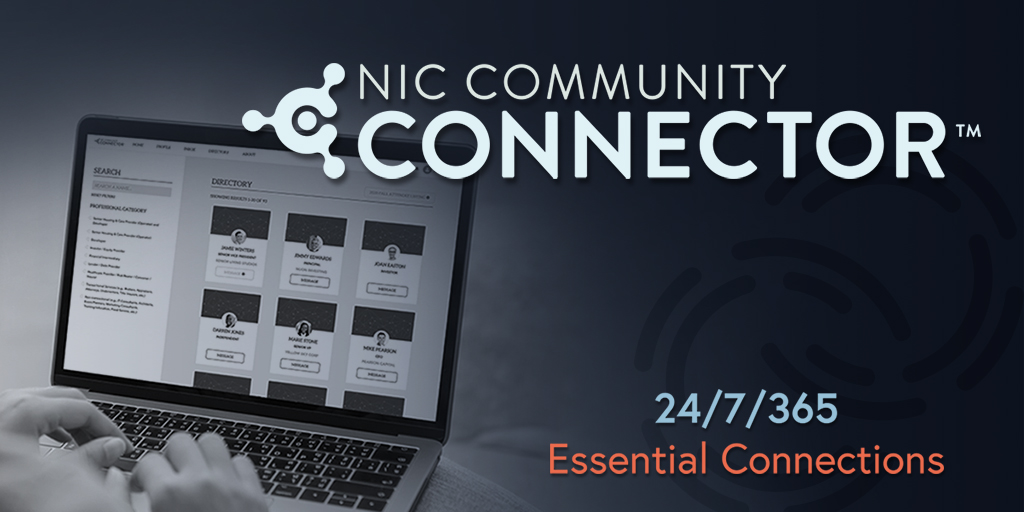
In the runup to the conference, NIC Founder & Strategic Advisor, Bob Kramer, pointed out that the new platform offers real value for attendees. He said, “The 2020 NIC Fall Conference is not only a uniquely affordable educational opportunity, it also provides an unprecedented new dealmaking platform, the NIC Community Connector™.” The vast majority of attendees are now registered on the NIC Community Connector, ensuring that there are, indeed, plenty of opportunities to connect directly with people in a position to make a deal.

NCC_Conf_1024x512

In practice, attending companies were able to extend opportunities to connect and learn to more of their staff than they would otherwise send in person. “We are taking advantage of the virtual format by including more of our team to build on essential relationships and gain invaluable insights from the educational sessions,” said Marilynn Duker, CEO of Brightview Senior Living. Without the cost, both in dollars and time, of travel and booking accommodations, and with a lower price for registration, the conference attracted numerous attendees who might otherwise not have made the trip.

By Popular Demand

In many ways, the conference adhered to traditional educational and thought-leadership programming. In total, more than 50 sessions offered insights, opportunities to participate in substantive discussions, presented the latest data and analysis, and featured some of the nation’s foremost experts and industry leaders. As in any in-person NIC conference, keynote general sessions featured panels of experts who needed no introductions.

Award-winning journalist Soledad O’Brien moderated a discussion with Mark Parkinson, President & CEO, American Health Care Association (AHCA) and National Center for Assisted Living (NCAL), and Andy Slavitt, senior advisor for The Bipartisan Policy Center and former Acting Administrator of the Centers for Medicare & Medicaid Services. Both leaders were frank and forthcoming regarding the impact of COVID-19 on seniors housing and care.

Parkinson, on whether the seniors housing and care industry is prepared for a second wave, said, “We don’t have to have a second wave. What’s so damned frustrating about this is that if everyone would just wear a mask, just that simple, considerate thing, if we would just make a decision as a country that everywhere we go we wear a mask and socially distance, we wouldn’t eliminate this in two weeks – but we would grind it to very low numbers.”

On funding Medicaid, Slavitt said, “In some point of time, whether it’s before or after the election, we’re going to have to do that [fund Medicaid], or many people who are on Medicaid today are going to face challenges, and payments are going to get even lower.” Towards the close of the discussion, Slavitt had this to say about national priorities, ”What we need is some radical introspection, as a country, into what kind of country we want to be. Part and parcel of this is the question of how we take care of people who need our help, they’re no longer at the stage where they can care for themselves, whether it’s because they have a disability, whether it’s because they’re aged, whether it’s because they’re low income, whether it’s because they’re sick. I think that is an enormous part of our national debate.”
Another highly anticipated general session featured an O’Brien-moderated discussion with seasoned political commentators, David Brooks and David Gergen. It felt like an honest, forthright assessment of the impact of the coming election on the sector. David Brooks offered a mea culpa on his 2016 predictions of a Clinton victory, and described his efforts since then to reconnect with the segments of the American populace with whom he’d grown out of touch. Both men offered their insights and predictions for the election – as well as their assessment on the impact it will have on American life and business interests.

The popular NIC Talks series, now a highly anticipated staple of the traditional event, returned —featuring another group of uniquely qualified, passionate thought-leaders, including JoAnn Jenkins, CEO of AARP, addressing the question, “How will COVID-19 impact the future of aging and aging services?” In the style of “TED-Talks,” these often emotionally powerful presentations added some punch to the analysis and data on offer in week one. A week two peer-to-peer discussion offered an opportunity to further discuss the NIC Talks presentations, with moderator Bob Kramer and NIC Talks presenter, Dan Cinelli.

In addition to one of the richest educational programs ever offered at a NIC conference, the event extended a variety of means for attendees to build and grow their business and social networks. Echoing in-person events, the virtual platform reveals to its users who else is in the lobby, or in a breakout session, and allows them to message one another, either in text or via video chat. Anyone who misses running into old friends in hallways should be heartened by this means to interact in such an organic, impromptu manner.

New Ways to Network

The unique, new NIC Community Connector launched in parallel to the event, and is currently only available to its attendees, who may continue to use it free of charge through the end of 2020. The innovative online platform provides a means to search for potential new contacts, and to communicate directly with the deal-makers they need to meet with. NIC is continuing to develop the platform, with new features scheduled to launch this year.

Attendees were also able to set up ‘braindates’ with each other, either one-on-one or in small groups. These intimate, focused exchanges provided not only a means to share thinking, but to connect with fellow attendees, and potentially to begin to build and grow new relationships with peers, based on those interactions. Through braindate™, attendees set up their own focused discussion groups, joined groups set up by fellow attendees, or arranged one-on-one meetings of their own.

In week two, called ‘connections week,’ NIC hosted numerous peer-to-peer discussions, on carefully curated topics of immediate relevance in today’s world. These moderated events offered participants expert thought-leadership, as well as frank discussion, and often eye-opening insights and ideas, offered up by attendees sharing their own real-world experiences and perspectives in more intimate small group breakout discussions.

Beyond educational sessions, the event offered attendees a variety of opportunities to spend time with each other, network, engage in self-care, and even share some cocktails or world-class entertainment together.

A series of ‘Brand, Brain, and Being’ sessions offered attendees a chance to focus on themselves and gain expert tips on improving personal brand, productivity, creativity, and overall wellness. Just as in traditional events, there was a LinkedIn expert on hand to help improve social profiles.

Meanwhile, for NIC MAP® Data Service power users and novices alike, there were opportunities to learn from NIC MAP experts, discuss how they use the NIC MAP Data Service platform, and meet (virtually, of course) with NIC MAP staff to discuss how the industry’s leading data service might benefit their businesses. Discussion groups for NIC MAP users delved into how they use the platform to analyze market feasibility, inform underwriting, and effectively target markets.

virtual_expx_header-png

As with traditional NIC events, the attendee experience also included world-class entertainment. As week one drew to a close, the Young@Heart chorus, introduced by an impressive collection of A-list celebrity admirers, charmed and entertained with their talented, and infectiously fun, performances. Perhaps the most anticipated session of week two was a behind-the-scenes experience with Broadway and film cast members from “Hamilton!”, who also delighted fans of Broadway’s most popular show with exclusive performances that were simply not to be missed.

Although the conference has ended, attendees will retain access to a library of its many educational sessions and will also be able to use the powerful NIC Community Connector through the end of 2020. As expressed by NIC CEO Brian Jurutka in a press briefing, “I believe this conference – and the NIC Community Connector – will be valuable to thousands of leaders and their businesses, as they begin to craft a new normal and build towards a successful future, both for their businesses and for the millions of America’s elders seeking access and choice in seniors housing and care.”

How to Partner with a Healthcare Provider in the COVID Era

The pandemic is fast-tracking the link between seniors housing and healthcare. Residents want to be protected from infection and access to onsite care, no matter the setting.   

Educational session at 2020 NIC Fall Conference highlights onsite service.


Key Takeaways 

  • Seniors housing is emerging as a key part of the healthcare continuum. 
  • Keeping residents out of the hospital is a major objective. 
  • Seniors housing providers are managing healthcare risk onsite for their residents—both for infection and for social isolation/loneliness. 
  • Health and healthcare must become an essential focus for seniors housing providers—but they don’t have to be the provider of the healthcare.  

The COVID-19 outbreak has accelerated emerging trends. Consumers are making more purchases online. Virtual meetings are now routine. Telehealth has gone mainstream in a matter of months.   

Likewise, the pandemic is fast-tracking the link between seniors housing and healthcare. Residents not only want a hospitality-type experience but also expect to be protected from infection. Many want access to onsite care, no matter the setting.   

Different approaches are emerging.  

One example of how to partner with a healthcare provider was presented during  Education Week at the 2020 NIC Fall Conference during a session  titled: “What Does Senior Living Look Like in the COVID Era: The New Role of Health and Healthcare Onsite.”    

Separately, a peer-to-peer discussion on the topic was held during the conference Connections Week. Participants shared their experiences with onsite healthcare. 

The educational session was led by Bob Kramer, NIC founder and strategic advisor, and president at Nexus Insights. Participants included Michael Grust, founder and CEO at San Diego-based senior living provider SRG; and Jim Lydiard, staff vice president at CareMore Health, a division of insurer Anthem.    

SRG collaborates with CareMore to offer onsite healthcare services, a partnership that has deepened during the COVID-19 crisis.  

Kramer provided context, noting that older adults have become more fearful about visits to traditional healthcare settings, such as doctors’ offices and clinics. At the same time, new models of care are emerging, including the use of telemedicine. 

“We are at a nexus point as an industry,” said Grust. He explained that the ability to protect the health of residents while creating environments where they can thrive will make a big difference in their decision to leave their homes and move into senior living communities. “We are focused on quality of life,” said Grust. 

CareMore’s insurance program—called Touch—provides a full range of medical services to residents who enroll. Many of the CareMore visits by healthcare providers are proactive, which helps contribute to the overall health of residents and improve their quality of life.  

The program is meant to compliment the work of SRG’s hospitality and wellness teams. CareMore does not offer dining services or help with the activities of daily living.  

Kramer noted the distinction between health and healthcare services. Health is related to prevention and wellness. SRG’s ZEST program, for example, keeps residents healthy and engaged. CareMore provides the actual medical services. “Health and healthcare have to be an essential focus, but you don’t have to do it all yourself,” said Kramer. “Partnerships can deliver benefits.” 

Teamwork Succeeds 

CareMore works together with the wellness team onsite. They can communicate with CareMore via text, video and phone. “Residents can get help right way,” said Lydiard, which helps keep them out of the hospital.  

Residents voluntarily sign up for the CareMore program. Enrollees receive a health assessment and a customized care plan. Regular visits from healthcare practitioners are provided as well as telehealth sessions. Mini clinics, operating three to five days a week, are created on campuses with a sizable number of enrollees.  

SRG does not pay a fee to CareMore. The patient’s insurance pays for the service under Medicare, Medicare Advantage or Medicaid. “This does not cost the operator more money,” said Lydiard. He added that the arrangement can help reduce the operator’s costs by eliminating unnecessary healthcare expenses that the operator might incur. Also, residents who enroll in the CareMore  Medicare Advantage plan may save as much as $200-$300 a month.  

Another plus: The partnership aligns the interests of the insurer and the operator. SRG keeps its residents healthier, often resulting in a longer length of stay. CareMore is motivated to keep residents healthy because it is paid through a capitation contract or risk-sharing model.   

Scale matters, however. The ability of CareMore to greatly impact resident outcomes depends on enrolling a critical mass of residents in the program. Membership grows virally after about 20 percent of residents sign up as CareMore’s presence on campus increases and residents see the value of onsite care. “We have to build membership,” said Lydiard.  

CareMore handles the marketing of the plan. But the staff at the community is educated on the benefits. 

 A hurdle to enrollment has been the reluctance by residents to switch insurance plans. They want to keep their primary care doctors, specialists and healthcare networks. 

But a big change will make it easier for residents to sign up. CMS is expanding its value-based care model to allow groups like CareMore to enroll residents with a traditional Medicare plan. They can keep their providers and still get the wraparound services provided onsite by CareMore. “This is a game changer,” said Grust.  

 The panelists agreed that senior living is now a part of the healthcare continuum. “We need to raise our game,” said Grust, noting “We are not post-COVID.” Senior living providers must continue to protect residents while providing an environment where people can thrive. “We have always been focused on the quality of life,” said Grust. “That is our unique selling proposition.”

Pace of Occupancy Decline Slows in Skilled Nursing

NIC MAP® Data Service released its first Skilled Nursing Monthly Report, which includes key monthly data points from January 2012 through June 2020.

NIC MAP® Data Service released its first ever Skilled Nursing Monthly Report on August 31, 2020, which includes key monthly data points from January 2012 through June 2020.

Here are some key takeaways from the report:

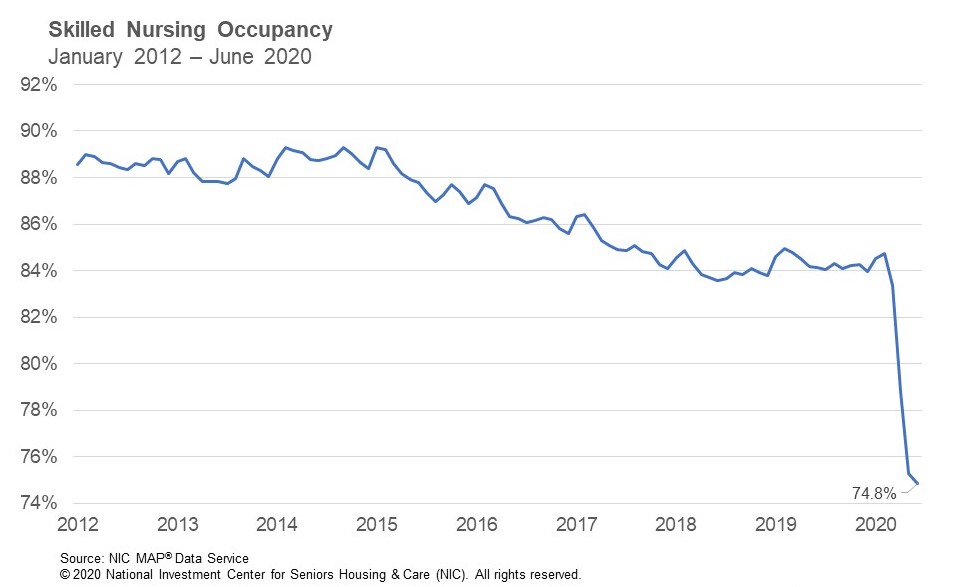
  1. With few signs of abating, the effects of the COVID-19 pandemic were still evident in the June skilled nursing data. The pace of the decline in occupancy slowed in June, but the rate hit a new record low of 74.8%. The 41 basis-point decline from May was the first month-over-month decline in occupancy less than 100 basis points since the start of the pandemic in March. This suggests that occupancies at skilled nursing properties may be starting to stabilize. However, significant uncertainty remains, especially as fall and winter approach. New challenges could arise with arrival of the flu season complicated by a possible resurgence of the COVID-19 virus. Since March, the occupancy rate has fallen 853 basis points from 83.4%. It is now down 990 basis points below February’s level.  The year-over-year occupancy rate is down 930 basis points from June 2019 and down 871 basis points from the previous low set in June 2018, prior to the pandemic. Urban area occupancy has declined significantly more than rural areas, declining 970 basis points since March compared to 539 basis points in rural areas.Skilled Nursing Occupancy through June 2020-1
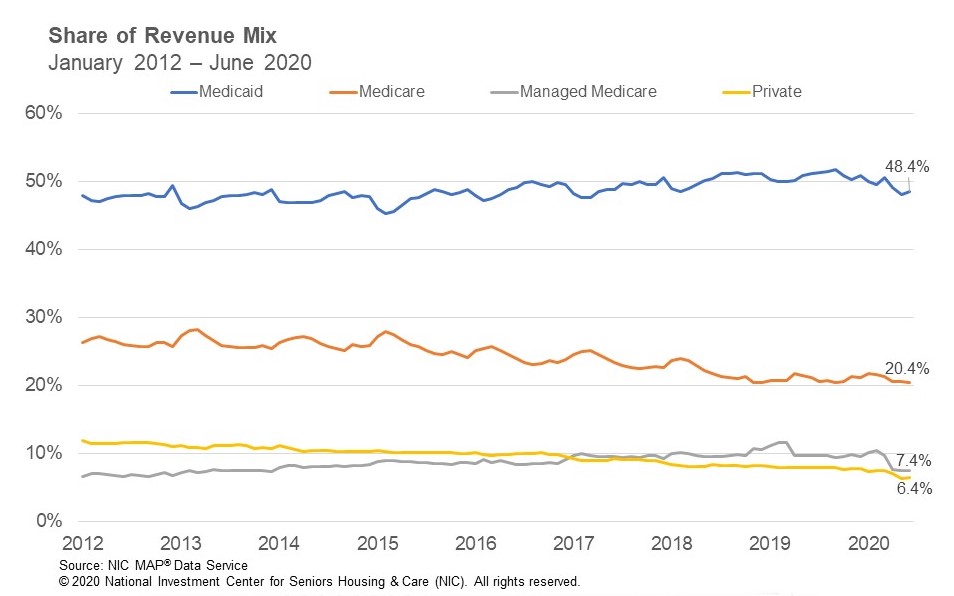
  2. Managed Medicare patient day mix increased slightly from May, ending June at 5.5%. This was the first month-over-month increase, albeit small, since the pandemic started. However, it is still down 109 basis points since March and down 158 basis points since February when the managed Medicare patient day mix was 7.0%. In addition, managed Medicare revenue mix seems to be stabilizing. It was flat from May to June, ending June at 7.4%. However, it has declined 224 basis points since March and 303 basis points since February when it was 10.5%. The stabilization in June suggests that insurance enrollees may have started to resume elective surgeries as states began lifting the suspension of such procedures.
  3. Medicare revenue mix declined slightly from May to June, ending at 20.4%. Although down, Medicare revenue mix has held up relatively well since the pandemic began in March, compared with other payors. It is only down 89 basis points since March compared to managed Medicare (down 224 basis points) and private (down 102 basis points). In addition, Medicare patient day mix has increased since March, from 11.2% to 11.9% in June. Although overall occupancy has declined dramatically during the pandemic creating significant pressure on skilled nursing operators, Medicare patient days likely did not decrease as much as it would have given that the Centers for Medicare and Medicaid Services (CMS) waived the 3-Day Rule, which required  a 3-day inpatient hospital stay prior to a Medicare-covered skilled nursing stay. Share of Revenue Mix through June 2020
  4. Medicare (RPPD) was essentially flat from May to June, ending at $557.76. However, Medicare RPPD has increased 1.9% since March. It likely increased because of additional reimbursement for COVID-19-positive patients requiring isolation, in addition to the temporary suspension of the 2.0% sequestration cuts by CMS (effective May 1-December 31, 2020). The trend varies, however, in urban and rural areas. The increase in Medicare RPPD since March was only 0.2% in rural areas, but 2.4% in urban areas. This most likely reflects the increase in Medicare support for urban areas with higher levels of COVID-19 cases.

To get more trends from the latest data you can download the Skilled Nursing Monthly Report. There is no charge for this report.

The report provides aggregate data at the national level from a sampling of skilled nursing operators with multiple properties in the United States. NIC continues to grow its database of participating operators in order to provide data at localized levels in the future. Operators who are interested in participating can complete a participation form here. https://www.nic.org/skilled-nursing-data-initiative. NIC maintains strict confidentiality of all data it receives.

Staff Mental Fatigue and Burnout: The Hidden Toll of COVID-19

Caring for the mental health of senior care staff during the pandemic is essential so they can continue providing compassionate care for residents.

A recent study from North Carolina State University and Georgia Tech found that healthcare workers in the United States are struggling with significant mental-health challenges during the COVID-19 pandemic, including depression, anxiety, and insomnia. While all healthcare workers are at risk, one key feature of caregivers in a seniors housing and care setting is that many of these caregivers have spent months, if not years, developing relationships with the residents they serve and their families. This means the emotional toll experienced by these staff may be that much more overwhelming.

Adding to the stress load is that filling staffing gaps amidst the pandemic has become even more difficult, stretching existing staff thinner. While attracting and retaining personnel has long been an issue for many seniors housing and care operators, the current crisis has exacerbated this challenge. The most recent wave of NIC’s Market Fundamentals survey indicated that 85% of organizations were offering overtime hours to mitigate labor shortages and 42% were tapping agency or temporary staff.

A Pandemic of Grief

In the initial months following the COVID-19 outbreak, much of the media focus was on hospital emergency room and ICU staff – those who would most traditionally be considered as the frontline healthcare workers. There has also been coverage of long-term care and senior care resident well-being and the impact of social isolation and loneliness on resident mental and physical health. What seems to get less attention is the impact of the pandemic on seniors housing and care staff. These staff have been facing high levels of stress resulting from many months of continued crisis as they seek to protect and care for residents while observing the latest infection control protocols. They have also been coping with forced isolation and, in some instances, death of residents for whom they have become the only ‘family.’ Finally, they carry the burden of concern for their own families’ health and safety.

Increasingly, however, these frontline workers are sharing their own deeply personal experiences of mental anguish, symptoms of post-traumatic stress disorder, and burnout. Many have highlighted these experiences to draw attention to the plight they and their colleagues are experiencing to reinforce that these workers absolutely should be considered frontline healthcare workers, and to underscore their need for supportive mental health services.

Tools for Identifying At-Risk Workers

The University of North Carolina School of Medicine, UNC Health, and Google have launched a mobile app that is designed to provide healthcare workers with mental health resources. The Heroes Health app is designed to identify mental health stress among healthcare workers and apprise leaders about the times of day or particular units that might need additional support, without identifying specific employees.

Healthcare workers complete weekly questionnaires on symptoms related to various mental health conditions. These questionnaires then feed summary reports of the user’s symptoms and trends over time. The summary reports include an assessment of their sleep quality, anxiety, and potential PTSD symptoms.  

Additionally, apps like Headspace and The Breethe meditation app are supporting healthcare workers by offering free access to their platforms in an effort to help mitigate the stress and anxiety felt by those who are caring for sick patients and residents. Such access includes breathing exercises to reduce stress and meditation for anxiety.

Proactive Coping Strategies

Given the high-stress nature of frontline healthcare roles, forward thinking operators are striving to combat the mental fatigue that working during a pandemic poses to their staff. It is crucial to find ways to support staff mental health and provide them with tools for managing the very real personal toll this crisis is taking on them. As an example, frontline caregivers may find themselves restarting old habits like smoking amid the stress. Without effective mitigation strategies, there is going to be a great deal of burnout, and the risk of these staff leaving the field going forward.

Overcommunication

Overcommunication is one of the strategy pillars Aegis Living has employed throughout the pandemic to keep staff current on the latest information. In the early days of the pandemic, these were daily communications that served to provide the most up-to-date information. These frequent touch points with staff provide leadership the opportunity to connect with their staff, to validate their experiences, and to be a source of support and encouragement for them. As Aegis Living President Kris Engskov has stated, these interactions were in part “to be a cheerleader” for staff. These points were further emphasized during the most recent NIC Leadership Huddle: Coping with the Pandemic held on August 17 when Lori Alford, Co-Founder and COO of Avanti Senior Living and Lynne Katzmann, Founder and CEO of Juniper Communities discussed “COVID-fatigue” and its impact on staff.

Managing Staff Emotions

As residents have become ill or passed away, staff and caregivers are understandably grieving. However, the work of caregiving and supporting residents and their families does not go away during the grieving process. Staff need support from one another, and to be able to talk and listen to each other, sharing feelings of anxiety, grief, panic, or guilt. While staff are all sharing in collective grief, leadership should reinforce with staff that this is in no way indicative of their failing.

The unfortunate reality of the pandemic is that residents may get sick despite all that staff do to protect and care for them. Given all these stress factors facing staff, managers should be on the lookout for warning signs, such as distractions while on the job, incomplete work, irritability with families or clients, and emerging lateness or absence from work which did not exist previously. Operators should also be encouraging staff to seek professional help as needed, especially as tele-mental health services have become increasingly available. Remind staff that there is no stigma in doing so. Empathy and understanding are key when addressing these issues and encouraging staff to seek help.

As Executive Coach Dan Brown of Arden Coaching pointed out during NIC’s recent Leadership Huddle, operators and administrators should be attuned to the signs of high stress amongst frontline workers. Brown listens for maladaptive thoughts, or feelings, and whether they are persistent. “One of the feelings that you really want to listen to, when you’re working with people on the front line, is a feeling of guilt, that ‘I can’t do enough.’”

Advising Staff

One of the most important aspects to keep in mind when considering the mental health and well-being of senior housing and care staff, is that staff cannot consistently offer great care to residents unless they are taking care of themselves. This may mean remembering to schedule their own relaxation time, whether that is a warm bath, an in-home movie, a favorite food, or a glass of wine.

Staff are going to be worried about bringing the virus into their own homes, so operators need to be providing regular testing for staff as well as reminding them to follow safety protocols at work, and to shower and change their clothes before engaging with family members at home.

One thing is clear – there will be no resolution to the pandemic anytime soon. The mental toll that it is having on frontline caregivers is real and could be extremely detrimental if this brave and needed workforce succumb to depression, PTSD, and other mental health challenges. As the battle with COVID-19 shifts from a sprint to a marathon, one of the key tasks of executive leadership teams and management at all levels is to be attuned to and address the mental health of their staff. Caring for the mental health of staff—especially during a pandemic that has caused high levels of mental stress and fatigue, and profound depths of grief—is essential to avoid burnout and enable staff to continue providing great, compassionate care for residents.  


{{cta(‘05843e86-7aea-4b9a-9eb8-25a86f116f95’)}}