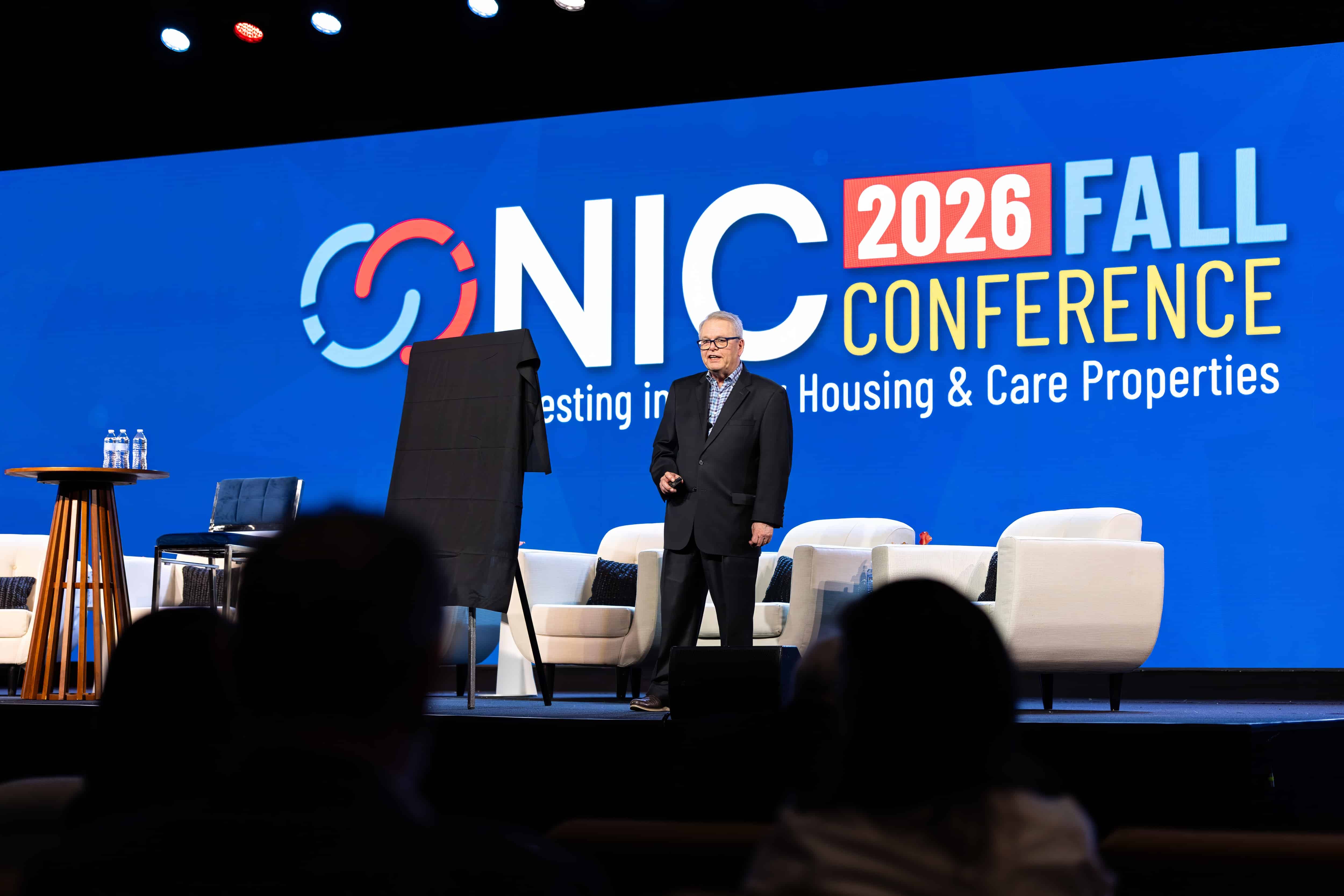
#NICFall26

From Longevity to Cap Rates: What the Main Stage Conversations Revealed 

Eight main stage sessions at the 2026 NIC Fall Conference, and one shared question about the customer older adults are becoming.

The main stage at the 2026 NIC Fall Conference opened with a question and closed with a price. In between, eight sessions covered aging, hospitality, quality, affordability, the economy, development, and capital. Read together, they make one argument: the customer is changing, and every part of the industry has to decide how to respond.

This is a closer look at what was covered on the main stage. For the full conference recap, see “Changing with the Customer: Takeaways from the Record-Setting 2026 NIC Fall Conference”.

Aging Reimagined: The Customer Is Changing, and So Is the Language

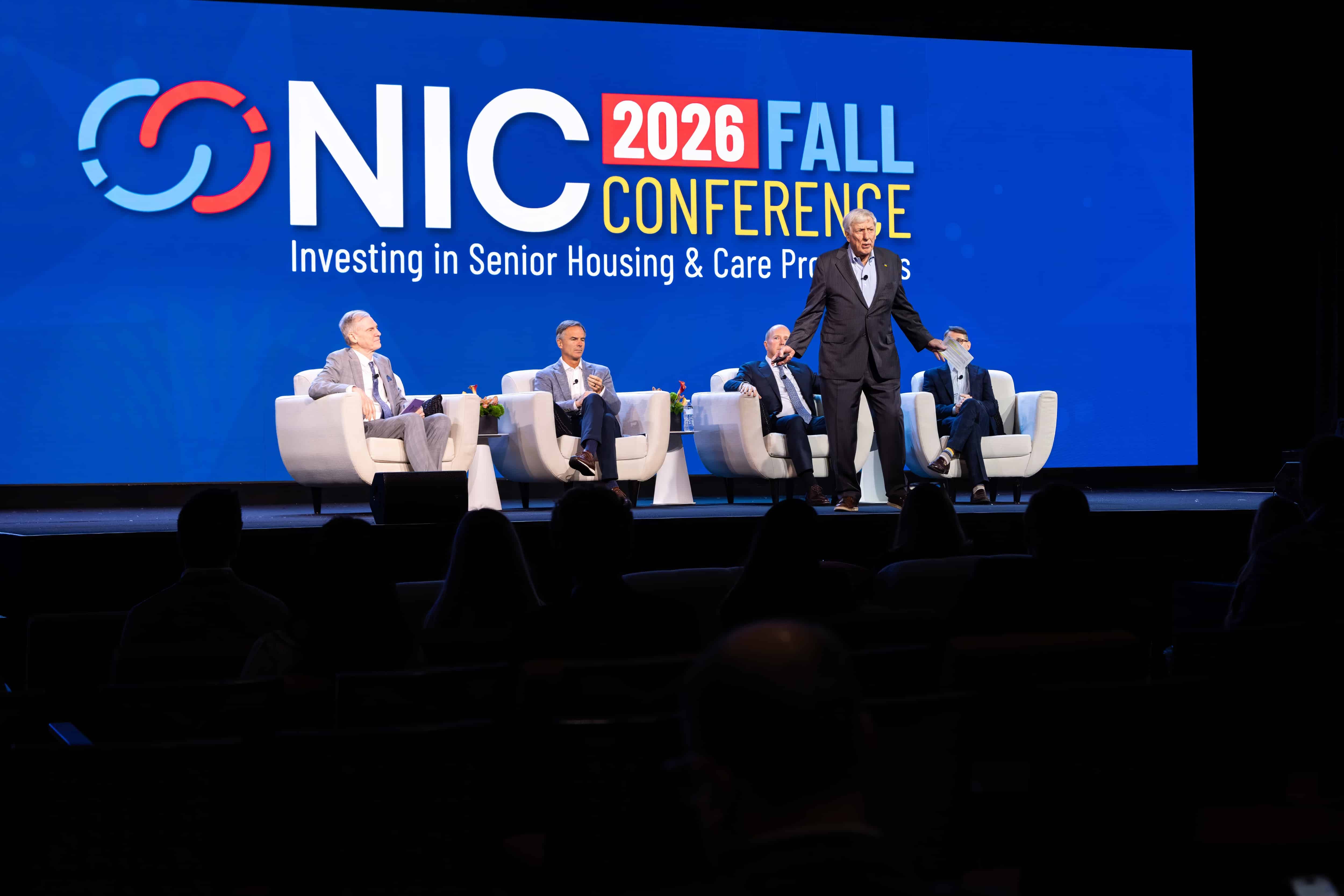
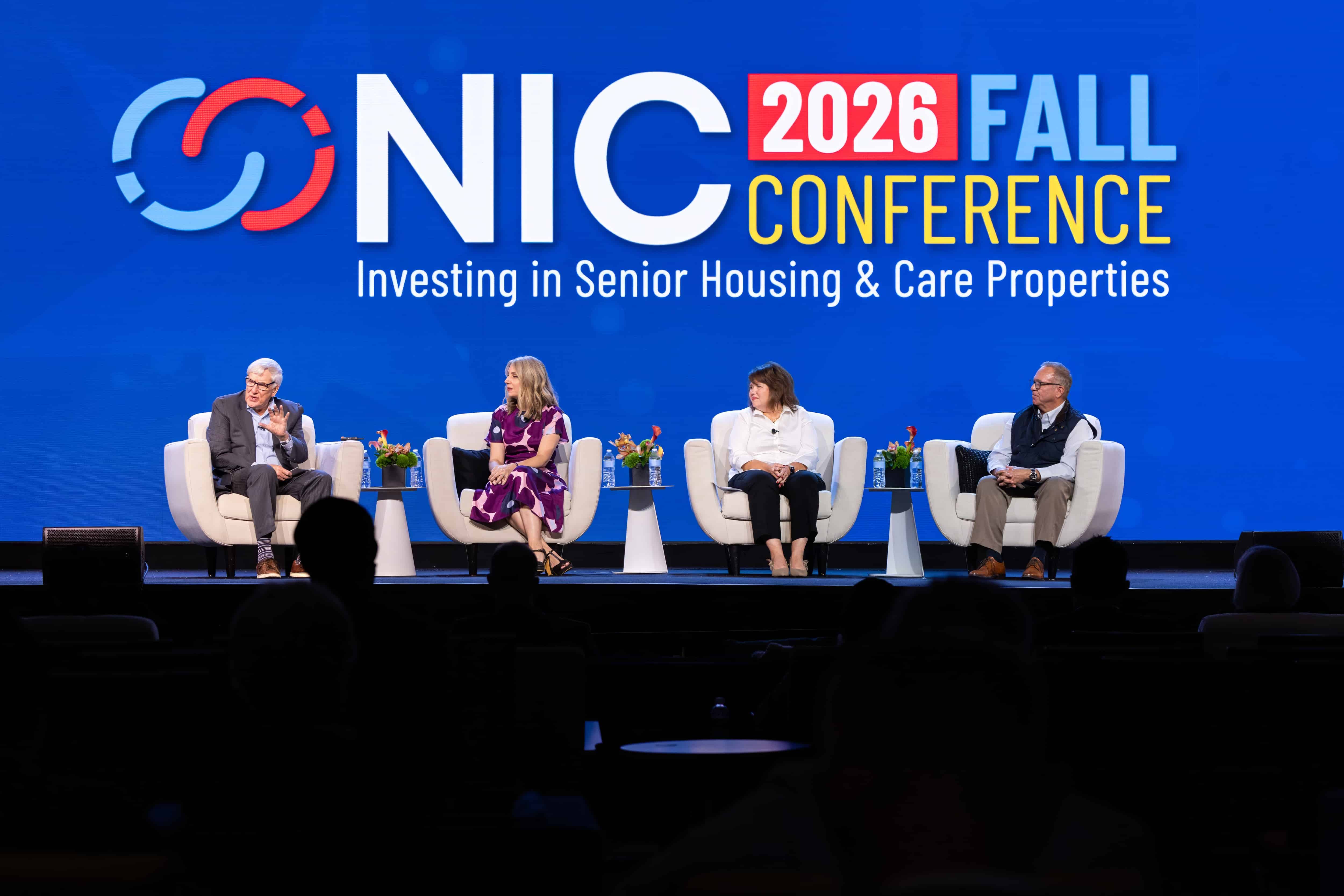
The conference opened with NIC leadership taking stock. CEO Ray Braun welcomed the room to Chicago in NIC’s 35th anniversary year. Board Chair Ken Segarnick looked back to when conference sessions were still making the case for investing in senior housing. “The capital came. The data came,” he said. This year’s program asks something different: “We’ve gone from proving the investment case to reimagining the aging experience.”
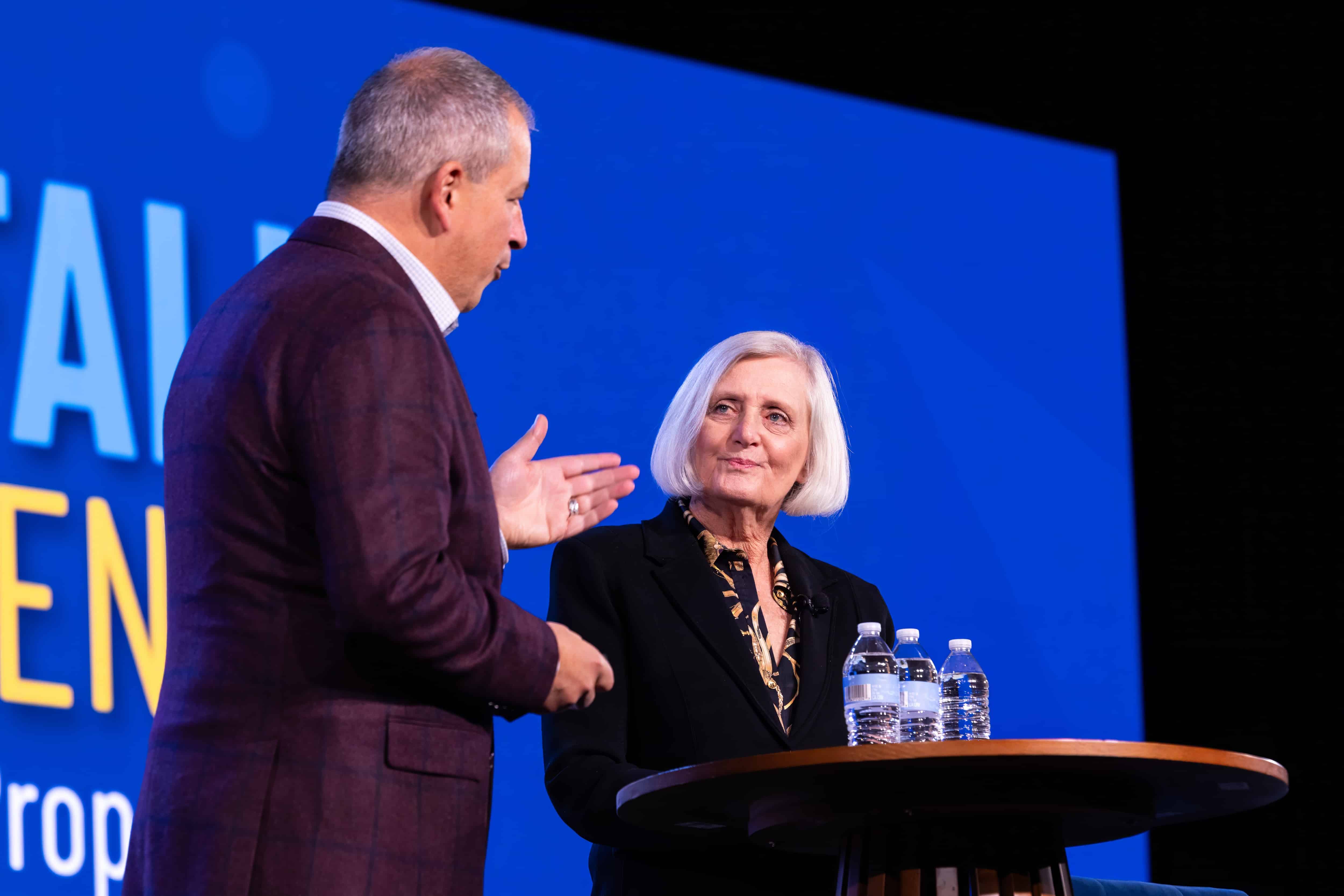
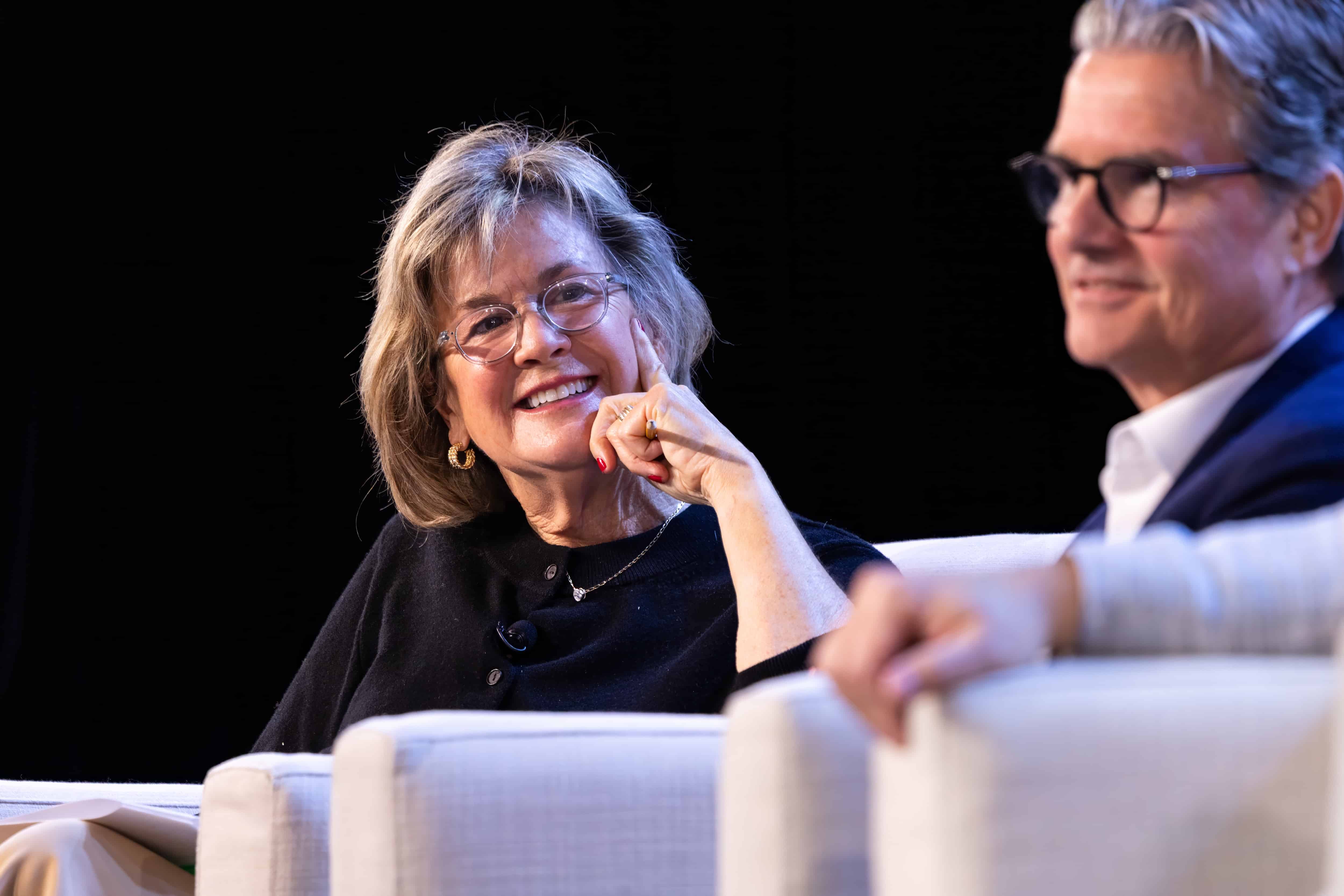
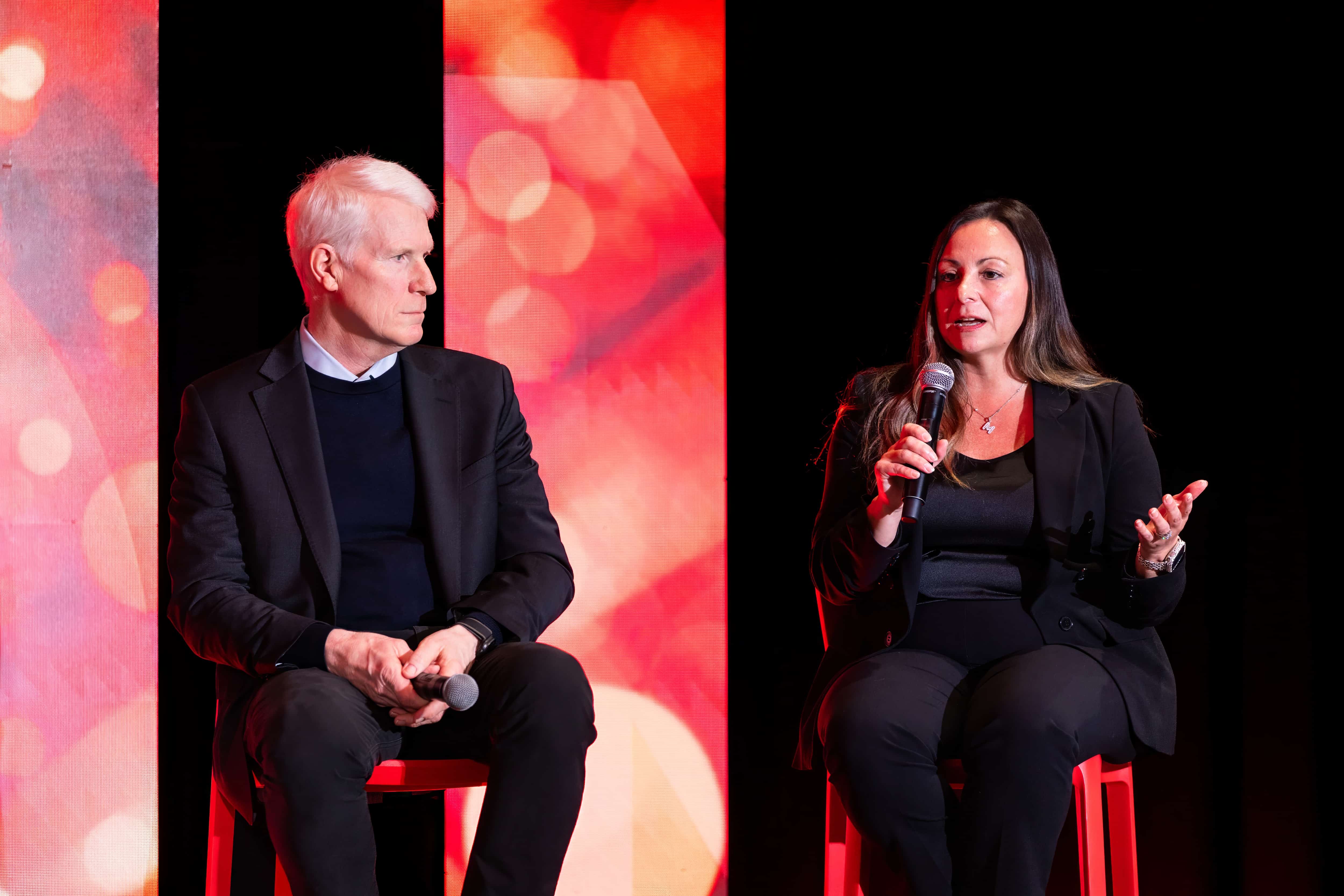
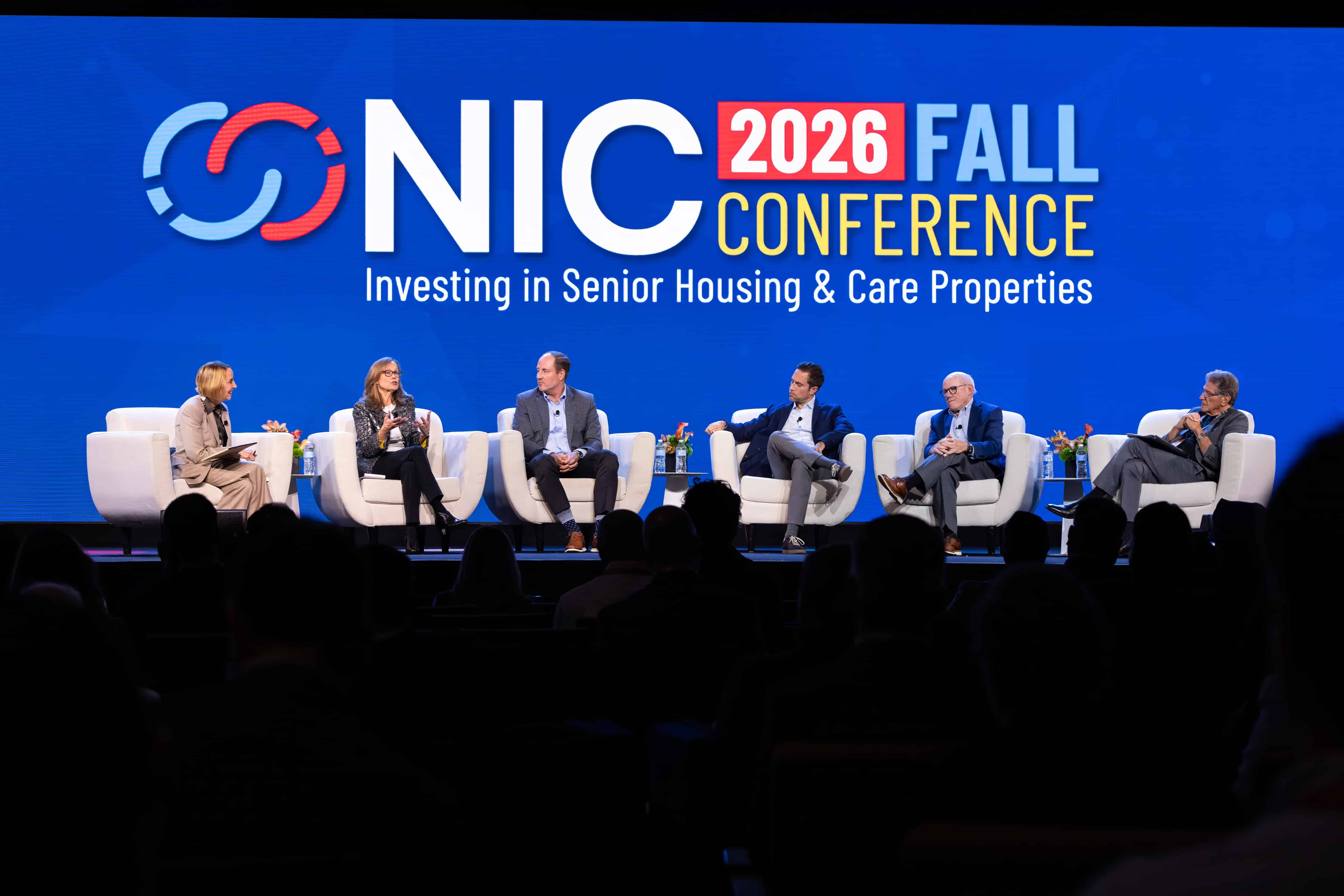
Ken Segarnick and Susan Barlow on the main stage

Segarnick also previewed NIC Vision 2030, the board’s work on the organization’s strategic direction. “Our 2022 plan expanded the tent. NIC 2030 looks beyond it,” he said, with more to come at the Spring Conference in Dallas. Immediate past chair Susan Barlow added a prediction about a recently launched research study that will identify the drivers of high-performing communities. Before any results are in, she expects those drivers to be tied to workforce and resident satisfaction. “AI is not replacing us,” she said, “and we need more humans in this business, not less.”

“The real estate case is made. The case in front of us now is the human one.”

Ken Segarnick, Chair, NIC Board of Directors

Then he handed the room a question to carry through the keynote: if the customer is changing this much, what will it take for us to change with them?

A Keynote That Started with a Show of Hands

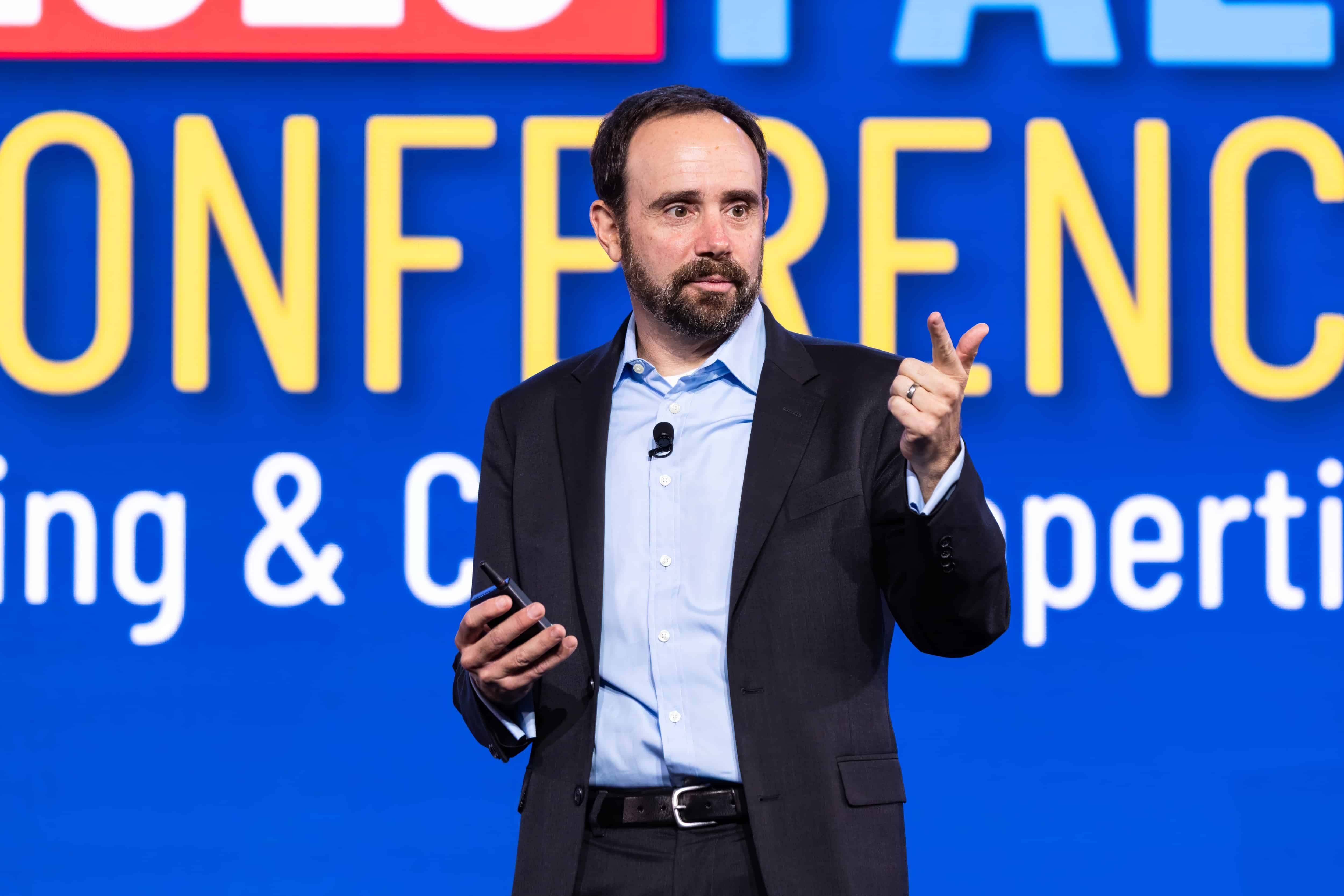
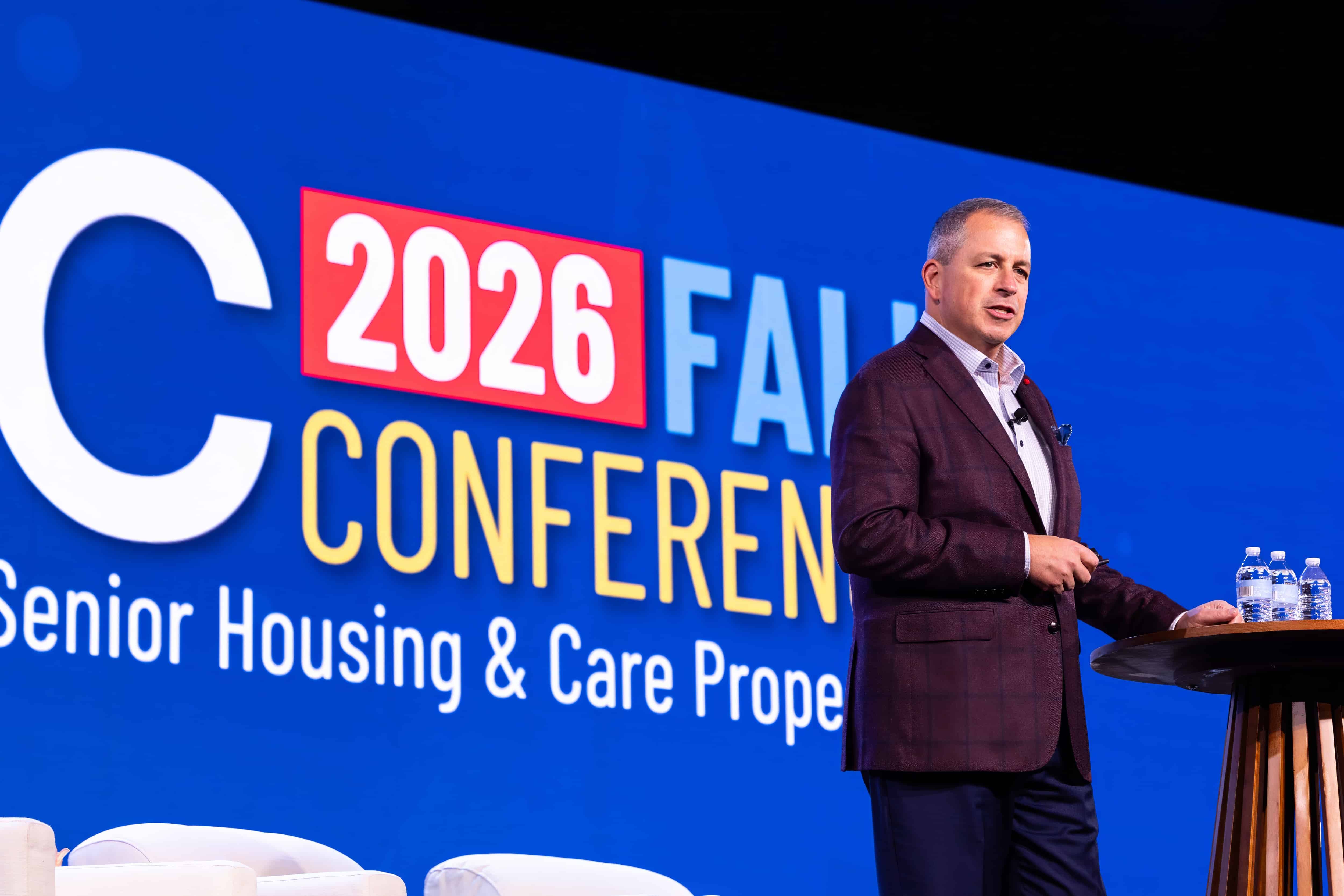
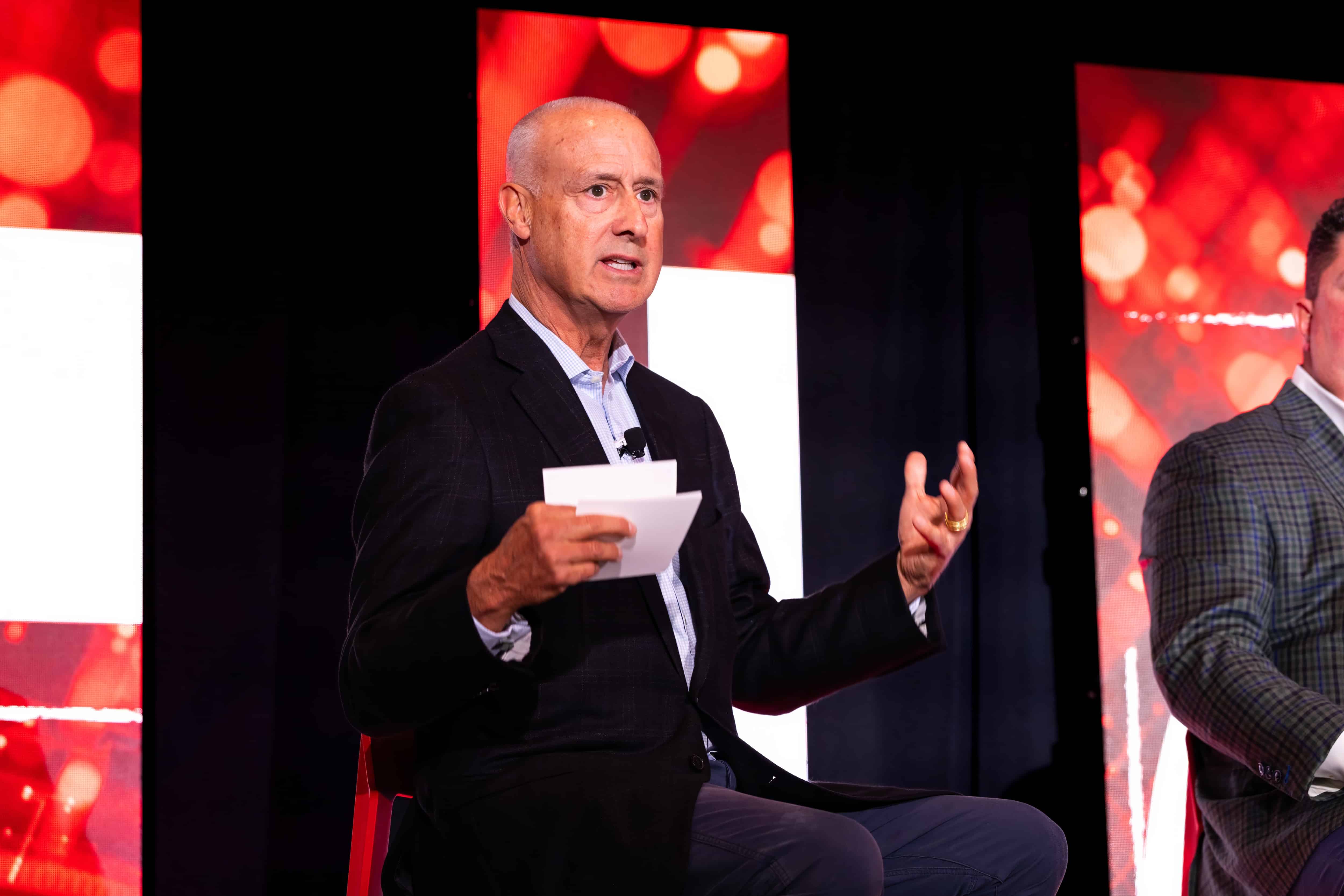
Ken Dychtwald at the 2026 NIC Fall Conference

Ken Dychtwald, PhD, is founder and CEO of Age Wave, a psychologist and gerontologist, and the author of 19 books on aging. He told the room he has worked in the field since 1974 and asked everyone to set aside what they already knew.

Then he asked who would like to live to 100. About half the hands went up. When he added “no matter what,” nearly every hand came down. He asked people to explain why, and the answers came back fast: quality of life, friendship and family, and a vital healthspan rather than just a long life.

He used the Apollo moon mission as a frame. It was off-course 97% of the time, he said, and succeeded through constant correction. “This is the time to be in the industry you’re in,” he told the room, and he expected course corrections to come out of the week’s conversations.

“This is the time to be in the industry you’re in.”

Ken Dychtwald, Founder and CEO, Age Wave

New longevity life stages

Stages of life are invented, not fixed, Dychtwald said. Adolescence only got its name in 1904. He sees three more emerging: “middleescence, late adulthood, and elderhood.” The questions for operators and investors follow directly: “Who is your market? How do you refer to them?”

He told the story of John Glenn, whom he knew, returning to space at 77. When reporters asked whether he was too old, Glenn answered, “just because I’ll be 77 doesn’t mean I don’t still have dreams.” The lesson, Dychtwald said, is that a long life invites a rethink of what to do with it: “maybe it is time to have a new dream.”

Toward a new age of aging

Dychtwald described the silent generation, which has made up most of senior housing’s residents, as inclined to trust authority, follow rules, and stay stoic. Boomers, he said, are more rebellious toward authority and more individualistic. Gen X came of age with more skepticism and more comfort with technology. His advice was blunt: “Get ready for the complaining. Get ready for the demands.”

“There’s a new age of aging coming.”

Ken Dychtwald, Founder and CEO, Age Wave

Matching healthspan to lifespan

Here Dychtwald pressed hardest. He pointed to a gap between how long Americans live and how long they live well, and noted that a third of people over 65 have five or more physicians “who generally don’t talk to each other.” Most medical schools require a pediatrics rotation, he said, but few require one in geriatrics.

He also asked the room to consider an uncomfortable question. If dementia disappeared tomorrow, some businesses in the aging field would no longer be needed. “Is that good or bad? Who are you?” he asked.

Language came up as well. He shared clips of two leaders in aging services and geriatric medicine who favored “longevity” over “aging” as the more aspirational word, and he told of his brother’s band playing at a community called Journey’s End. “Maybe the whole field is going tooing to change some language around,” he said. “Maybe it’ll be longevity housing.”

New choices for how and where to live

Dychtwald raised shared and intergenerational living, care delivered at home, and technology that works like “a health Waze,” guiding people toward what their bodies need. He asked how many in the room would consider a lease of $10,000 to $12,000 a year for a 24-hour robot caregiver. More than half the people he asks, he said, raise their hands.

He reminded operators who is often writing the check. When the founder of Lifeline launched that service, most of the checks came from adult children. “You need to be thinking about how is this being read and how will this create peace of mind for the elder and also for the adult child or grandchild,” Dychtwald said.

And he pointed to purpose. By his numbers, the average American retiree watched 47 hours of television a week last year. “We have not created purpose.” He showed a video of an intergenerational conversation across continents that moved moderator Tana Gall so much she said she “choked up.” He ended with a clip of Ruby McNally celebrating her 100th birthday by skydiving, her third jump.

The challenge: take a stand

As the session wrapped, Dychtwald offered the industry a set of challenges. He said his piece plainly and left the answers to the room:

  1. Create an “elder corps.” He cited 80 million people over 60, only 24% of whom volunteer, and suggested the idea could come out of NIC.
  2. Press artificial intelligence to help solve the dementia problem rather than accept it as inevitable.
  3. Serve a wider market than the one the industry serves today.
  4. Move from desperation to aspiration. Senior living today, he said, is “largely about desperation,” and he named wellness as the opening.
  5. Work out how to turn home equity into a better life. “Somehow figuring out how to translate a person’s home into a better life is going to be figured out by somebody in this room,” he said.

He ended with a reminder that there will not be one answer. When he and Bob Kramer were growing up, there were three flavors of ice cream, he said, and now there are a thousand-plus. “I’m not sure that there is one solution, but I think it’s going to proliferate in terms of creativity, and that’s going to grow out of this meeting.”

The panel responds
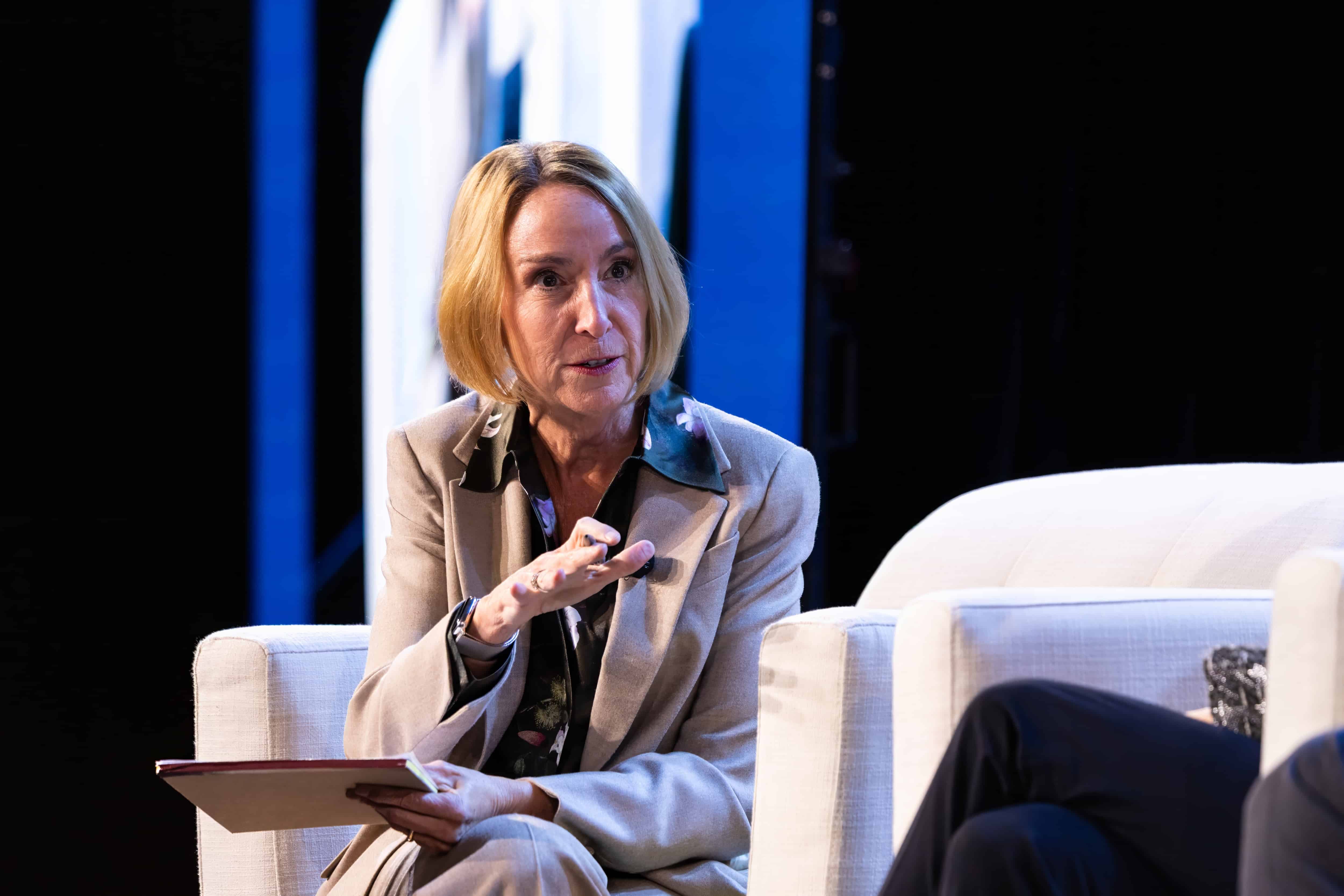
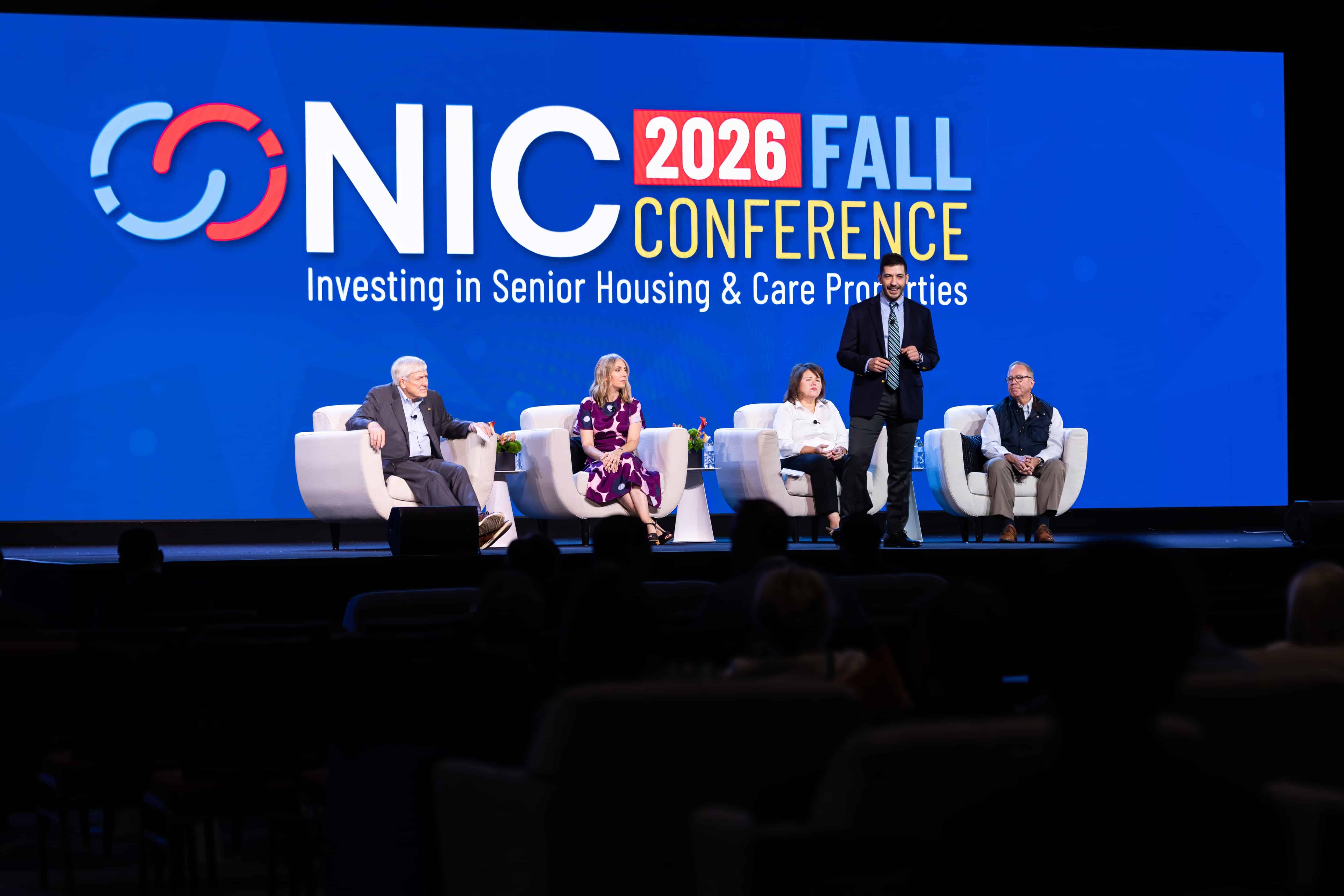
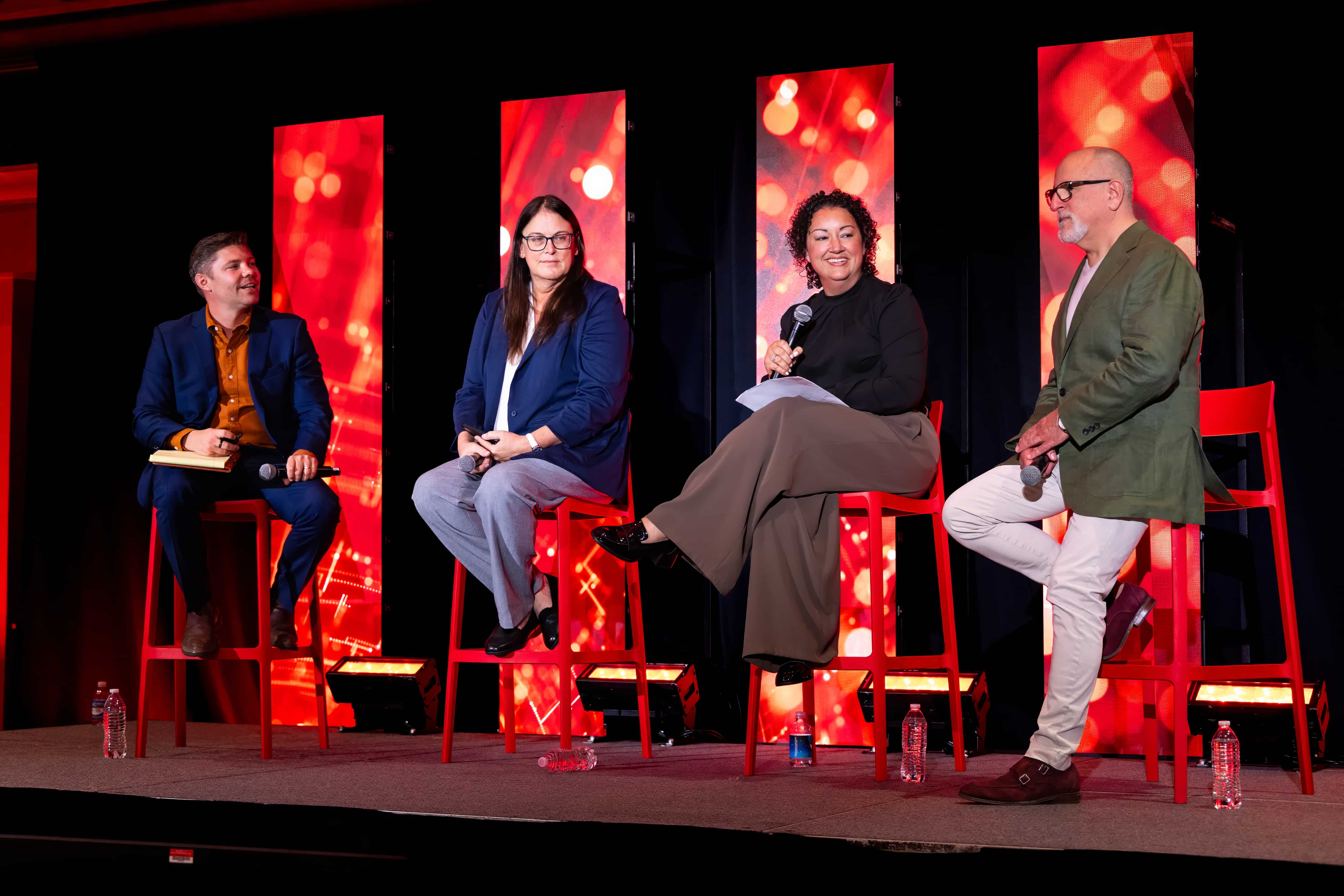
Tana Gall moderating the keynote panel

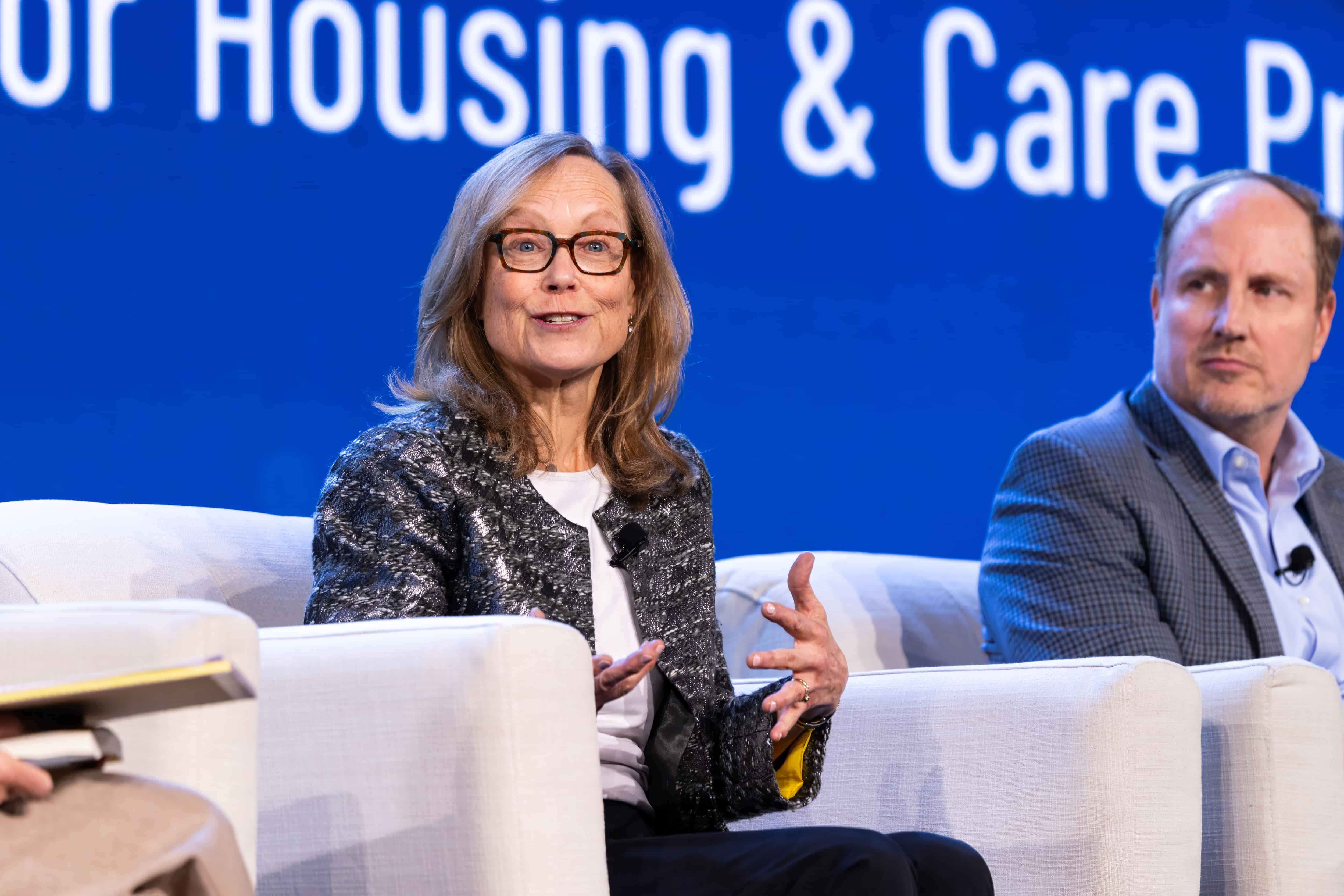
Tana Gall, president of Merrill Gardens, moderated. She said Dychtwald’s talk showed that “longevity has created entirely new life stages,” and asked the panel to say what that means in practice.

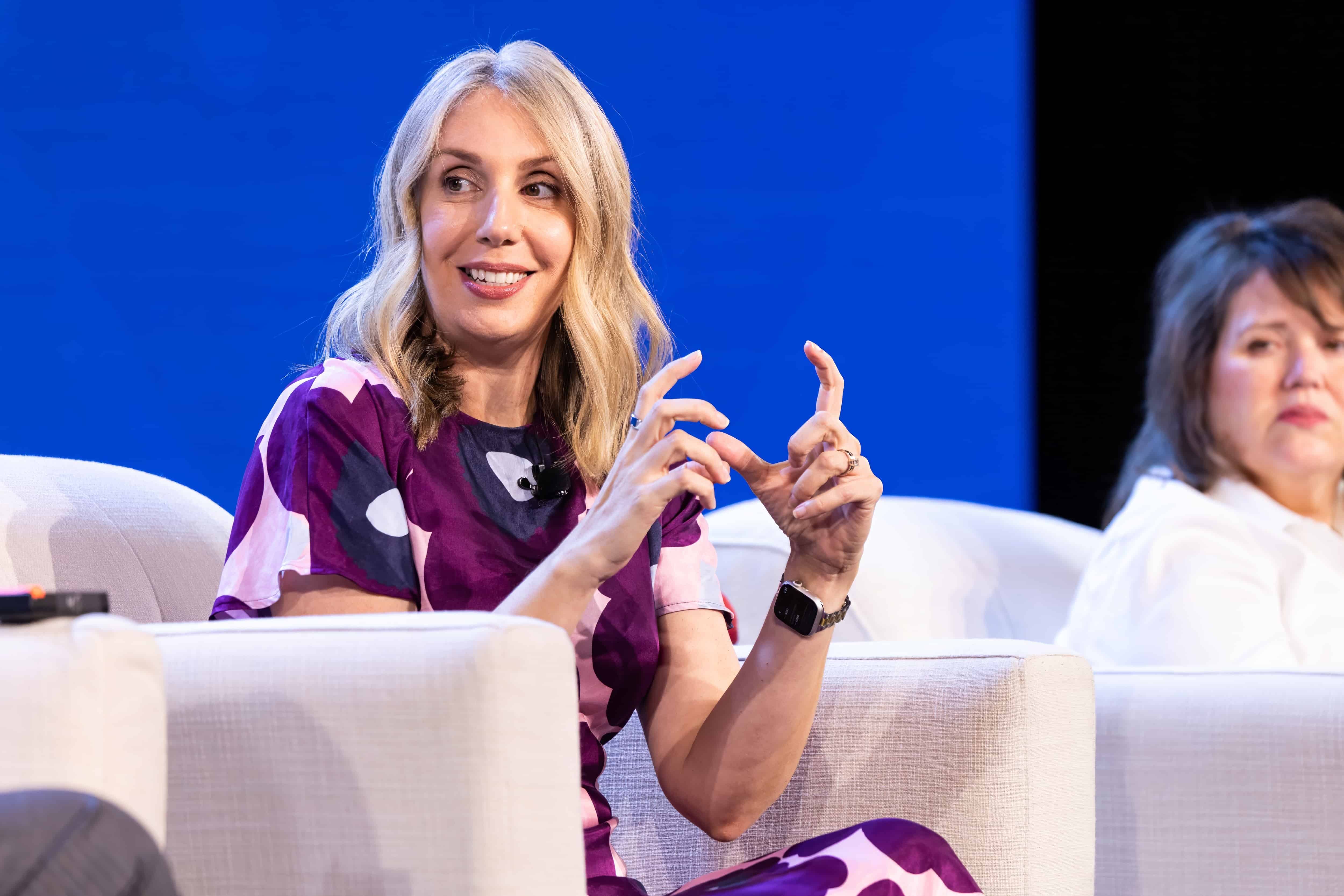
Anne Doyle, CEO of Spark Living and Learning, focused on higher education partnerships. Almost every community has a school or university nearby, she said, and the research, the workforce, and the energy come with it. One community she works with became the first to bring a university’s brain health program into the “wild,” and residents paid for it because demand was high. These partnerships do not require heavy capital. On the business case, she was direct: “it also clearly, in my experience, is good for the bottom line.”

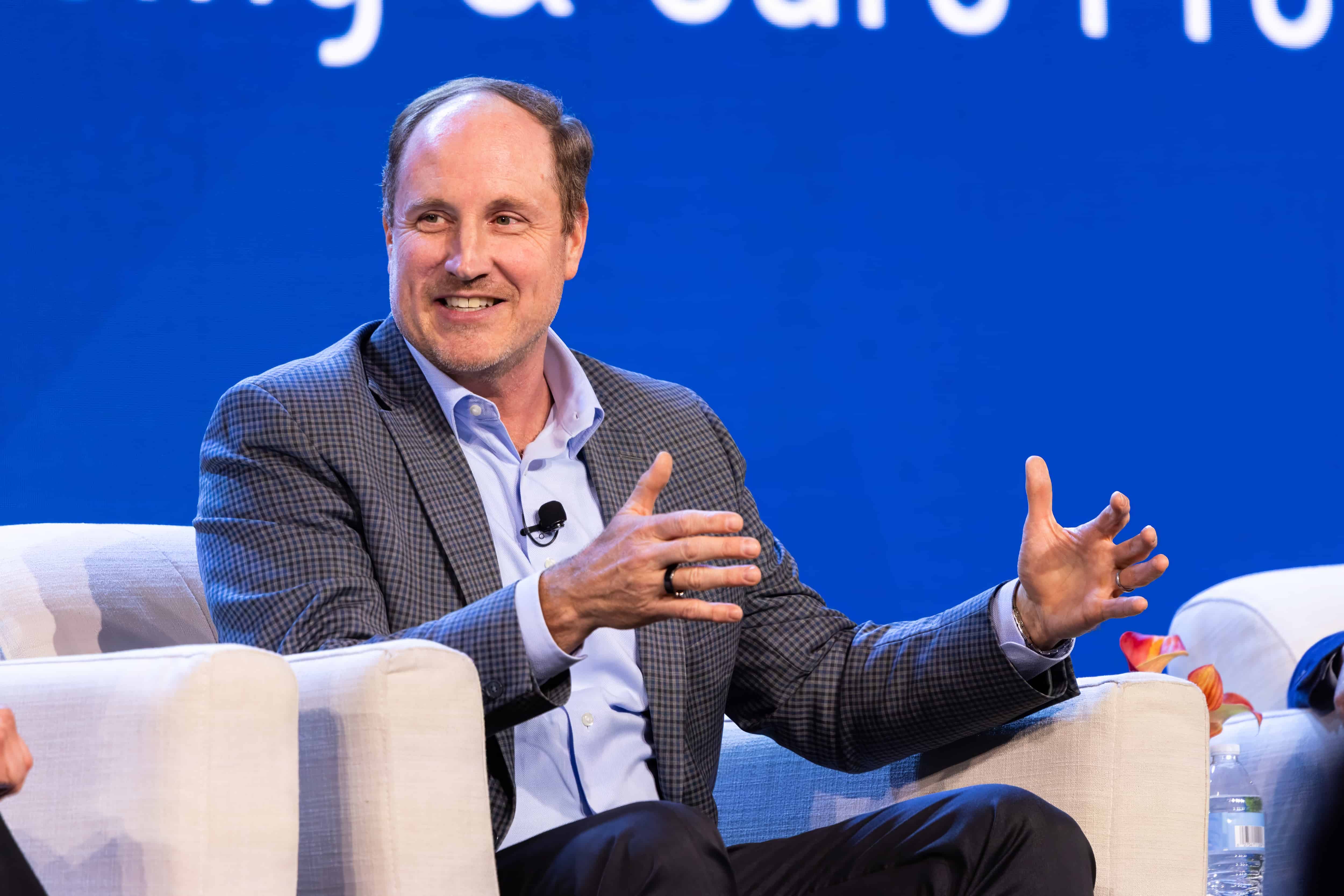
Ryan Frederick, founder and CEO of Here, argued that people should plan for how they age. “We don’t shape place, place shapes us,” he said. He also offered a challenge from his own reading of NIC MAP data: the industry serves a small share of older households, so it may know its residents but not the consumer. “If only 10% of seniors are moving to senior living, do we really know what seniors want?”

Bill Pettit, principal at Black Dog Capital Advisors, spoke to the supply and affordability math. The industry serves roughly 10% to 15% of older adults, he said, and he believes active adult can deliver much of the benefit of full-service senior housing at about half the cost. His view of the industry’s purpose did not waver: “We change lives in our industry.”

Adam Kaplan, CEO and founder of Solera Senior Living, described a move from reactive to proactive care, with passive monitoring in the background and a focus on the intersection of hospitality and longevity. He also made a case for the sector’s structure: “In senior living, it’s private pay. People can move out if they don’t like our product, and I love that.”

Gall closed the session with a challenge of her own. “Longevity may be inevitable, but for this group, what we do with it is really up to us.”
Lodging: Lessons From an Older Cousin

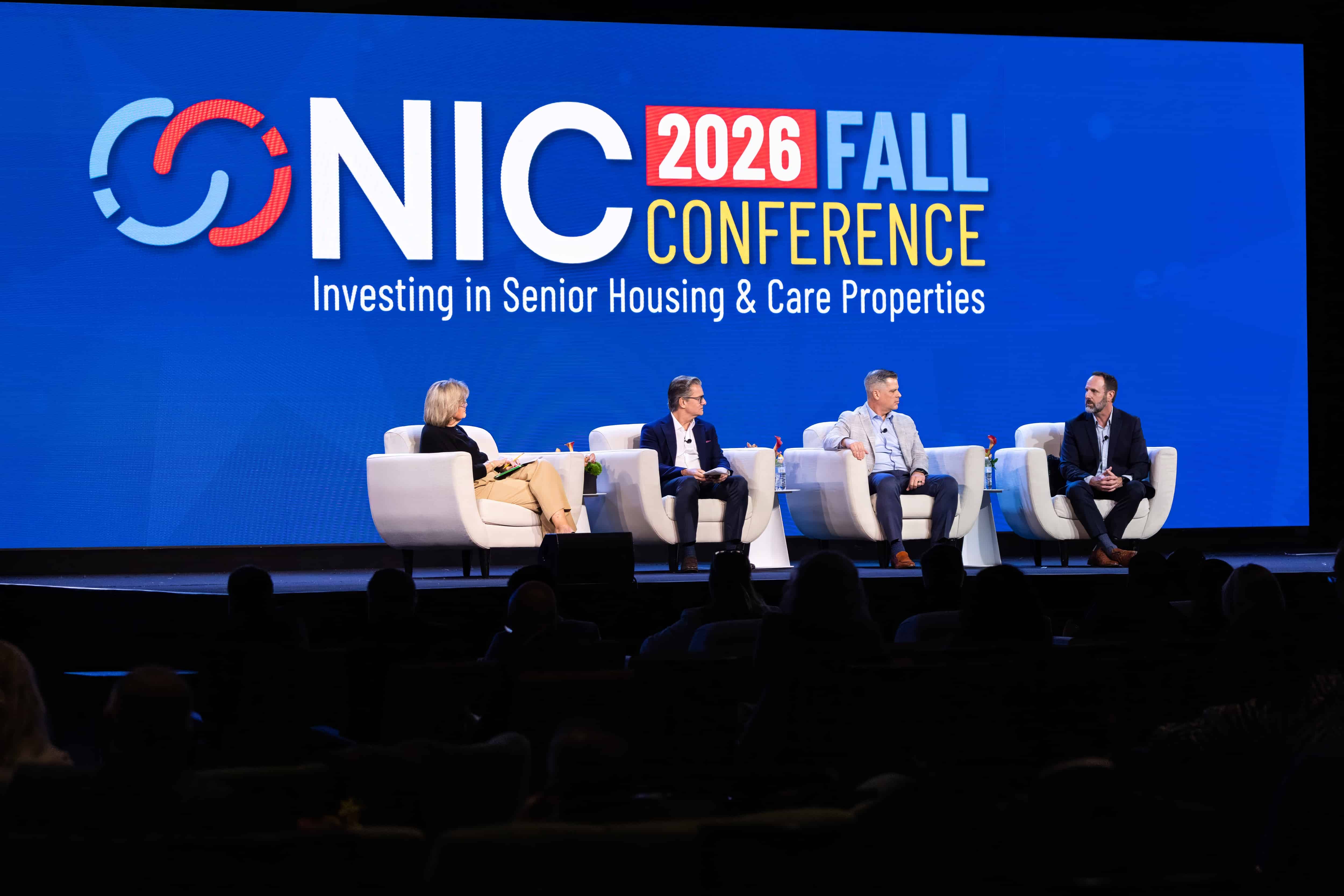
This session built on NIC’s lodging sector report, released earlier this year. Kurt Read of RSF Partners moderated a panel that included John Arabia of Taylor Vance LLC, Jack Callison of Sunrise Senior Living, Richard J. Hutchinson of Discovery Senior Living, and Dave Johnson of Horizon Capital. Hotels and senior housing share crossover investors and operators, and the panel asked what is practical to borrow.

Callison framed brands as a promise: “a brand is a promise, and that promise is things you can count on.” Locally, he said, that promise has to feel personal. Hutchinson agreed that local identity matters. “Each building’s a snowflake in the marketplace,” he said.

Arabia raised a caution from hotels about who owns the customer relationship: “be very careful about allowing intermediaries to fill your properties.” On data, Callison said capital from outside the sector is “incredibly frustrated by the lack of data and transparency,” and added that “data and transparency will unlock capital. It will unlock consumer trust.” Hutchinson described comparing data from company to company as “an absolute nightmare.”

“Scale should make a community better because it’s part of something bigger.”

Jack Callison, Chief Executive Officer, Sunrise Senior Living

Skilled Nursing: Why Quality Comes Before Capital

Skilled nursing investment session

Mark Parkinson of Park Place moderated owners and investors Matthew Gourmand of Omega Healthcare Investors, Dave Sedgwick of CareTrust, and Ben Shibe of Cascade Capital Group. The session continued a conversation that began at the NIC Spring Conference with operators, this time from the investor’s side.

Sedgwick said CareTrust passes on operators that focus only on economics. “We look for folks who have a genuine commitment to their mission,” he said. His formula: a mission-driven organization attracts the best people, becomes the employer of choice, and then becomes the provider of choice. “There are no shortcuts.”

Shibe described quality measures as the scoreboard while adding that staffing is how organizations deliver those outcomes and that adding staff alone does not fix a poorly managed organization.

Sedgwick closed the loop with a story from CareTrust’s operator conference. The company asked operators to submit stories of staff members who went beyond the call of duty. The winner was an administrator who worked with her team to get a resident who is quadriplegic and on a ventilator to his son’s wedding, a three-hour trip up a mountain. CareTrust flew her and her husband to New York City to experience the kind of hospitality she had shown.

Middle Market: Three Models, One Barrier

Middle market senior housing session

NIC senior principal Omar Zahraoui opened the session by reminding the room how the conversation has evolved since NIC’s original Forgotten Middle research in 2019. NIC has since added work with the Harvard Joint Center for Housing and the Milken Institute, launched the Senior Housing Affordability Calculator, and plans to update the Forgotten Middle study in 2027. He also drew two distinctions: the middle market is “not one consumer,” and some middle-market consumers are there by need while others are there by choice.

NIC co-founder Bob Kramer then moderated three operators offering three different models.

Middle market housing panel discussion

Bre Grubbs, chief strategy officer at Leisure Care, described a Northern California community of more than 300 apartments, 40% of them affordable. Affordable residents pay a base rate of $1,900 a month, while market-rate rents range from $3,000 to $9,000. They share the same programs and the same pool parties, and both groups have waiting lists. Laura Lamb, president and CEO of Episcopal Retirement Services in Cincinnati, described patio homes with no entrance fee, where she acts as “the convener of services” by bringing in local partners to provide them. Tod Petty of Mainstay described a vertically integrated platform in the Southeast that keeps costs down by doing construction, design, and operations in house, down to buying carpet from a distributor at 30 cents on the dollar.

The barriers they named were less about math than about mindset. Grubbs: “I think the biggest perceived barrier that maybe we all face is the perceived risk of doing something different.” Lamb pointed to financing that does not recognize new models: “We don’t fit in your box.” And she offered a risk argument for lenders: “What happens if it fails? You recover, you repurpose, you sell it.”

“We’ve got 60% of the market that can’t get in senior housing. And if we can crack that code, we can go there.”

Tod Petty, Chief Investment Officer, Mainstay Financial

Grubbs closed with a call to the room: “This is the single greatest opportunity that exists in providing housing for older adults today. It is also the greatest responsibility that we have at this moment in time.”

See a full recap of the session “It’s Time to Make Middle Market Housing & Care a Reality”.

Radical Hospitality: From Task to Moment

Bob Kramer introduced this session by connecting it to the keynote. After Dychtwald’s talk on the customer, he said of the lessons ahead, “They’re not going to be optional. They’re not going to be an amenity. They’re going to be at the core of who you are as a provider to Boomers, to Gen X, and to Millennials.”

Moderator Debbie Brown, owner and principal of dbconsulting, led a panel with Dirk Burkharts, president at Aegis Living; Jason Childers, chief operating officer at Merrill Gardens; and John Hetzel, vice president of culinary at Atria Senior Living.

Burkharts offered a definition: “Service is black and white. Hospitality is color.” Childers described the difference between service and hospitality as completing a task versus “personalizing and creating a moment,” and said communities are now competing with every experience their next generation of residents has had at resorts, restaurants, and spas.

Hetzel said Atria’s highest-performing communities on customer satisfaction are also its highest performing financially, with strong rate growth, margin, and occupancy, and a large share of move-ins from referrals. Burkharts shared a small example of the point: a care team member grabbed three balloons for a resident who loves them. “That didn’t cost a penny,” he said.

“We’re hiring people for their heart, and we can teach them the skills.”

Jason Childers, Chief Operating Officer at Merrill Gardens

The Economy: Resilient, With a Long View

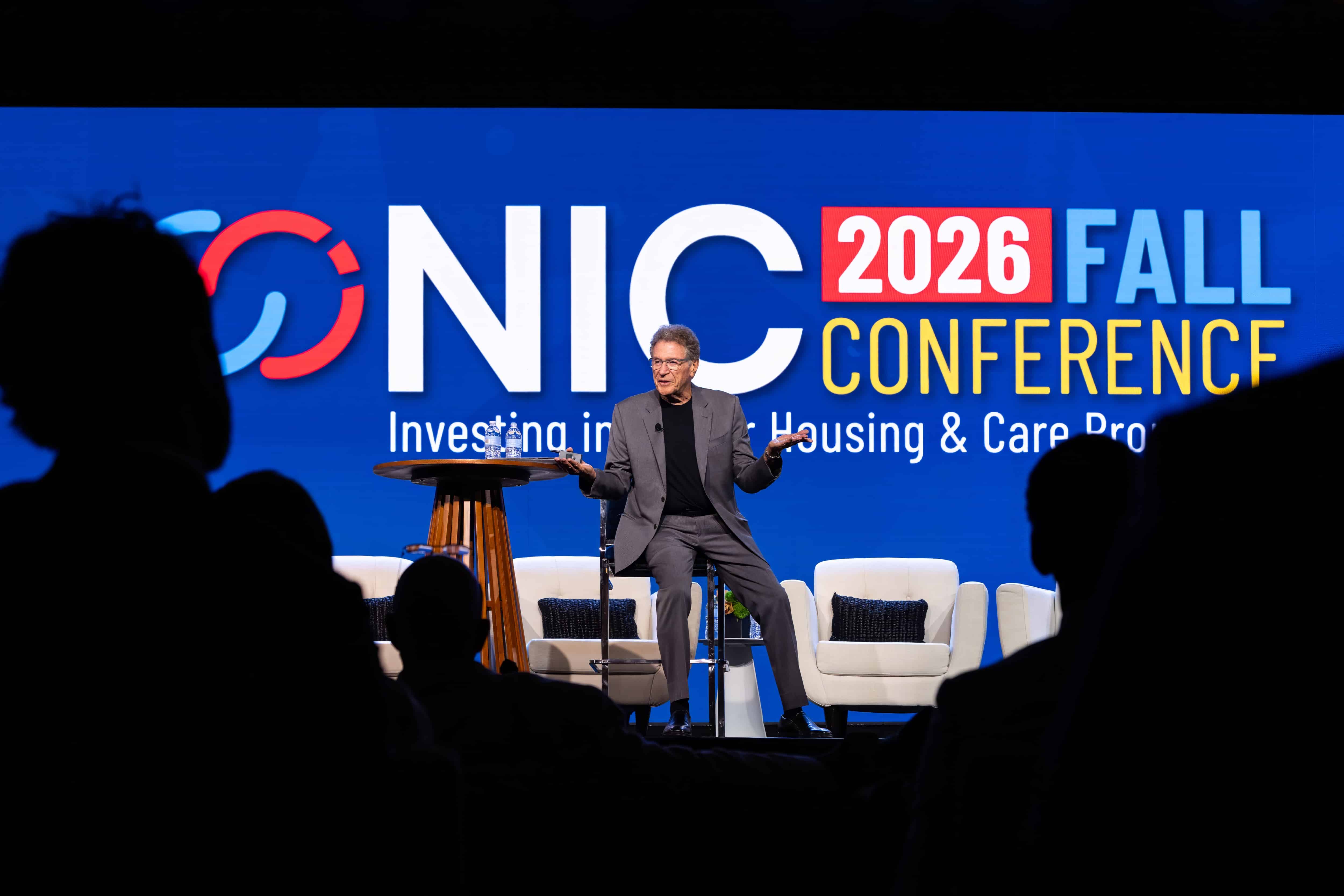
Eric Winograd discusses the economic outlook

Eric Winograd, director of developed market economic research and chief U.S. economist at AllianceBernstein, provided an economic outlook, then joined Lisa McCracken, NIC’s head of research and analytics, for a conversation about what it means for senior housing and care.

He called artificial intelligence a major force in the economy and drew a line that stayed with the room: “AI rewards the owners of capital, punishes the owners of labor.” On demographics, he did not hedge: “Demographics are destiny.”

His advice to a room of investors and operators was to tune out the noise. “You should never watch financial media,” he said. “Think medium term. That’s your job.”

“Ten years from now, we’re not going to remember if the Fed raised rates in October or in December. We’re going to remember if the economy managed to stay on its footing.”

Eric Winograd, Chief U.S. Economist, AllianceBernstein

Development: The Case for Building Again

“From Standstill to Strategy: Reigniting Senior Housing Development” asked what it will take to get new communities built. Moderated by Aaron Becker, senior managing director and head of Seniors Housing & Healthcare Production at Lument, the session featured panelists Samantha Eckhout, managing director of investments at REDICO; Steve Marker, senior vice president of development at Brightview Senior Living; Molly Odgers, vice president of the Senior Housing Group at BOK Financial; and Jennifer Wong, director of acquisitions at AEW Capital Management.

The discussion explored the factors continuing to constrain development, including elevated construction costs, interest rates, and pressure on project economics. Marker said development is not keeping pace: “We track all of the development that’s coming through and I don’t see any chance that we’re keeping up with demand for senior housing.” Odgers described where financing stands: “Much of what’s getting done right now is sponsor driven. Lenders are more willing to stretch for the right sponsor.”

Panelists also looked at what gets built. Wong said conversions are “always compelling on paper,” but “you just can’t retrofit in a way that works for today’s consumer.” Eckhout pointed to the resident experience: “As an industry we don’t spend enough time talking about the resident experience. I am thinking a lot about how organic experiences happen within a community.”

Capital Markets and Valuations: Operator, Location, Operator

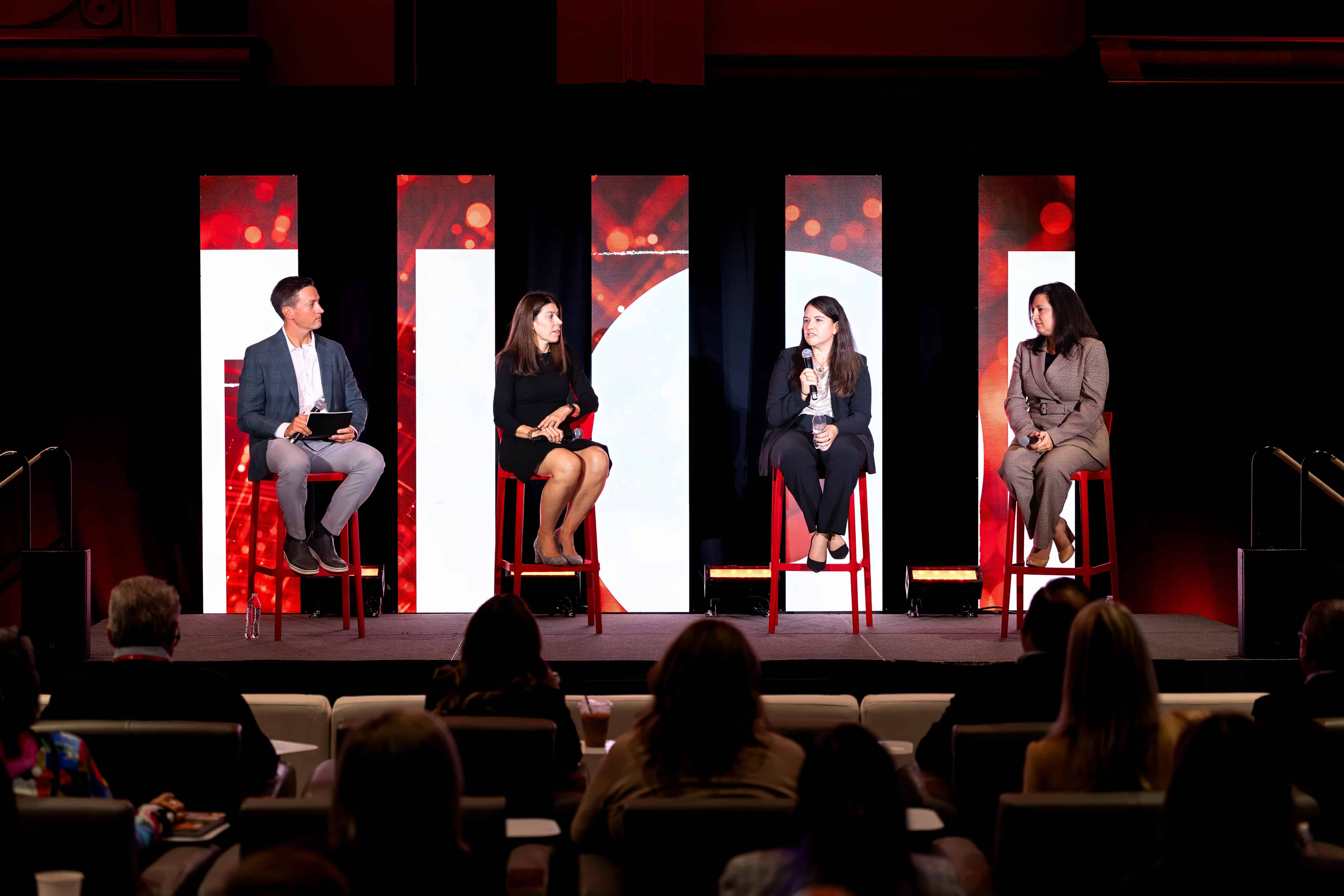
The closing capital markets session is a staple of the NIC Fall Conference, with this year’s session focused on record transaction volume and intense competition. Aron Will, vice chairman at CBRE, moderated Ayesha Menon of Bain Capital, John Pawlowski of Green Street, and Gabe Willhite of American Healthcare REIT.

Will framed valuation around two forces: “There’s really two arbiters of value – underlying debt cost and liquidity.”

Willhite cautioned against reading cap rates as a shortcut. “It’s not just a cap rate game, right? It’s what are you capping,” he said. He added that buyers often assume a higher cap rate guarantees a higher yield: If cap rates are higher on a deal, there’s a reason. Not to say they are bad deals, just that they are higher risk.”

“In real estate, it’s location, location, location. And in senior housing, it’s arguably operator, location, operator.”

Aron Will, Vice Chairman, CBRE

One Question, Many Answers

The sessions covered different ground but the same question ran throughout: what will it take to change with the customer? NIC’s role is to put the data and the people in the same room and let the conversation do its work.

2027 NIC Spring Conference Dallas promotional graphic

The 2027 NIC Spring Conference takes place in Dallas, March 15 to 17. Join the waitlist. For more from the Fall Conference, read the full recap at “Changing with the Customer: Takeaways from the Record-Setting 2026 NIC Fall Conference” and the closer look at the Innovation Labs at “In the Innovation Labs: Where Operators and Investors Got Specific”.

#NICFall26

In the Innovation Labs: Where Operators and Investors Got Specific

Five breakout sessions at the 2026 NIC Fall Conference turned big questions into practical ones: what to renovate, which active adult lane to pick, how to build for healthspan, how to partner with a REIT, and what AI tells your prospects.

The main stage at the 2026 NIC Fall Conference set the questions. The Innovation Lab sessions gave practitioners insights to work through the how. On Thursday, October 22, five targeted sessions put operators, investors, developers, and researchers in the same room to compare notes on what is working, what is not, and what they would do differently.

Several of the labs echoed the opening keynote from Ken Dychtwald, who asked the industry to plan for a customer who is changing. The labs showed what that planning looks like on the ground.

Old Bones, New Returns: Repositioning Dated Communities

Innovation Lab session on repositioning older communities

Roughly half of senior housing communities in the United States are more than 25 years old. As new development stays muted, the panel asked how and when to reinvest. Joe Daniels, Vice President of Business Development at Direct Supply, moderated the session with panelists Danielle Breton, co-CEO of LCB Senior Living; Sheryl Marcet, chief investment officer at Arcus Healthcare Partners; and Diana Watts, senior vice president of asset management at Benchmark Senior Living.

Their first message was that the building is only part of the story. One panelist said the operator and the market decide more than the finishes do. In a market full of new construction, she cautioned against trying to out-build it. In a market of older buildings, play defense: match the finishes and add amenities. Either way, price matters: “If you’re overpaying, your plan’s never gonna work.”

Watts described Benchmark’s approach as common spaces first. The first impression a prospect gets is the lobby, the dining room, and the gathering spaces, and she wants them to show residents out of their rooms and in public spaces. Benchmark also runs a program that renovates individual units on demand, with a named owner and a clear process. The results can be surprising. One community’s operations team told her, “We found a new tax bracket within this zip code.”

The panelists disagreed on execution. Watts buys materials in bulk and renovates units as they turn. Breton prefers larger, planned batches and dislikes piecemeal work: “The new floor makes everything else look bad.”

Alignment kept returning as the deciding factor, between investors and operators and inside each organization. Marcet described where it breaks down: “I think the alignment fails when you have a capital partner that says, ‘What’s the least amount we can do for the best return?’ And everything is off from day one.”

“It really becomes sort of a fabric of the community. And then you see it in the numbers.”

Sheryl Marcet, Chief Investment Officer, Arcus Healthcare Partners

Choose Your Lane: Business Models Winning in Active Adult

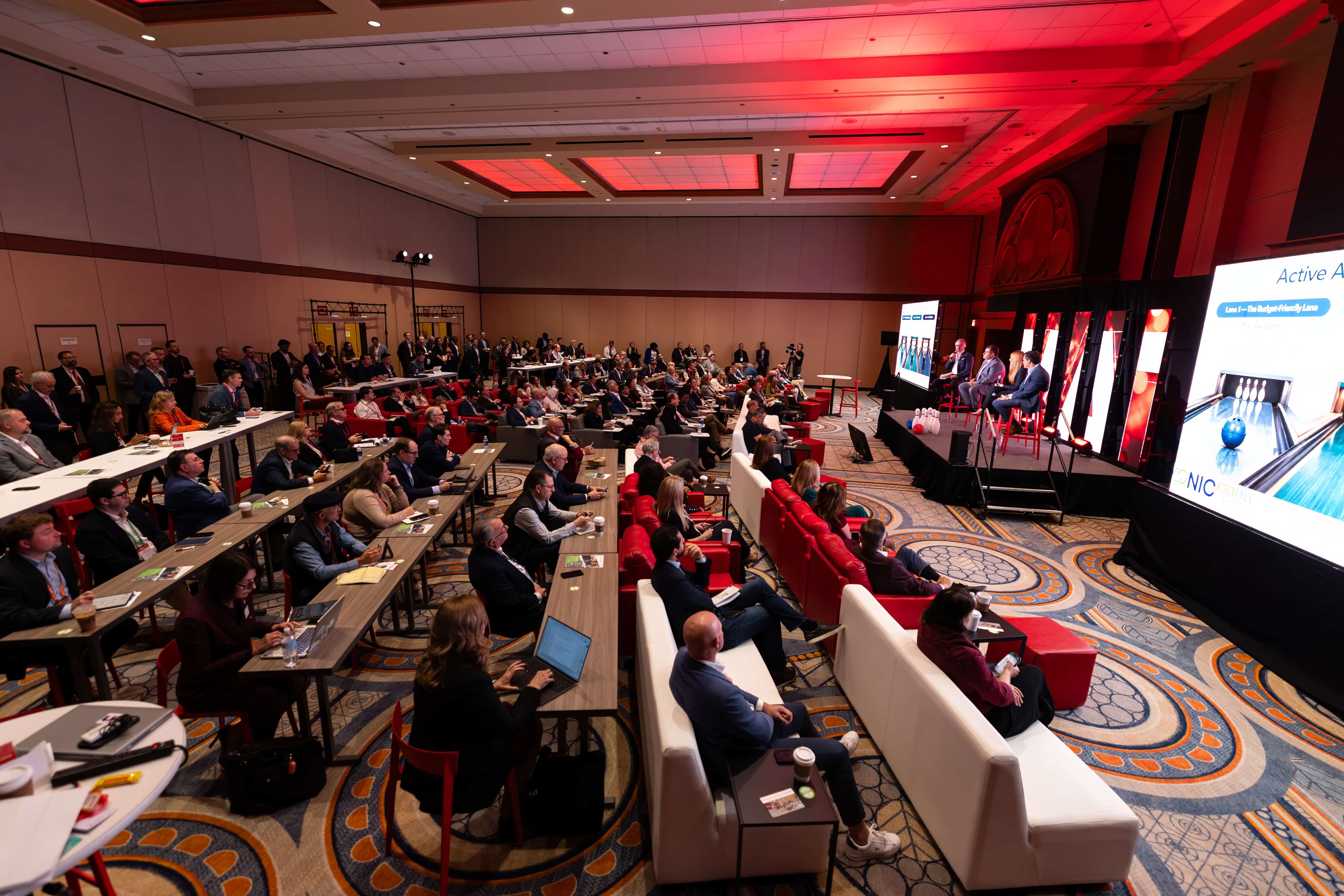
Active adult business models Innovation Lab discussion

Session moderator Brett Robinson, president of Sparrow Living, framed the active adult panel with a bowling theme: a budget-friendly lane, a “sweet spot” lane, and a “full house” lane. He was joined by Mike DiGiacomo, chief operating officer of United Group; Allison Joseph Pendleton, chief operating officer of One Clover; and Michael Levine, senior managing director at Greystar.

Robinson put the active adult opportunity in numbers, “Our penetration rate is less than one percent, whereas in traditional senior living it’s more like ten or eleven percent,” he said. He also questioned a line he has used for years, that active adult is want-based rather than need-based, and described why he is rethinking it.

The panelists showed how different the lanes can be. On the budget end, Pendleton described communities where programming is resident-led and the activities director receives about $750 off monthly rent to lead it. Quiet neighbors, she said, are “the number one thing” residents want. Levine described what residents told Greystar when asked why they moved in: “Every single person said it was the person that they met with, it was the lifestyle they saw.”

The most consistent theme was people. A panelist noted that in active adult, a single community manager “might be 40 to 50% impact on that community,” far more than one person would be in a larger operation. Another said, “The best manager I ever hired was a school teacher.”

“I’ve heard myself 100 times say our product is not need-based, it’s want-based.”

Brett Robinson, President, Sparrow Living

The Longevity Revolution: Turning Healthspan into a Growth Strategy

Longevity and healthspan Innovation Lab session

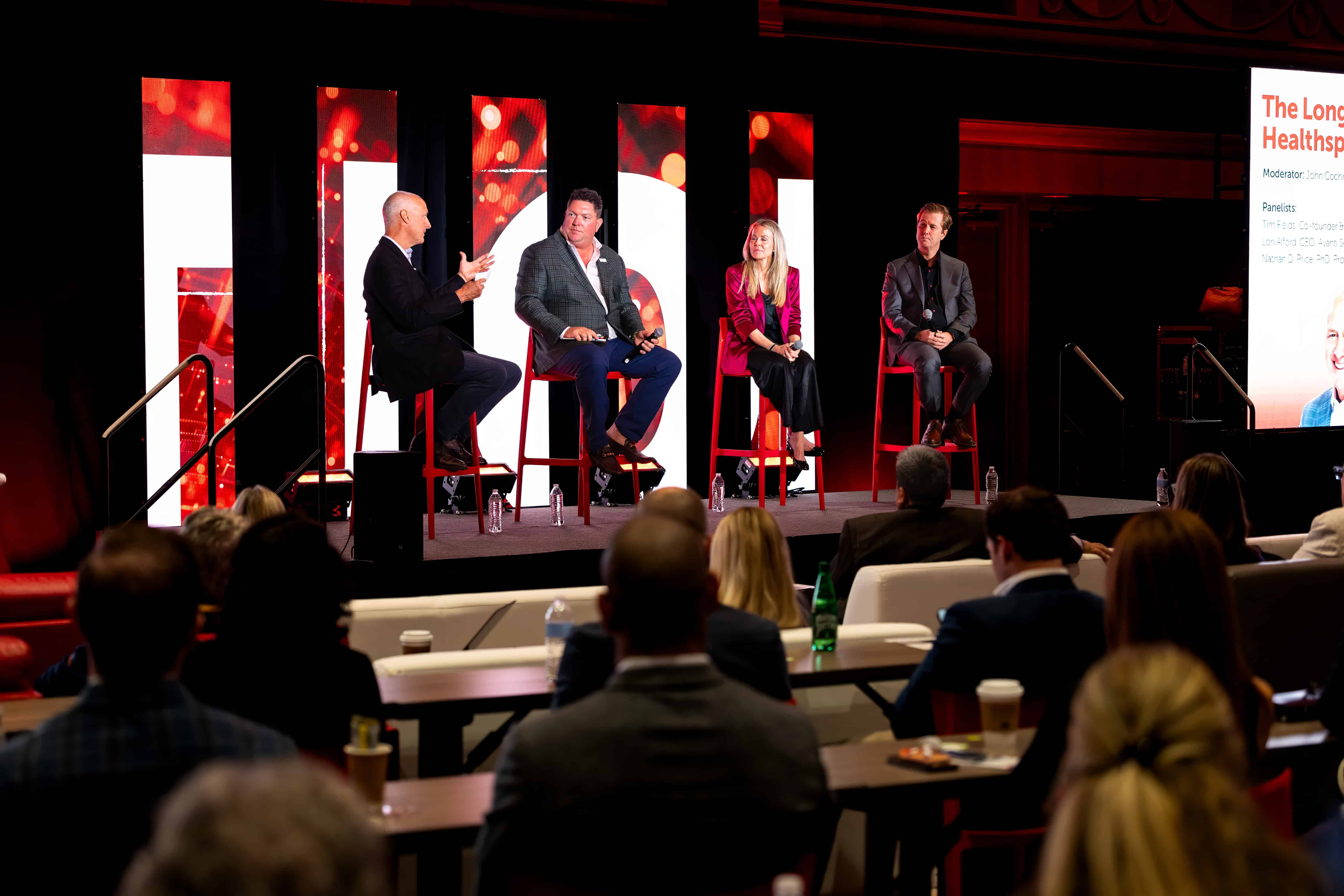
Moderator John Cochrane, president and CEO of HumanGood, tied the session directly to the keynote. “If you were lucky enough to sit in on Ken Dychtwald’s session yesterday,” he said, “you heard about the age wave that is already transforming the field.” Cochrane said he prefers the word healthspan to longevity, and that healthspan “represents the most significant opportunity we have seen in this field.”

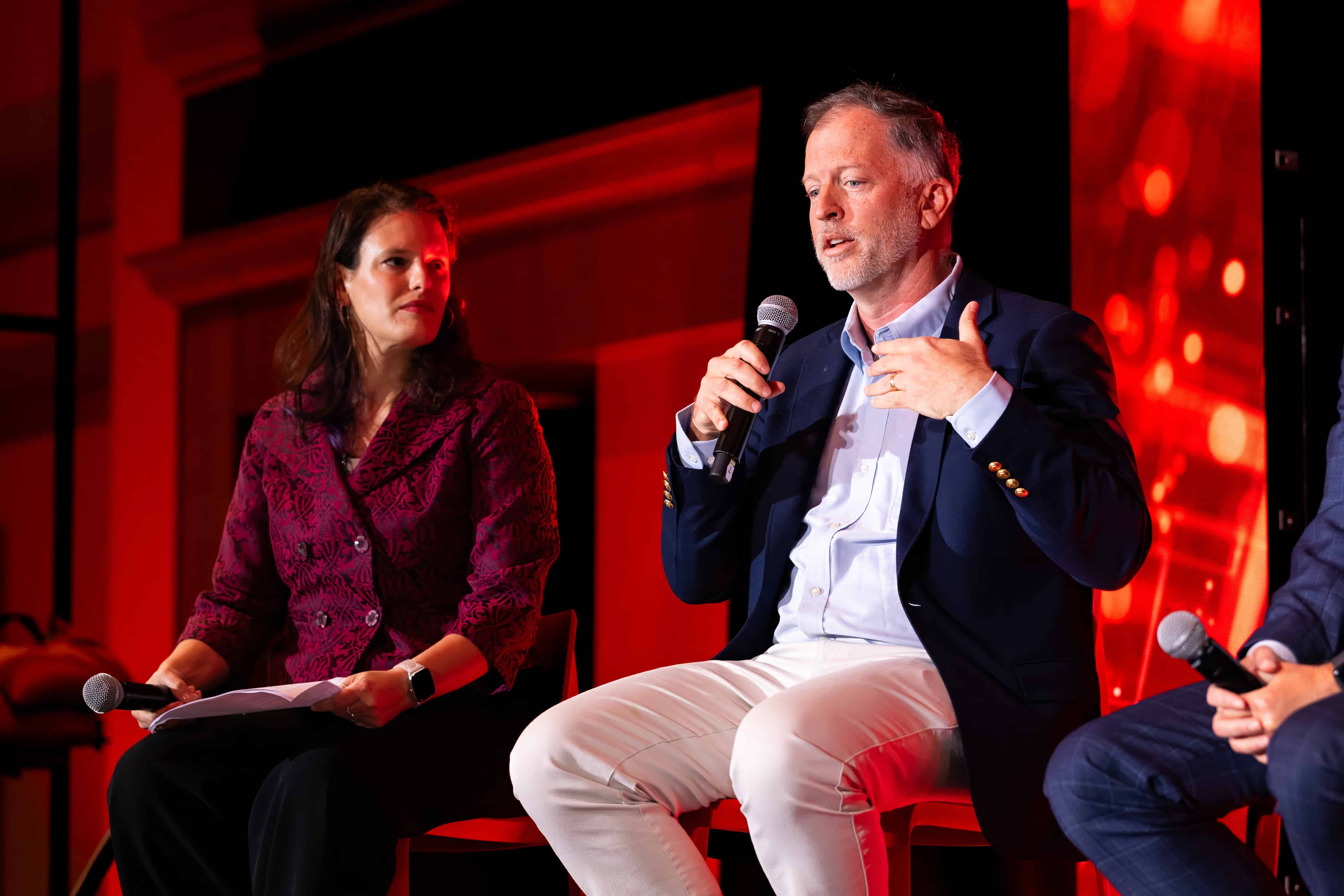
Nathan Price, PhD, professor and co-director of the Center for Human Healthspan at the Buck Institute, brought the science. He cautioned against anything sold as a cure-all: “There is no such pill.” He also explained why healthspan is hard to measure. “You actually only know your own healthspan after it’s over,” he said, which is why he focuses on how much of your available health you are using now. And he pointed to where senior housing can contribute: the last mile, turning knowledge into daily habits.

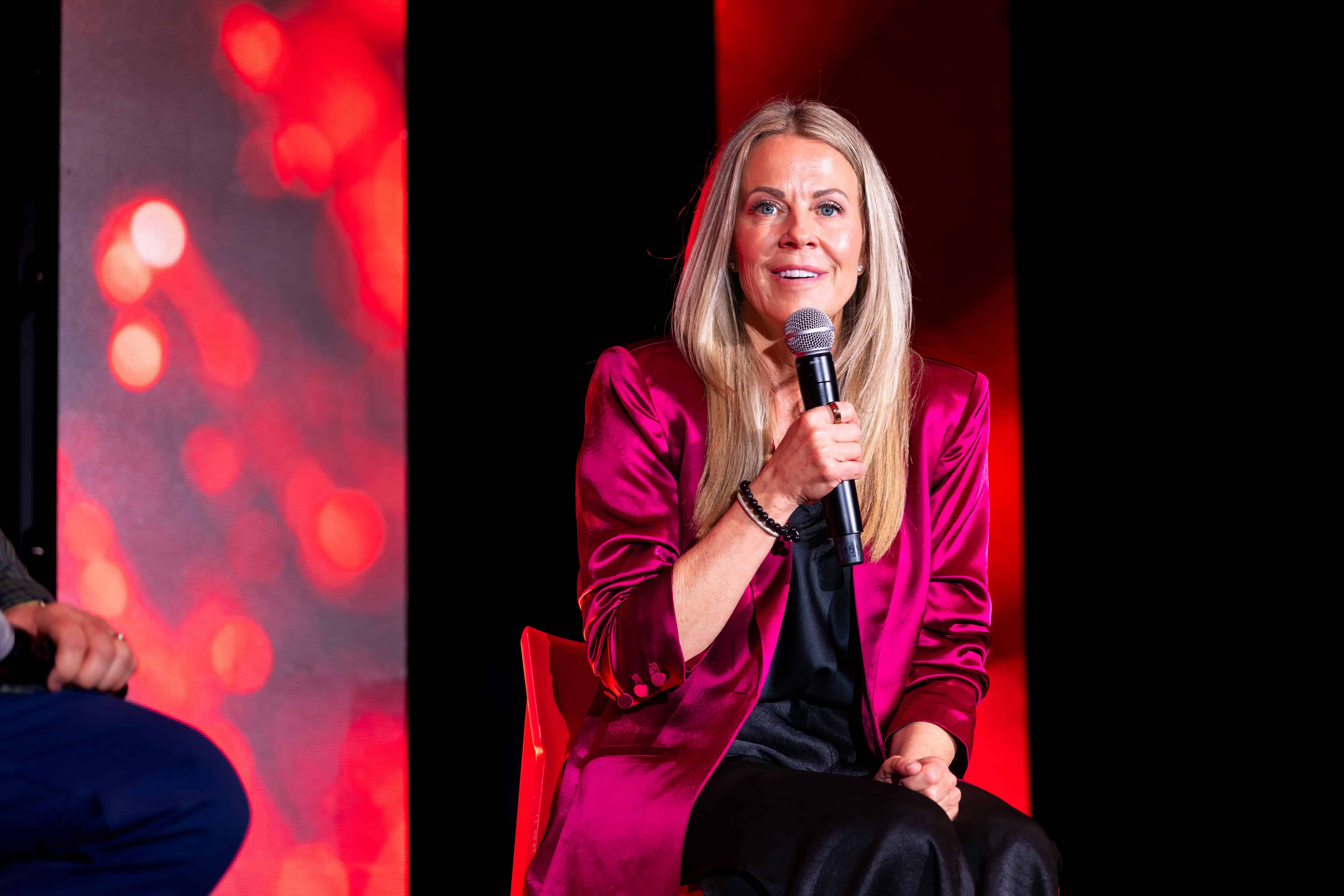
Lori Alford, CEO of Avanti Senior Living, shared what her communities have learned from putting movement and brain health at the center of programming. When asked what activities residents attend most, she was direct: “Arts and crafts is not top of the list. Spirituality events, they’re not the top of the list. And guess what? Bingo certainly isn’t top of the list.” She told the story of a resident in a wheelchair who wished he could walk his granddaughter down the aisle. A care partner overheard, the executive director talked to the family, and a year of one-on-one work later, a video shows him standing and walking to his granddaughter at the end of the aisle in an empty church.

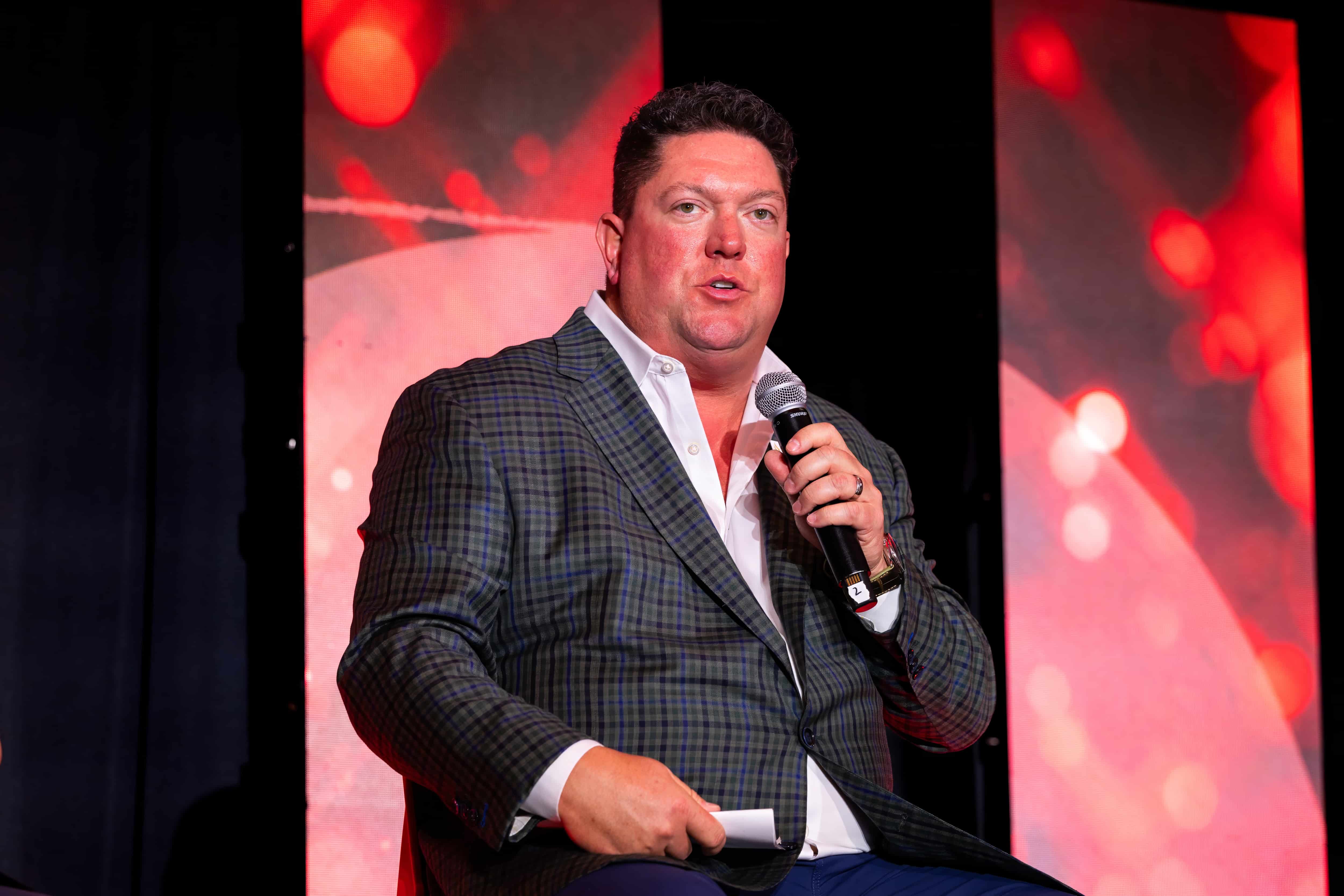
Tim Fields, co-founder and CEO of Ignite Medical Resorts, brought the skilled nursing view. “Nobody chooses to admit to a skilled nursing facility,” he said. “They go because they have to.” His team builds hospitality into short stays, down to a “fond farewell” at discharge, with a medal that says, “I got my spark back.”

Cochrane also raised a challenge that echoed the keynote: the industry may be protecting older adults from risk to the point of overprotecting them.

“We’ve de-risked aging to the point where we’ve actually infantilized people.”

John Cochrane, President and CEO, HumanGood

How to SHOP: New Opportunities for Operator Growth

SHOP partnerships Innovation Lab session

Nicole Funari, senior principal for capital strategies at NIC, moderated a candid session on REIT-led Senior Housing Operating Portfolio, or SHOP, models. Panelists were Edward Burnett of Ciel Senior Living, Dan Lahey of LCS, Jeff Miller of Janus Living, and Melanie Mooney of NHI.

Miller explained why many REITs moved toward SHOP, describing the older triple-net lease approach as “the worst of both worlds” for the real estate owner, who carried the downside without sharing in the upside. Operators should bring their own questions to the table. Burnett suggested asking a prospective partner how it behaves in a down quarter and how reliably it funds capital projects.

What does an operator need to be ready for a successful REIT partnership? Lahey said strong community performance is “table stakes,” and that the management of the community matters as much: “You need excellence at the back office level.” Mooney described the compliance side, including internal controls and security, and encouraged operators whose systems are not ready to start now and build a clear path to enable a SHOP relationship.

On incentives, Mooney said the management agreement is “sort of like a prenup,” the place to settle investment thesis and communication expectations before problems arrive. Miller offered a dose of humor about capital budgets: “I have not yet met the operator who thought the CapEx budget was too high.” And he described the built-in tension between the two sides.

Burnett’s advice was simple: “I think it begins and ends with transparency.” Mooney’s parting advice, in keeping with the marriage metaphor the panel kept returning to, was shorter: “Don’t go to bed angry.”

“The REITs would prefer it if they could run the buildings. The operators would prefer it if the REITs never talk to them ever.”

Jeff Miller, Chief Operating Officer, Janus Living

AI Is Already Talking to Your Prospects

Artificial intelligence and prospect research Innovation Lab session

Andrew Smith, senior vice president of healthspan and innovation at HumanGood, moderated a panel with Renee Kimberly of Senior Lifestyle, Kristen Paris of ProMatura, and Patrick Schuerer of Franciscan Ministries. The question was not whether to use AI, it was what prospects and families are already learning from it before they call.

Paris brought consumer research that ProMatura conducted for the American Seniors Housing Association (ASHA). Among respondents who had used AI to search for senior living, 46% had never visited a specific community’s website. Her takeaway for communities: make information easy to verify, and make it easy for someone to call and ask, “Is this right? Does this apply to me?”

The panel then searched for one community across four AI tools. Each returned different information in a different format, drawn from sources the community may not control. Schuerer explained that the goal is no longer just a high search ranking but authority in the content AI tools pull from. Panelists suggested having someone else search your communities, because AI tools tailor results to the person asking.

The most surprising part of the session was emotional. Kimberly, who leads sales strategy at Senior Lifestyle, shared how an AI tool responded to a simulated call from someone whose spouse had been diagnosed with Alzheimer’s disease. It acknowledged the person’s situation and did not rush them toward a decision. Her read: “it’s doing a really good job right now of synthesizing empathy.” She said the exercise reminded her why human connection matters.

“Now you’re not just looking to be ranked, you’re looking to be cited.”

Patrick Schuerer, Vice President of Communications and Brand Strategy, Franciscan Ministries

What the Innovation Lab Sessions Had in Common

2026 NIC Fall Conference Innovation Labs

The topics ranged from renovation budgets to REIT agreements to AI prompts, but the same themes kept appearing. Alignment between partners decides whether an investment works. People, from community managers to caregivers to sales teams, matter more than amenities. And the customer is not waiting for the industry to catch up.

2027 NIC Spring Conference Dallas promotional graphic

Those themes will carry into the 2027 NIC Spring Conference in Dallas, March 15 to 17, where a new operator showcase will give five operators one hour to pitch their growth strategies to capital providers. Join the waitlist. For more from the NIC Fall Conference, read the full recap at “Changing with the Customer: Takeaways from the Record-Setting 2026 NIC Fall Conference” and the closer look at the main stage sessions at “From Longevity to Cap Rates: What the Main Stage Conversations Revealed”.

#NICFall26

Changing with the Customer: Takeaways from the Record-Setting 2026 NIC Fall Conference 

A record crowd in Chicago spent three days on one question: how does senior housing and care keep pace with the older adult customer as that customer changes?

Opening main stage at the 2026 NIC Fall Conference

On the first afternoon of the 2026 NIC Fall Conference, NIC Board Chair Ken Segarnick gave the room a question to hold onto: “If the customer is changing this much, what will it take for us to change with them?”

For three days in Chicago, October 21 to 23, the senior housing and care community kept working on it. Capital providers asked it about valuations. Operators asked it about hospitality, repositioning, and the workforce. Researchers, economists, and technologists asked it about what older adults will want from the decades they are gaining. The answers did not always agree, and that was useful.

A Record Year for NIC’s 35th Anniversary

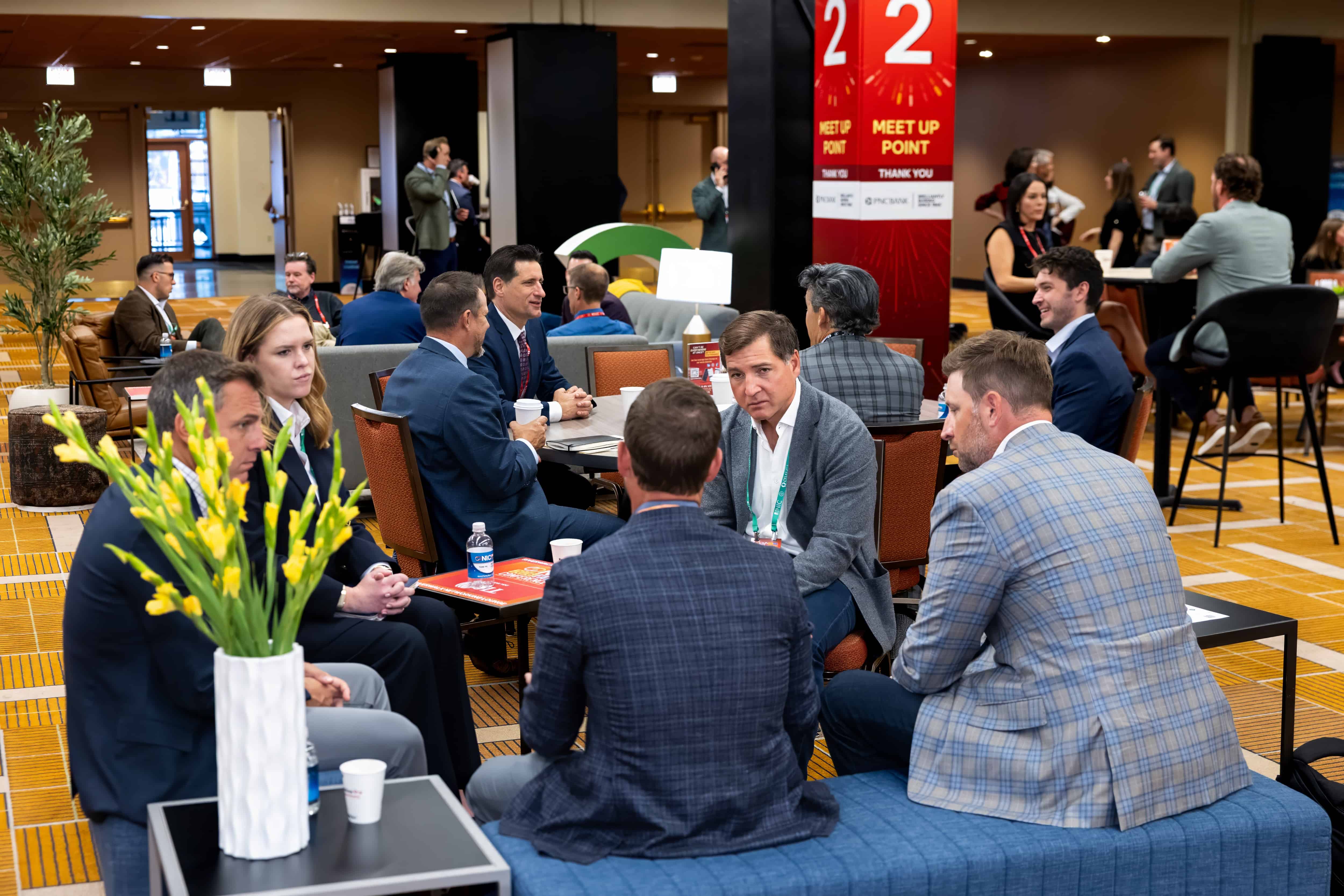
Attendees at the 2026 NIC Fall Conference in Chicago

The conversations drew the largest audience in NIC’s history, with 3,704 people in the room during NIC’s 35th anniversary year. The conference welcomed 698 first-time attendees, representing nearly one in five registrants, and brought together professionals from more than 1,400 companies. Operators and capital providers made up 69.71% of registrants, reflecting the strong representation of key industry stakeholders.

The number matters less than who it represents. People who allocate capital, operate communities, and build and supply them chose to spend three days talking with one another, in person, about where senior housing and care goes next.

The Session That Framed the Week

Ken Dychtwald at the 2026 NIC Fall Conference

The opening Premier Session, “Aging Reimagined: What Comes Next for Senior Housing and Care,” asked the industry to start with the changing customer. Keynote speaker Ken Dychtwald, PhD, founder and CEO of Age Wave, has studied aging since 1974. He opened with a show of hands: who in the room would like to live to 100? About half raised a hand. When he added “no matter what,” almost every hand came down.

The reasons people called out told the story: quality of life, friendship and family, and the desire for a vital health span, not just more years. Dychtwald built his talk on that distinction. The customer is changing, he argued, in ways that will test long-held assumptions about who senior housing serves and what they want from it.

He described a silent generation that has made up most senior housing residents, inclined to trust authority and follow rules, and a boomer generation that is more rebellious and individualistic. His advice to operators: “Get ready for the complaining. Get ready for the demands.” The vocabulary may need to change too. “Boomers don’t ever want to be a senior,” he said, and he floated a different frame: “Maybe it’ll be longevity housing.”

“There’s a new age of aging coming.”

Ken Dychtwald, Founder and CEO, Age Wave

Dychtwald pushed on harder questions as well: why Americans’ healthspans trail their lifespans, why a third of people over 65 see five or more physicians who rarely coordinate, and what an industry built around late-life struggle could look like if it instead were built around aspiration. He closed by asking the industry to take a stand on the questions that will define the next era, from purpose in later life to brain health to a wider market than senior housing serves today.

Panel discussion led by Tana Gall

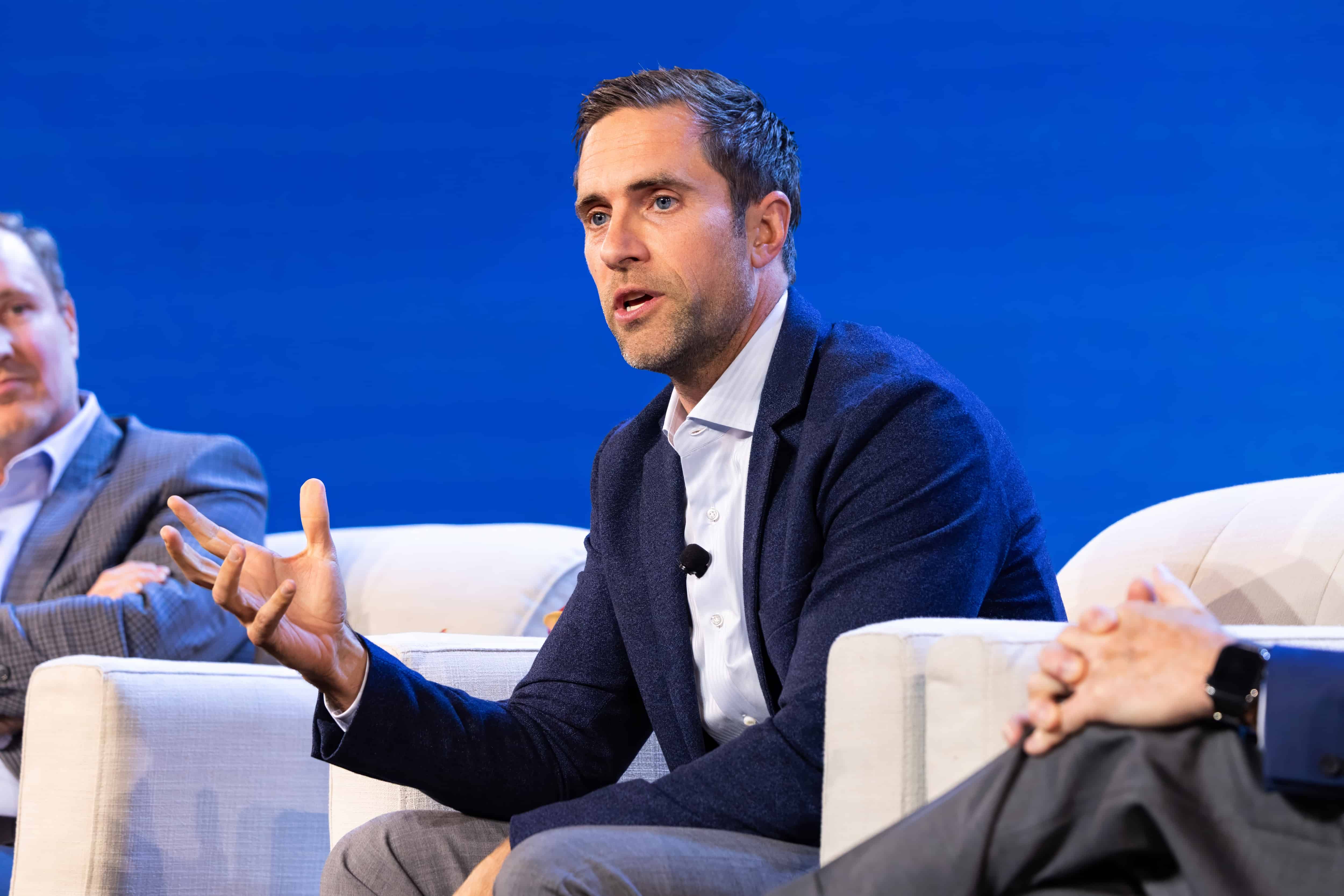
A follow-up panel led by Tana Gall, president of Merrill Gardens, put the ideas to work. Panelists took up intergenerational partnerships with universities, the gap between how people hope to age and how they plan to, and what it would take to reach the older adults the industry does not serve today. Gall summed up the mood: “Longevity may be inevitable, but for this group, what we do with it is really up to us.”
This is the kind of conversation the NIC conference exists to facilitate: one that puts the changing older adult customer at the center and invites the people who finance, build, and operate senior housing to respond. Dychtwald’s questions deserve more room than a recap allows, and we will have more to say soon.

Conversations That Carried the Thread

Across the main stage, the same question kept coming back in different forms.

The Lodging Sector Evolution and Playbook session

Lodging offered one lens. In “The Lodging Sector Evolution & Playbook: Possible or Practical for Senior Housing?,” leaders from the hotel and senior housing industries compared how brands, ownership, and operations fit together, and what senior housing can learn from the evolution of the lodging industry. Jack Callison, CEO of Sunrise Senior Living, offered a test for scale: “scale should make a community better because it’s part of something bigger.”

Quality came up as a condition of capital. In “The Case for Quality in Skilled Nursing Investment,” Dave Sedgwick, president and CEO of CareTrust, described the path he sees: a mission-driven organization attracts the best people, becomes the employer of choice, and then becomes the provider of choice. “There’s no shortcuts,” he said.

Affordability moved from diagnosis to design. In “It’s Time to Make Middle Market Housing & Care a Reality,” three operators showed three different middle market models that work. Bre Grubbs of Leisure Care named the biggest barrier as “the perceived risk of doing something different.” NIC also announced plans for a new Forgotten Middle study in 2027.

Hospitality tied back to the keynote. NIC co-founder Bob Kramer introduced “Service as a Strategy: Building a Culture of Radical Hospitality” by pointing to Dychtwald’s generational profiles and telling the room the lessons ahead were “not going to be optional” and “not going to be an amenity.” On the panel, Dirk Burghartz of Aegis Living put it simply: “Service is black and white. Hospitality is color.”

The economy update came with a long view. Eric Winograd, chief U.S. economist at AllianceBernstein, told operators and investors to look past the daily noise: “Don’t focus on the short term; think medium term. That’s your job.”

The conference closed on price. In “Capital Markets & Valuations,” moderator Aron Will of CBRE reached for a real estate rule of thumb and updated it: “In real estate, it’s location, location, location. And in senior housing, it’s arguably operator, location, operator.”

Read the closer look at the main stage sessions: “From Longevity to Cap Rates: What the Main Stage Conversations Revealed”.

Smaller Rooms, Sharper Questions

Alongside the main stage, five Innovation Lab sessions put operators and investors in smaller rooms to work through the how. Panelists compared when to refresh an older community and when to reposition it. Active adult operators laid out three business models. A panel on healthspan took up themes from the opening keynote, and HumanGood CEO John Cochrane named one of the field’s habits directly: “We’ve de-risked aging to the point where we’ve actually infantilized people.”

Other sessions covered how operators and REITs build a SHOP relationship that lasts, and what AI tools already tell your prospects before they ever call. Renee Kimberly of Senior Lifestyle said AI is “doing a really good job right now of synthesizing empathy,” a point that sent the room back to the value of human connection.

Read the closer look at the Innovation Labs: “In the Innovation Labs: Where Operators and Investors Got Specific”.

What Makes a NIC Conference Different

NIC CEO Ray Braun called the NIC Fall Conference the industry’s “Super Bowl,” “a place to reconnect, build relationships, exchange ideas, and yes, make some deals.” The event is built for that. There is no exhibit hall, so the time goes to relationship building, to sessions, and to the conversations that look to the future. With 63.66% of attendees holding senior-level executive positions, the conference offered direct access to experienced leaders and key decisionmakers from across the industry.

The program itself is volunteer built. NIC Fall Conference program committee co-chairs Joe Daniels and Tana Gall led a group of volunteers who curated the sessions, and Segarnick noted that nearly 99% of NIC volunteers say they would recommend the experience to someone else. Between sessions, the welcome reception, the Women’s Networking Reception, the First-time Attendee Reception, and the networking reception, attendees had ample structured ways to reconnect and make new contacts.

Where the Conversation Goes Next

NIC’s role is to supply independent data, bring the right people into the same room, and keep the hard questions in front of the people who can act on them. The week’s sessions showed what that looks like: insights on the changing customer and the middle market grounding the debate, and operators, investors, and economists pressure-testing one another’s assumptions.

Segarnick put the shift this way: “The real estate case is made. The case in front of us now is the human one.”

Continue the Conversation in Dallas

2027 NIC Spring Conference promotional graphic

The 2027 NIC Spring Conference takes place in Dallas, March 15 to 17. It will debut a new operator showcase in which five operators pitch their growth strategies to capital providers in a single hour. Join the waitlist.

Senior Housing Strongly Outperformed Other Property Types in Third Quarter

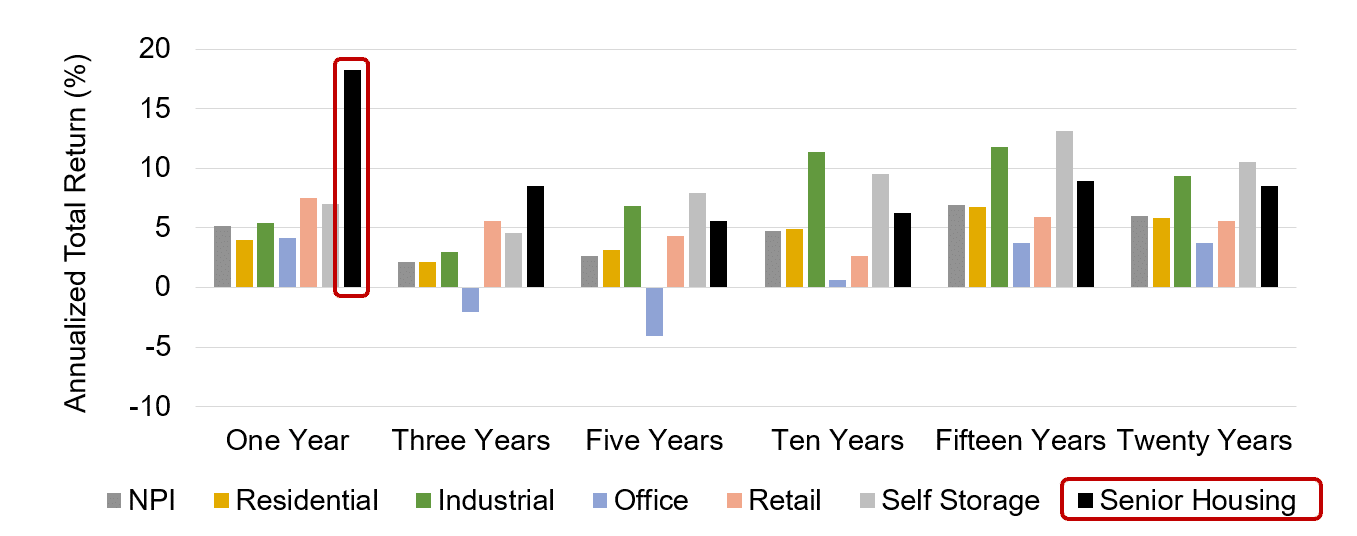
Assisted living near 20% total returns over one-year period, independent living more than 15%

Senior housing investment performance in the third quarter of 2026 accelerated, posting a total return of 6.0%, triple the next highest return, which was retail at 2.0%. Assisted living’s total return of 6.6% outpaced independent living’s 5.4% as the gap in occupancy rates between the two property types continued to narrow. Overall, senior housing during the quarter outperformed the broader NCREIF Property Index (NPI) total return of 1.4% by nearly 460 basis points, marking the eighth consecutive quarter of index outperformance.

Breaking out return contribution, senior housing capital appreciation in the third quarter nearly doubled from the first and second quarters to 4.6%, the highest quarterly gain since 2014. The capital appreciation return is the change in value net of any capital expenditures incurred during the quarter. Senior housing income return in the third quarter held steady, once again yielding 1.4%.

Over the year-to-date period ending September 30, 2026, senior housing strongly outperformed all NCREIF Property Type Subindexes, posting the only double-digit total return at 14.4%, which was more than ten percentage points above the NPI’s total return of 4.0%. These performance measures reflect the returns of 242 senior housing properties valued at $17.8 billion in the third quarter. Overall, the number of senior housing properties tracked within the NCREIF Property Index has grown significantly from the 56 properties initially tracked in 2003, a reflection of increased institutional investment in the property type.

Turning to market fundamentals, the occupancy rate for senior housing rose 0.6 percentage points in the third quarter for the 31 NIC MAP Primary Markets to reach 90.4%, driven by positive net absorption outpacing the number of new units arriving online. The third quarter of 2026 marked the first time that senior housing occupancy rates have been above 90% since 2014.

TOTAL RETURN
NCREIF
Property
Index (NPI)
Senior
Housing
Assisted
Living
Independent
Living
3Q 2026 1.46.06.65.4
YTD 4.014.415.612.0
One Year 5.218.319.815.3
Three Years 2.18.67.88.8
Five Years 2.65.64.66.3
Ten Years 4.76.25.8N/A
Fifteen Years 6.98.9N/AN/A
Twenty Years 6.08.5N/AN/A
INCOME
NCREIF
Property
Index (NPI)
Senior
Housing
Assisted
Living
Independent
Living
3Q 2026 1.21.41.51.3
YTD 3.54.34.54.0
One Year 4.75.76.15.3
Three Years 4.75.35.35.3
Five Years 4.54.64.44.9
Ten Years 4.54.84.6N/A
Fifteen Years 4.85.4N/AN/A
Twenty Years 5.15.8N/AN/A
APPRECIATION
NCREIF
Property
Index (NPI)
Senior
Housing
Assisted
Living
Independent
Living
3Q 2026 0.24.65.14.1
YTD 0.49.910.77.8
One Year 0.412.113.29.6
Three Years -2.53.22.53.3
Five Years -1.81.00.31.3
Ten Years 0.21.41.1N/A
Fifteen Years 2.03.5N/AN/A
Twenty Years 0.92.6N/AN/A
Source: NCREIF, Data through September 30, 2026

Resetting the Senior Living Sales and Marketing Stage: The Impact of AI 

How AI innovation is helping operators of every size adapt to prospect new behavior and make every touchpoint count 

Two decades ago, online search shifted how consumers researched their housing and care options, reshaping senior living sales, and now consumer behavior is shifting again. Instead of typing keywords and scanning a list of links, families today are asking artificial intelligence (AI) tools like ChatGPT a full question, such as, “What’s the best memory care near me for my mom who wanders?” These inquiries often eliminate the need to visit individual websites, with AI delivering a detailed written answer and recommendations that may name specific communities. 

Comparison: Using search vs. AI answers

Then (2000s)
Online search
Now (2020s)
AI answers
What the prospect does Types a few keywords, such as “memory care near me” Asks a full question, such as “What’s the best memory care near me for my mom who wanders?”
What comes back A ranked list of ads and website links A written answer that may name specific communities
Who shows up first Whoever buys ads and ranks highest, often lead aggregators Communities that AI tools can find clear, detailed, and accurate information about
What the prospect does next Clicks through several sites, often filling out an aggregator’s inquiry form Contacts communities named, often without visiting a website
What operators need for better positioning Search engine optimization (SEO) and an ad budget Answer engine optimization (AEO): clear, accurate website content

Industry expert Renee Kimberly, Vice President of Sales Strategy and Enablement at Senior Lifestyle, is seeing more prospects enter the sales pipeline mid-funnel, having already used AI tools to research their options.  

At the same time, AI tools place capabilities that once required a large technology budget or a data science team within reach of operators of any size. Together, these changes are beginning to reshape how the industry reaches and responds to prospects. 

The 2025 Argentum Technology Reporti found that 76% of its senior living respondents believe AI will have a positive or transformative impact on operations. Lifeloop’s 2025 report, The state of AI in senior living: Trends & opportunitiesii, revealed that 36% of senior living operators reported using AI tools, a sharp increase from the 9% reported just a year prior.  

AI adoption is climbing, but the numbers vary widely depending on who is surveyed and how “using AI” is defined. Many operators are understandably cautious. Technology costs have always been a budget issue and AI introduces concerns about security and reliability. Yet sales and marketing is one of the safest places, compared to the clinical area as an example, to start implementing AI solutions: it’s lower-risk, easy to explain, and quick to show measurable results.  

This article looks at what operators should understand before investing in AI tools and how three operators — Avanti Senior Living, Phoenix Senior Living, and LCS — are using AI to reach prospects more effectively and improve their sales and marketing results, with additional insights from industry expert Kimberly.  


Renee Kimberly — Laying foundations for AI analysis 

Kimberly, though recently appointed to her leadership role at Senior Lifestyle, has been leading data analytics and technology innovation in the senior living industry for more than 22 years. “Throughout my career, I’ve believed that great technology should empower people,” Kimberly said.  

Senior Lifestyle is listed in the American Seniors Housing Association’s 2026 ASHA 50 as one of the nation’s largest owners and operators of seniors housing, serving residents’ needs from independent living through skilled nursing and other specialized services. Kimberly specializes in using AI to analyze sales leads for sentiment, tone, nuance, and communication preferences. That analysis helps identify prospect intent and overcome objections in the sales funnel, which matters more now that prospects increasingly arrive already informed by AI.  

One project she led deployed an AI agent (software that can act on its own to complete a task) to understand why prospects might hesitate to start a conversation with a community team. The AI processed 15,000 leads, generating different “call to action” email messages, and tracked how each performed. Two possible barriers emerged: wariness of the stereotypical pushy salesperson, and reluctance to share sensitive personal health information. The AI then suggested messaging that addressed those concerns, focused on developing a relationship early, and gave prospects “permission” to engage. The approach resonated: Harder-sell tactics delayed decisions, while building trust removed barriers more quickly. 

She noted that the AI analysis also provided a new sales perspective: whereas sales teams viewed a tour as “intent,” most prospects viewed a tour as “explore.” This insight further reinforced the importance of relationship-building and earning trust during tours. 

Kimberly encourages operators to overcome their fears around AI through simple experimentation as well as through education. “Embrace AI,” she said, “because your customers are.” She suggests three starting points: 

  • Take an AI prompt-writing course. Prompts are the instructions to generative AI tools. The better your prompts, the better the results. 
  • Learn how to use AI responsibly and securely. AI tools given free rein can expose personal, financial, or health data. 
  • Know the basics of answer engine optimization (AEO). AEO means writing and organizing your website so AI tools can find relevant and accurate information about your community, such as care levels, pricing, and location, and include it in their answers.  

Whether you intend to build your own AI tools or use a product partner’s, Kimberly recommends first gaining a foundational understanding of how AI communicates with your prospects. In the early 2000s, search engine optimization (SEO) shaped which communities families found online and created a pay-for-ranking structure that most operators couldn’t compete in. AEO now shapes which communities AI tools recommend. 

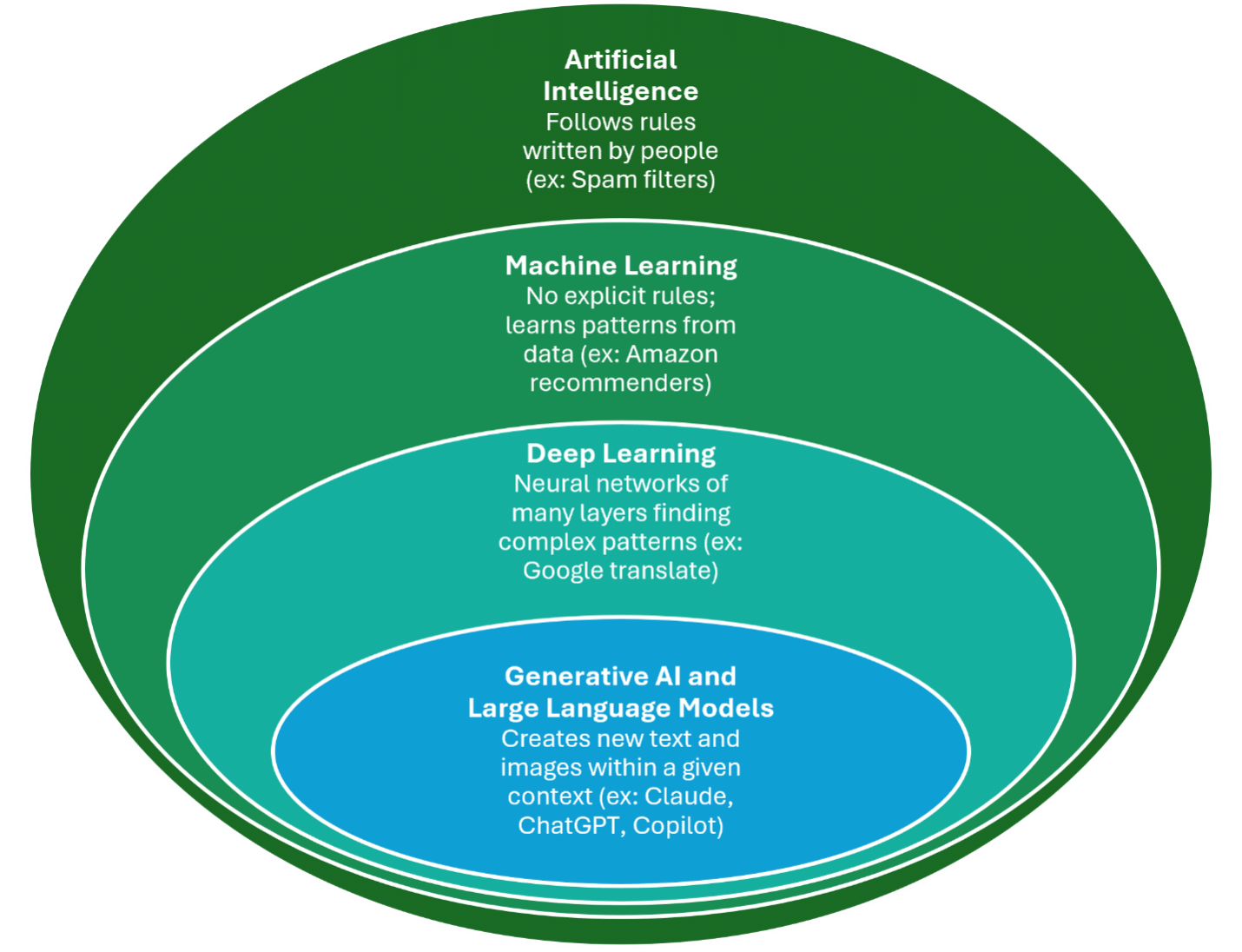
The layers of artificial intelligence (AI)

The layers of artificial intelligence (AI)

Three senior living AI use-case examples

The three operators profiled below represent distinct paths to AI adoption at different scales: Avanti, with seven communities, built its own tool; Phoenix, which manages 55 communities, partnered with a technology vendor; and LCS, managing over 130 communities, developed an in-house data science function. Their experiences show how internal capability, scale, and vendor relationships can shape an operator’s approach.


Avanti Senior Living — A founder-led AI Strategy

With seven luxury assisted living and memory care communities, Avanti Senior Living shows what a smaller operator can do with AI. Founded in 2013, Avanti is headquartered in Spring, Texas.

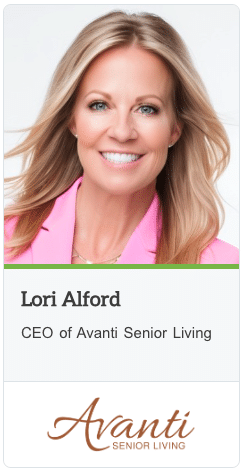
Lori Alford, CEO of Avanti Senior Living, has spent 26 years in senior living championing innovation and technology for resident care and experience. Avanti continually looks at where technology can improve processes and decisions or reduce repetitive work.

Alford has woven AI adoption into the core of Avanti’s culture, and that culture has deep roots: the company has used automation for over a decade. Though not the AI of today, those early tools taught Avanti the value of automating repetitive work and built a team willing to explore how technology can support its mission.

In 2023, after personal projects showed her how easy it could be to create with AI, Alford recognized the potential benefits it could bring to Avanti’s sales and marketing process. In 2024, she partnered with a coder to build a sales AI agent for Avanti—software that texts new inquiries, logs activity, and scores leads on its own. Her own comfort with AI made building, rather than licensing a commercial product, a practical choice for Avanti, though it is not the only route for a smaller operator. The vision she shared with her sales team was to have AI “take the mundane tasks away, so you can focus on residents more.”

Deploying this proprietary AI agent gave Alford the ability to customize around Avanti’s own sales process, iterate quickly, establish scoring logic, and begin using the resulting intelligence before some of those capabilities were readily available within its third-party CRM software. In effect, Avanti owns both the tool and the intelligence it produces.

The speed-to-lead results came quickly. Every new inquiry gets an instant text, day or night, and the median time to first human contact went from 11.6 hours (including non-working hours) to 5.4 hours. Alford estimates that the agent saves each sales counselor three to five hours per week by eliminating the need to chase first touches and log activity.

“AI should not replace the relationship in senior living,” says Alford. “It should remove the friction around the relationship.” If AI can reduce administrative work, identify which prospect needs attention, or help manage a waitlist more strategically and give leaders better information, the salesperson has more time for conversations and building relationships that lead to move-ins.

Although Alford is well versed in AI and manages the agent herself, she sees her role as executive sponsorship, guiding rapid experimentation and getting the organization comfortable adopting new ways of working—disciplines that even a leader less AI-savvy can implement.

Alford also spends significant time in the field with her sales teams. “Great ideas come from both sides, not just the technology end,” she said.

Avanti hosts AI training classes for its sales team two to four times a year. “AI fluency is becoming a core skill for our teams, so we invest in helping people understand how to use it effectively,” Alford explained.

Alford’s biggest lesson as a CEO is to stay clear on why AI is being used, what operating problems it solves, and the impact it’s having.

For operators looking to develop their own AI processes, Alford has direct advice: “You can do it,” she encourages, “just start.” Alford recommends starting by identifying the recurring decisions, administrative work, and information gaps that repeatedly slow your teams down, rather than beginning with choosing an AI product.


Phoenix Senior Living — Vendor partnership at the core

Phoenix Senior Living, headquartered in Roswell, Georgia, manages 55 communities across 10 states, serving more than 3,700 residents with a continuum of care from independent living through skilled nursing and respite care. Its vendor-led approach is a route open to operators of any size.

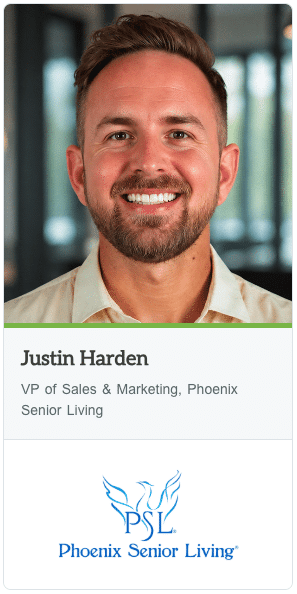
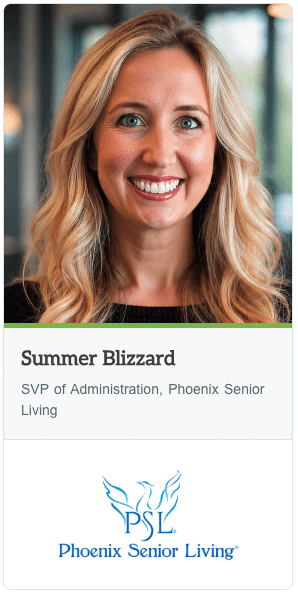
Justin Harden, VP of Sales & Marketing, and Summer Blizzard, SVP of Administration, credit a culture of innovation and strong partnerships with technology firms for much of their success in implementing AI initiatives. “It’s always been about keeping the focus on serving seniors — putting our residents first,” explained Blizzard.

In 2024, with AI already easing administrative work elsewhere in the company, Phoenix’s sales and marketing team wanted to bring it into the sales process. “Our goal was least friction to sale,” Harden said. “Sales directors documenting conversations, mundane CRM tasks, those things took time away from face-to-face conversations. We wanted to give back time to our sales teams,” he explained.

Phoenix partnered with Further, a senior living sales and marketing technology company. Over a series of conversations, the Further team asked strategic questions that helped Phoenix determine best-fit solutions and build a rollout plan.

Phoenix started with sales director training, using Further’s AI-driven roleplay simulations. The AI dials the salesperson’s phone like a real inquiry, asking about pricing, services, amenities, and care. It shares details only when asked, so salespeople practice qualifying a prospect.

“The teams were uncomfortable with being trained by an AI agent at first,” Harden shared, “so we used that feedback to add more education about AI into the training.” Now they appreciate how AI simulations remove stress from learning since there’s no worry about losing a real lead, and how the roleplays can be completed independently, on their own schedule.

In late 2025, Phoenix deployed “Teri,” a conversational, generative AI agent, as its virtual receptionist for all incoming telephone calls. The program is named in honor of Phoenix CEO Jesse Marinko’s late mother. Powered by Further’s proprietary large language model (LLM), Teri answers questions warmly, schedules tours, and routes callers to the right staff.

Harden and Blizzard shared that some prospects have even arrived for tours asking to meet Teri and thank “her” for being so helpful.

Phoenix had originally planned to pilot Teri, but after seeing immediate benefits it rolled Teri out to all communities. Further’s integration with Yardi software pushes prospect data directly into Yardi’s CRM, so every inquiry Teri handles adds to Phoenix’s own prospect history.

Since deploying Teri, Phoenix has seen its inquiry-to-tour conversion rate increase by 6%. Combined with other AI-assisted CRM tasks, sales teams save around 15 hours per week.

The rollout was not without its challenges. When senior executives called Teri with higher-level questions, they uncovered several “areas of opportunity,” as Harden put it. Teri had initially struggled with pivoting when a caller changed topics mid-conversation and was trained to transition more smoothly.

Because Further hosts everything, Phoenix didn’t need to invest in hardware, infrastructure, or engineering staff—a model that puts sophisticated AI tools within reach of operators without in-house technical teams. “Our tech stack is pretty lean,” commented Harden. “We have Further and we have Yardi.” Next on Phoenix’s wish list: competitive intelligence tools to better position its communities.

When asked about what advice they have for other operators, Harden and Blizzard agreed that the right relationships are vital. “Choose to work with tried-and-true vendors who have a deep understanding of the industry,” said Harden.


LCS — Building an in-house data science function

LCS is one of the nation’s largest operators of not-for-profit senior living communities and, according to the 2026 ASHA 50, the third-largest senior living operator in the country. Its in-house approach shows what AI looks like on an enterprise scale, with lessons for operators of any size. LCS leaders saw an opportunity and a problem: years of prospect and sales data spread across the organization weren’t being fully used, and community sales teams’ time was stretched thin.

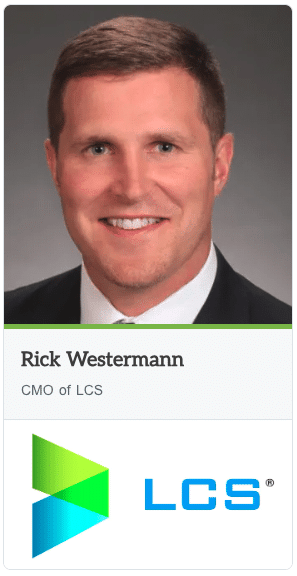
In 2022, LCS built an in-house data science team within marketing, led by Chief Marketing Officer Rick Westermann. The goal was to turn the organization’s data into insights its teams could act on: getting more out of Salesforce, the company’s customer relationship management (CRM) platform, and lightening the administrative load on community sales teams. Adding AI was the natural next step, with support from LCS’s technology and data engineering teams.

“The sales arena was, and continues to be, ripe with opportunity for AI. From better scoring and optimizing who gets contacted to how we create efficiencies and ease of work within our CRM, there is a lot we can continue to build,” said Westermann.

LCS rolled out AI in two phases. The first used machine learning to score leads, identifying which CRM data points matter most and teaching the model what a ‘good’ lead looks like. Trained on the sales activities in historical Salesforce data, the models rank leads by their likelihood of progressing through the funnel. The models weigh factors such as response times, family involvement, and other behavioral indicators so teams can focus where they’ll have the greatest impact.

The lesson applies to any operator: AI models are only as good as the sales activity captured in the CRM, so consistent data capture today lays the groundwork for tomorrow’s tools.

As the program matured and entered its second implementation phase, LCS expanded beyond lead scoring into AI-generated sales summarization. This capability automatically creates concise summaries of prospect interactions, engagement history and pipeline activity, allowing sales professionals to spend less time documenting conversations and more time building relationships.

Rolling out AI across many communities at once meant explaining why AI matters. It also meant acting on team member feedback to build trust in the tools meant to support their expertise, not replace it. LCS credits that community feedback with making AI adoption successful.

To measure the return on its AI investments, LCS uses attribution models to analyze sales results. It found that lead scoring increased conversion rates by 100–150 basis points. For ongoing performance monitoring, LCS also tracks the amount of time a lead spends in the sales funnel.

LCS continues to expand its AI roadmap, with governance policies, AI agents, and more predictive and decision-support tools next up. Nick Hamilton, Vice President, Data & AI, now leads the team as it builds capabilities, advances key enterprise initiatives and partners with LCS operational leaders to unlock greater value from data through conversational AI and advanced analytics.

For operators just beginning to bring AI into sales and marketing, Westermann points back to community-level feedback. “Field-level feedback is a must,” he noted. “Our department has the data science, but we need their expert feedback.” 


Key takeaways

As more prospective residents and families research senior living options with AI tools before they ever call, how those tools describe a community matters. Search engines created a first-contact stage in which many operators couldn’t afford to compete for visibility, but structuring content for AEO, as Kimberly recommends, now gives more operators a way to compete in this AI-driven answer era.

The three operators profiled in this article took different paths, yet similar patterns emerge:

  • Each operator is turning everyday sales activity into its own prospect intelligence. Every call Teri handles flows into Phoenix’s CRM; LCS’s lead scores are built on its own historical Salesforce data; and Avanti’s custom agent scores leads using logic designed around Avanti’s sales process.
  • Sales and marketing proved to be a practical place to apply AI in senior living: lower-risk, measurable, and explainable to teams who need to trust the tools they’re using.
  • All three began their sales AI work with a focused use case (AI roleplay training at Phoenix, lead scoring at LCS, and a custom sales agent at Avanti) and expanded from there.
  • Leaning on community-level experts was non-negotiable in every case. Rick Westermann credits community feedback with making AI adoption successful; Lori Alford spends time in the field herself; and at Phoenix, feedback from sales staff led the company to add more AI education to its training.
  • Scale also matters less than it did in the search era: size shapes which path an operator takes, not whether one is available. For operators still on the sidelines, the advice from all three points in the same direction: choose partners who understand the industry, listen to the teams in the field, and, as Alford put it, “Just start.”

The operators profiled here show that there is no single right model of AI innovation. Whether through an in-house data science team, a trusted vendor partnership, or a tool managed by the CEO herself, each is doing the same essential thing: making every interaction count.

With AI, operators of every size now have the tools to move early and adapt to prospects’ new behavior, and those who start now will set the pace in the years ahead.

1 https://info.argentum.org/the-state-of-technology-adoption-in-senior-living

2 https://lifeloop.com/resources/the-state-of-ai-in-senior-living-trends-and-opportunities