By now, we’ve all likely heard of the “silver tsunami,” and the growing demand for senior housing for Baby Boomers aging into this demographic need. With growing demand comes increased opportunity for family offices to help generate new supply and growth in operations. For a family office considering investing in senior housing, there are many different investment routes, each one offering the chance to participate in the sector’s strong returns.
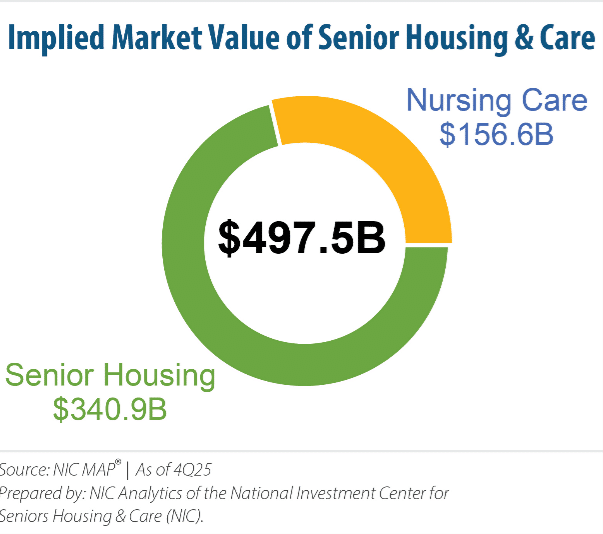
For family offices focused on long-term investments, senior housing offers an opportunity to pursue two legacy values: preserving wealth for future generations while investing in the housing, care, and well-being of older adults and their families. The youngest baby boomers won’t turn 80 until 2044, creating a durable demographic foundation for the sector for decades to come. Historically, senior housing has demonstrated resilience through economic and operating cycles, including its recovery following the significant disruption of the pandemic. With steady and consistent returns, and so many avenues to investment, family offices can tailor their approach to support goals for liquidity, portfolio diversification, risk, and holding periods. For family offices seeking to align their capital with their values, senior housing can support both financial legacy and quality of life across generations.
Types of Senior Housing
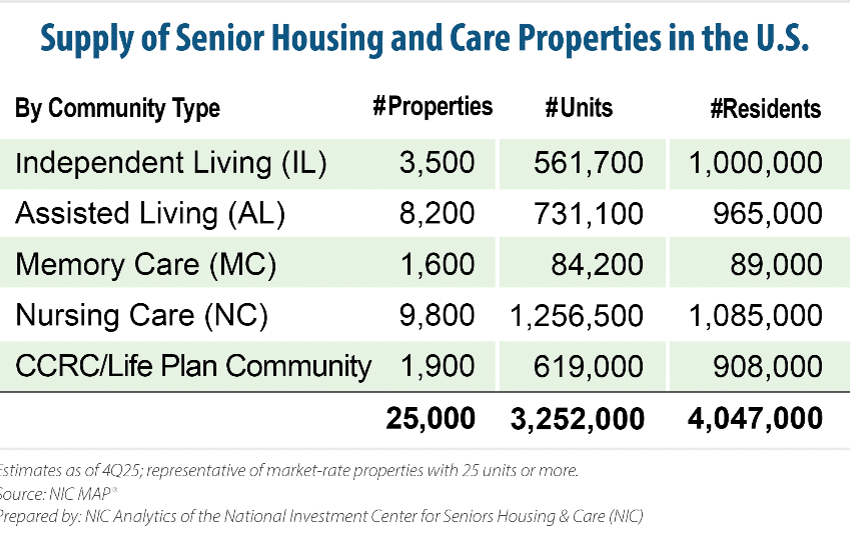
There are different types of senior housing, and the industry continues to innovate. Staying knowledgeable about the models and opportunities is what sets successful investors apart. Senior housing can be in apartment style buildings or in detached houses and offers residents varying levels of care. An emerging popular option that bridges the gap between traditional senior housing and multifamily offerings is active adult rental. Active adult rental communities provide onsite socialization and recreation for seniors without need for daily assistance. Slightly higher up the acuity scale, independent living also offers transportation and dining options. Assisted living and memory care meet the needs of those higher on the acuity scale, providing assistance with daily activities and specialized care for those with dementia and other cognitive issues. Many communities offer a mix of senior housing types allowing older adults to stay in their community as their care needs grow.
Senior Housing Investment Options for Family Offices
Senior housing is an attractive real estate investment option considering the current and growing demand of the aging population is not being met by increased supply. According to NIC MAP data, in the last six quarters, inventory growth has remained below 1%. Constructions starts for the industry are near record lows. Across a number of markets, senior housing inventory is actually declining due to the lack of new development.
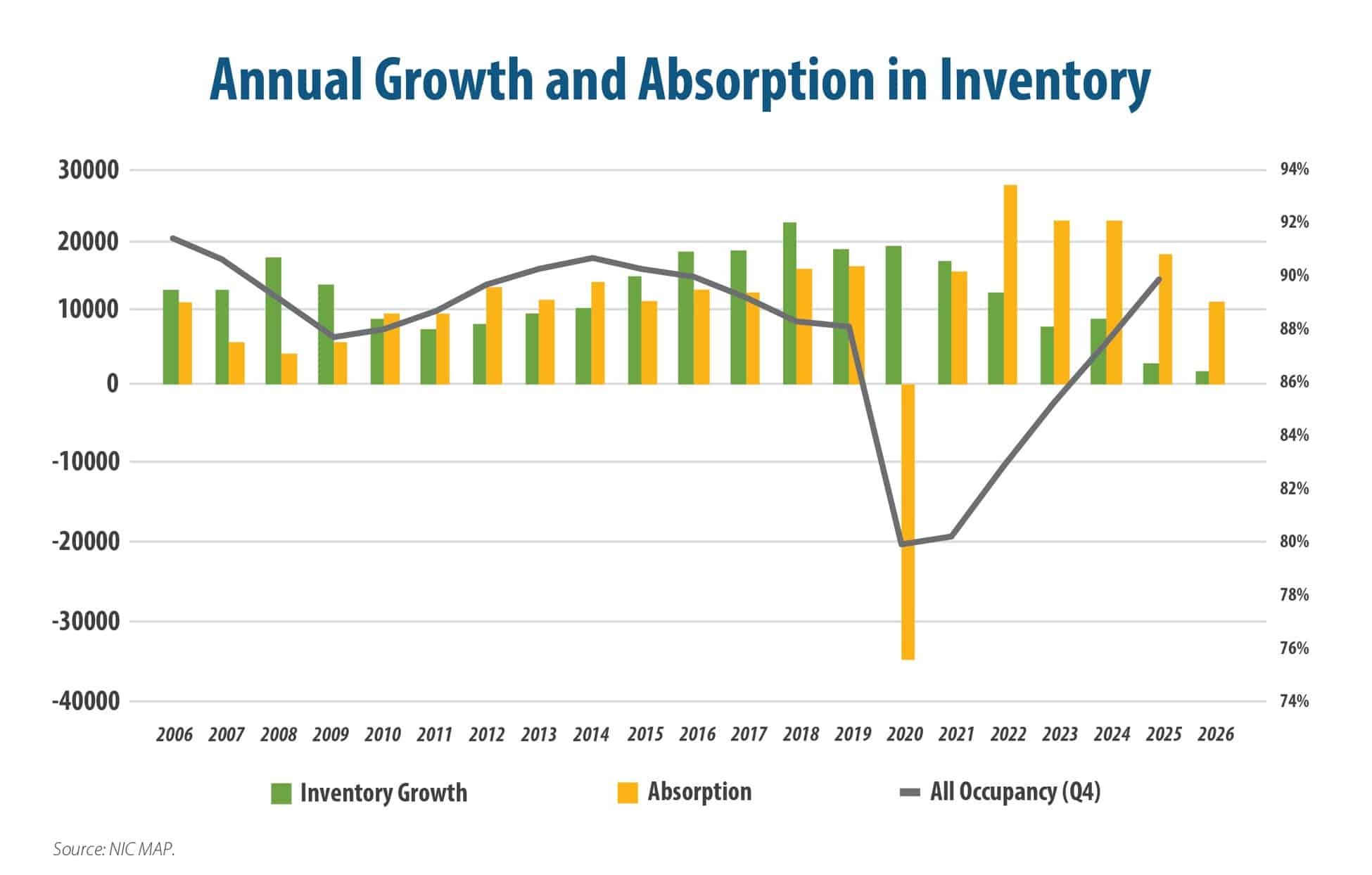
The chart above uses NIC MAP data to show annual inventory growth, absorption and the occupancy rate for senior housing in NIC MAP’s 31 primary markets. In the third quarter of 2026, the occupancy rate crossed the 90% threshold and, at 90.4%, is at its highest level since 2015. The demand for units, or net absorption, is outpacing new units arriving online. Only about 580 units broke ground in the second quarter within the primary markets, the lowest quarterly level on record, and units under construction are at historically low levels.
With such a tight market, senior housing real estate needs capital for development, expansion, and refurbishment. Family offices that want a more liquid investment in senior housing can buy stock in public senior housing real estate investment trusts (REITs). Alternatively, the private market offers specialized senior housing real estate funds or direct equity investment individually or through joint ventures. In recent years, both public and private investments in senior housing have outperformed other types of real estate.
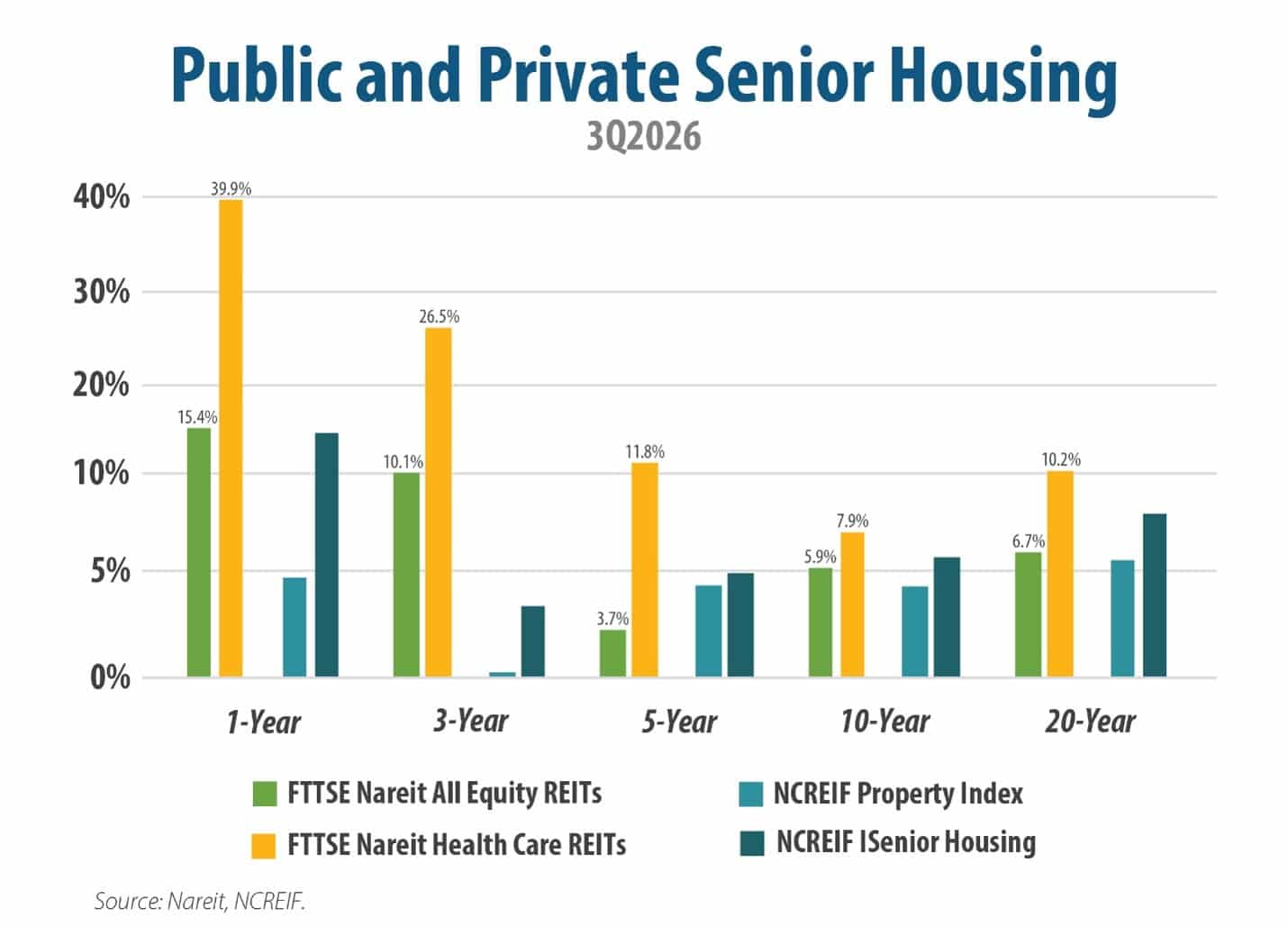
The chart above compares health care REIT returns, with 88% of market cap as of June 30, 2026 in senior housing REITs, compared to its major index the FTSE Nareit. All Equity REITs Index in the green bars. The blue bars compare NCREIF senior housing property returns to its major all property index. For both public and private, across all time periods, senior housing outperformed their respective all property indexes.
Real Estate Investments
Family offices looking for fixed income investments can choose senior housing real estate debt. Like equity, there are multiple channels available for investing, from buying commercial mortgage backed securities (CMBS), purchasing shares in a debt fund, or direct loans. Additionally, many senior housing REITs offer publicly traded bonds.
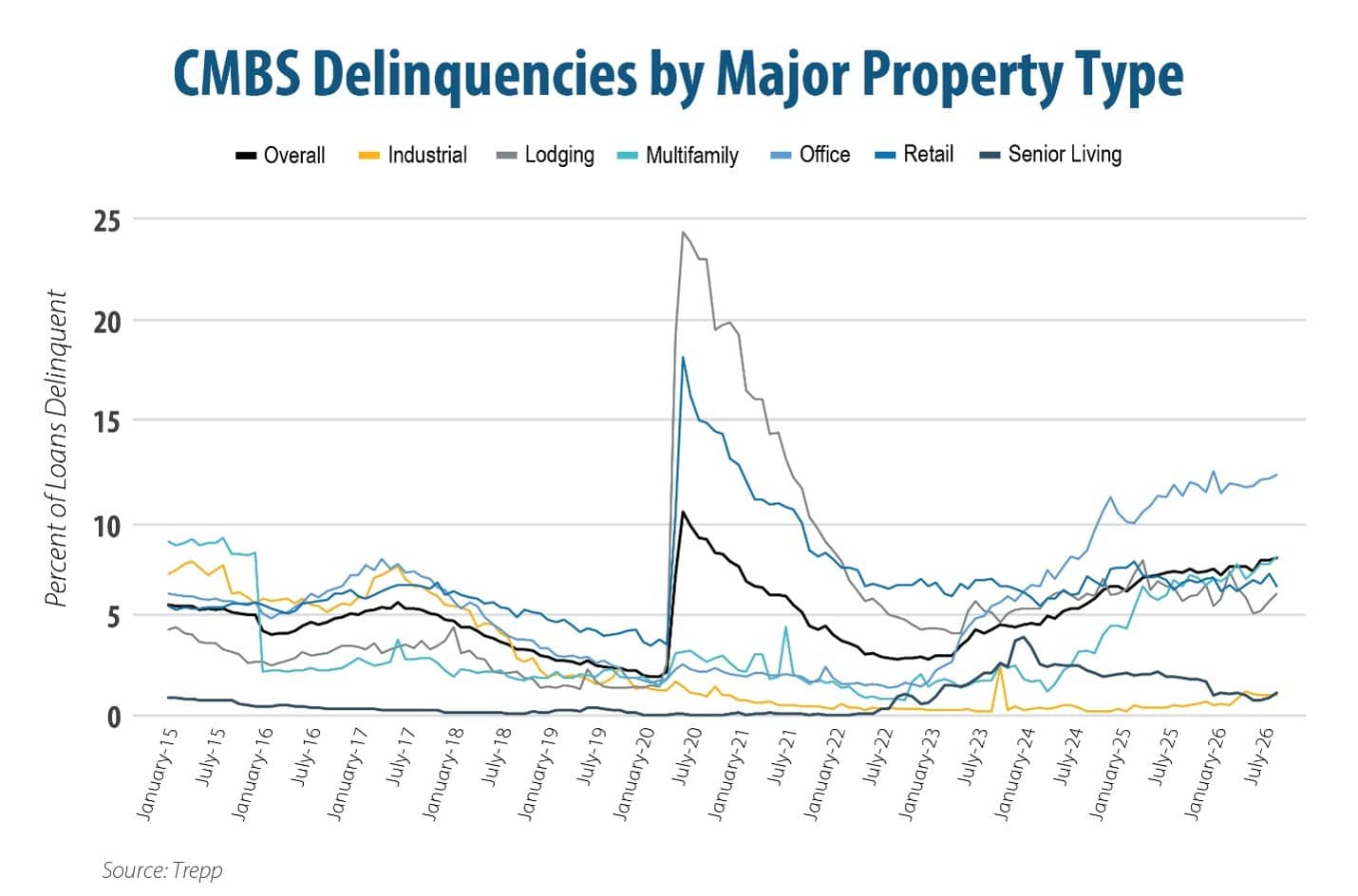
Senior housing debt compares favorably to other real estate debt. Senior housing CMBS has had an average premium of more than 200 basis points over ten-year treasuries since 2013, with low delinquency rates. In the second quarter of 2026, the average note rate was 5.4%, 120 basis points over the ten-year treasury. Delinquencies are below 1% for senior housing CMBS in July 2026, the lowest of the property types shown in the chart, and well below the overall rate of 7.9%.
Operations & Management Investments
While traditionally investors in senior housing have sought out real estate, there is growing interest in investing in operating and management companies as well. Many family offices are invested in health and wellness companies that are similar to senior housing, like home-based health services or provider practices. Alongside the physical properties, the industry needs investment in operators and mangers to continue to grow to meet the demand of the aging demographic.
With today’s aging population, senior housing investment opportunities are expected to remain relevant for the foreseeable future, aligning well with family office investment needs. NIC provides data and insights that inform senior housing investment. Learn more on NIC.org.
Key Questions Family Offices Ask & Investors Want to Know
1. How can a family office invest in senior housing?
Family offices have several entry points: publicly traded senior housing REITs for liquid exposure, private real estate funds, direct equity/joint ventures for more hands-on investment, and debt instruments like CMBS, debt funds, or direct loans.
2. Is senior housing investment through equity or debt?
Both. Equity options include public REITs, private funds, and direct or joint-venture investment. Debt options include CMBS, private debt funds, direct loans, and publicly traded bonds issued by REITs.
3. How does senior housing real estate perform compared to other property types?
Senior housing has consistently outperformed the broader NCREIF Property Index’s (NPI) total return for more than eight consecutive quarters. In 3Q 2026, senior housing posted the only double-digit return at 14.4%, more than ten percentage points above the NPI’s total return of 4%.
4. Why is now a good time to invest in senior housing?
Demand is high and growing for the next decade as the baby boomers age. Additionally, demand is currently outpacing supply: inventory growth has stayed below 1% for five straight quarters, occupancy is at a decade-high (904% as of Q3 2026), and new construction starts are at record lows — a tight supply picture that favors existing owners and investors.
5. How can family office invest in senior housing operations?
Beyond real estate, family offices can invest directly in operating and management companies — similar to how some invest in adjacent health and wellness businesses like home-based health services — helping meet the industry’s growing need for operational capacity alongside physical space.
6. What is a senior housing REIT?
A senior housing REIT (real estate investment trust) is an investable company that owns senior housing properties. Many senior housing REITs are publicly traded, allowing investors to buy shares and gain liquid, stock-market exposure to the sector without owning property directly.
7. What is CMBS?
CMBS (commercial mortgage-backed securities) are bonds backed by a pool of commercial real estate loans, including senior housing properties — offering family offices a way to invest in senior housing debt without originating loans directly.
8. What is the NCREIF Property Index (NPI?)
The NCREIF Property Index (NPI) is a benchmark maintained by the National Council of Real Estate Investment Fiduciaries that tracks investment performance for institutionally owned commercial real estate, including senior housing. It’s the standard benchmark used to measure private, direct real estate returns — similar to how the FTSE Nareit index benchmarks public REIT performance — allowing investors to compare senior housing’s private-market returns against a broader all-property index.
9. What’s the difference between independent living, assisted living, and memory care?
Independent living offers transportation and dining support for largely self-sufficient residents. Assisted living adds help with daily activities like bathing or medication. Memory care provides specialized support for residents with dementia or other cognitive conditions. Learn more about each property type here.
For more on investing in senior housing, explore the NIC Investment Guide, Eighth Edition.