NIC Middle Market Investor Summit Gets the Conversation Going

Capital providers and operators are talking about the challenges and opportunities of serving middle-income Americans who will not be able to afford private-pay seniors housing and care at current price-points, yet also don’t qualify for government assistance. While the discussion has only just begun, it is already generating excitement amongst investors and operators, along with a host of new ideas, and an openness to innovation and new partnerships aimed at meeting a huge demand that will only grow over the next several decades.  

Just a month after hosting an event in DC hosted by Health Affairs to publicly announce findings from “The Forgotten Middle:  Middle Market Seniors Housing Study”, NIC released the full study to the public, and hosted an investor briefing and discussion in a special event at New York City’s Yale Club. Co-sponsored by Institutional Real Estate, Inc. (IREI) and Real Capital Analytics (RCA), the event featured insights from study authors, detailed data, and expert panel discussions aimed at inspiring discussion and interest amongst the capital providers who underwrite much of the seniors housing and care industry in the United States, as well as operators and developers in the industry.  

Following an introduction and welcome given by NIC Chief of Research & Analytics Chuck Harry, NIC Chief Economist and Director of Outreach Beth Mace provided key findings and takeaways for capital providers and operators.  
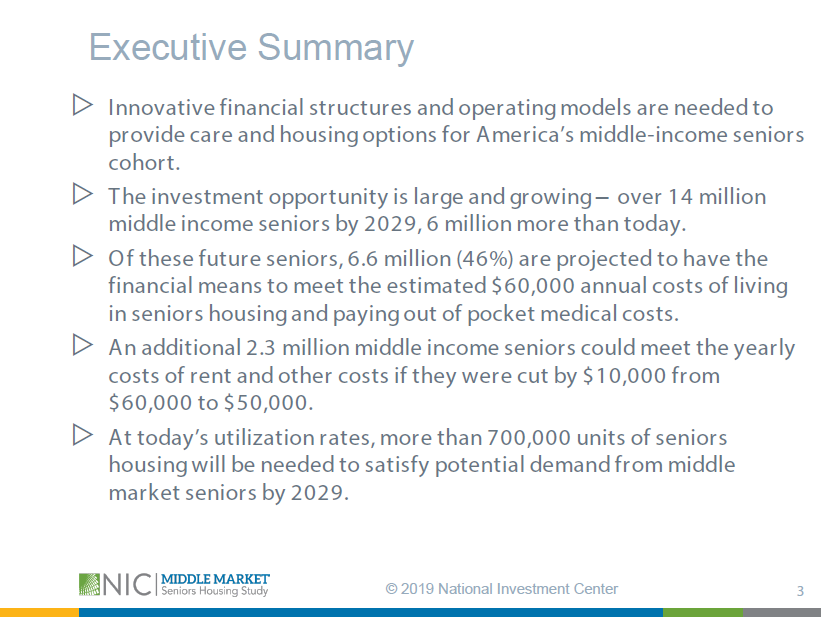
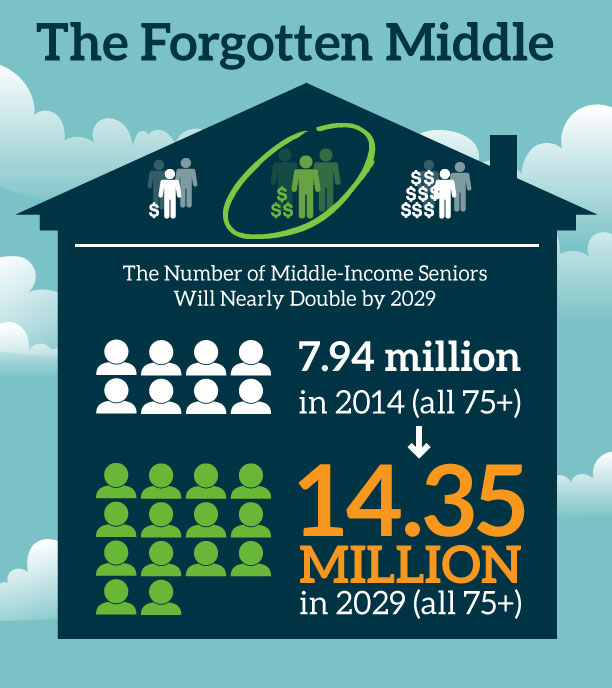
Mace’s summary of the study’s findings highlighted the challenges and opportunities facing the sector. She said “This investment opportunity is big. Our study indicates that there will be more than  14 million middle income seniors in 2029. That’s 6 million more than today.” She went on to explain that these numbers are conservative, and will actually continue to grow beyond 2029, and to point out that at today’s penetration rate of 11.2% and today’s construction rates, it would take 17 years to open the 700,000 new units it would take to meet this demand in 2029. After reviewing other key data points, Mace said that “the goal of today’s event, really, is to get the conversation started, to see how we, collectively as an industry, can start to address the care and housing needs of this cohort.” 

Study author Caroline Pearson, Seniors Vice President of NORC at the University of Chicago, then provided insights into the potential for further study, down to the local level, which would be potentially very useful for investors. Referring to last month’s Health Affairs event, she said, “I was in awe of the response that we got from the policy community to the research. I’ve released a lot of research; people are always very kind and gracious and say, ‘thank you’ but the excitement in the room this time was palpable.” She closed by saying “I’m eager to hear the discussion today. I’ve received lots of questions from the press, and lots of people have said to me, ‘you’ve convinced us this is a really big problem. Now we’re really scared – what should we do about it?’” 

What followed was a series of panel discussions, organized by industry perspectives, which yielded a host of ideas, plenty of questions from the audience of investors and industry leaders, and some general agreement on key issues that the sector will face, in an environment of cautious optimism.  

The first of three panels, moderated by Mace, featured equity investment executives Pam Herbst, Managing Director, AEW Capital Management, and Andrew Brett, Director of Real Assets Research, NEPC. The discussion yielded numerous ideas that Herbst and Brett have considered – or would consider – for making seniors housing more affordable, while retaining viability as an investment for their firms and the industry.  

The idea of shared space was raised, both as a means to lower construction and operating costs, and as a potentially attractive option for the boomer generation and seniors who might find a social living arrangement attractive. Reducing common areas from today’s average of 35%-40% would lower costs. Herbst also raised the possibility of gaining additional Floor-to-Area (FAR) allowances from municipalities in return for adding units to serve the middle market. This could help eliminate additional land basis costs, something she suggested could be relatively easy for communities to grant. 

Other ideas the panel discussed included state and municipal tax grants and investment incentives, renovating and/or repurposing older buildings, such as malls and big box retail, reducing dining and labor costs through existing programs such as “meals on wheels”, and allowing younger volunteers to “bank” volunteer hours towards their own retirement. 

The following panel, also moderated by Mace, was designed to represent the debt perspective. Panelists included Robert M. White, Jr., Founder and President, Real Capital Analytics, Michael Patterson, Vice President, Underwriting and Credit, Freddie Mac, Christopher Callaghan, Group Vice President, Head of Healthcare Banking, M&T Bank, and Heidi Brunet, Managing Director, Newmark Knight Frank. 

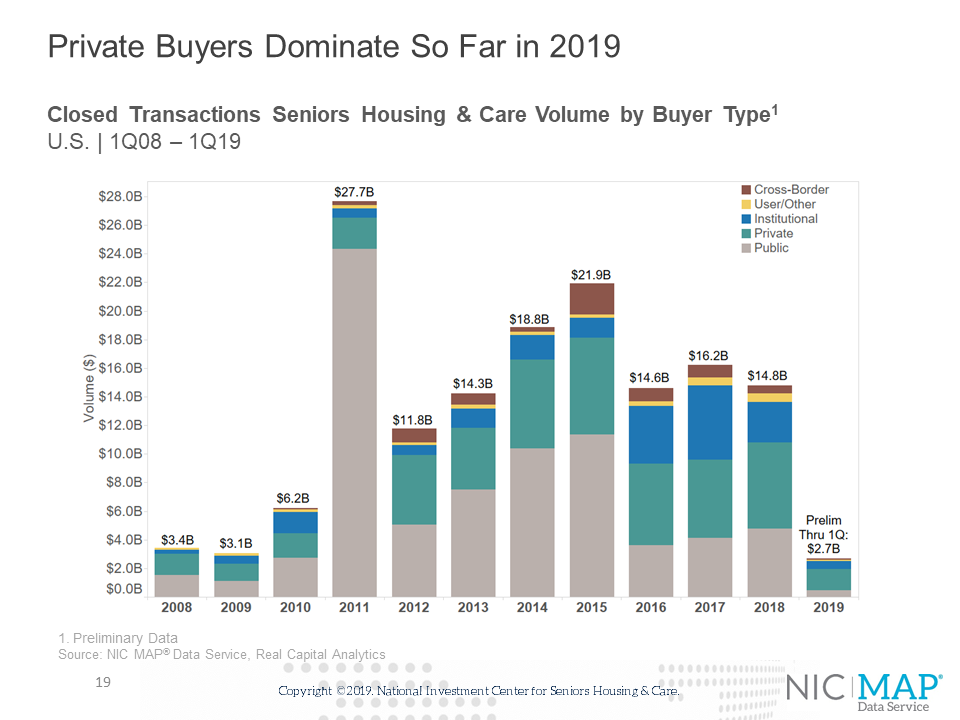
White presented data profiling the recent history of debt financing in the sector, with his insights on who is providing debt financing and who is not, and who may be providing debt in future. Following this, the panel answered questions from Mace on their perspective – and their ideas on dealing with potential middle market investment. 

When asked by Mace whether Freddie Mac would be able to securitize mortgages for lower margin housing and care models, Patterson said “we have obviously been able to so far…and we are wanting to continue doing that. We think this may be a part of those securitizations.” 

Referring to the conversation around cost, Callaghan, whose bank underwrites seniors housing construction, said, “We can underwrite to a lower margin for permanent debt, and get comfortable with sustainable cash flows. The lower to moderate income seniors housing has margins that are half those of high-end seniors housing, but you can still underwrite those cash-flows.” 

Ideas the panel discussed included adding Medicare reimbursements above rent, as the value-based care system begins to expand what the government will pay for, to include services such as providing nutrition, rehabilitation, and assistance with activities of daily living (ADLs). It was suggested that properties that provide multiple levels of care might benefit from numerous advantages. Also, the panel discussed the need for local and regional banks to be educated on the sector, to encourage further engagement. Another suggestion was to consider the growing sources of foreign capital interested in the sector. 

A panel of operators included Thomas Grape, Chairman and Chief Executive Officer, Benchmark Seniors Living, Gaurie Rodman, Director, Development Services, Direct Supply, and Judy Marczewski, Chief Financial Officer, Leisure Care. Moderator Kai Hsiao, Chief Executive Officer, Eclipse Seniors Living, began the discussion by saying, “This is where the rubber meets the road now. The question is can we actually make this middle market operating model work.” Hsiao then pointed out that his panelists had all “dipped their toe” in the water of middle market and would share what they had experienced so far. 

When asked about the decision to get into lower-cost private-pay seniors housing, Grape responded that, “we were drawn to it for the reasons that motivated the study, which is that we’ve seen rents and costs continually increase and knew that there was an unserved middle that we wanted to see if we could tap into.”  Marczewski, who said her company was about to open their third middle market property, said that, “what we have done is build an efficient model for operating and for construction. I really think the last piece of that is coming up with the efficient capital structure. That’s what’s missing.” 

Rodman said that, “for the middle market I believe the solution lies in looking at every layer of the development process and the operating process comprehensively, from the beginning.” She supported finding communities willing to work with developers with payments-in-lieu-of-taxes, increasing FAR, and leveraging infrastructure improvement taxes, as part of the land-selection process, in order to remove land basis costs. 

In addition to the ideas that came from the previous panels, the operators contributed many of their own. Grape’s company found cost-savings by simply reducing the building size, having shared units, and he explained how reducing non-care staff was possible, as well as using wood frame construction instead of steel and concrete as a cost-savings measure.  

Marczewski’s company lowered costs with efficient kitchen and menu design, resulting in high quality foods, but fewer options, and lower staff costs. Rodman described a cost-savings of $1,200 per unit just by replacing a closet that had a sprinkler in it with an armoire. 

Other ideas the panel discussed included achieving more labor efficiency with a “generalist” model, partnering with multi-use partners and developers, incorporating smart technology, partnering with healthcare, and leveraging community resources such as high schools and universities for volunteer groups. Panelists also suggested working with Medicare Advantage plans, adopting “social” models that emphasize the appeal of common areas, and attracting investor interest from the healthcare sector. 

The event concluded with remarks from NIC Founder and Strategic Advisor Bob Kramer, who challenged attendees and viewers to think about the day’s key takeaways, as well as to consider what was not discussed, and to take the discussion back to their own companies. He emphasized that, “As we look at 2029, this is a huge market, which, for the most part we’re not serving now. It’s going to grow exponentially in size.” He went on to point out that for 20 years beyond the study’s projections to 2029 the market will continue to grow. 

He discussed how demographics are changing, driving necessary shifts in how seniors housing must be conceived and marketed in the near future. Referring to aging baby boomers, he said, “they’re not going to want to move in to anything with the name ‘seniors’ on it, because they don’t want to be called a seniors.” Concluding his remarks, and the event, Kramer said, “We want to bring a spotlight to ideas, in terms of models…we’ve mentioned development efficiencies, we’ve talked about operating efficiencies, we’ve talked about capital efficiencies, and the last one…regulatory efficiencies – or I might say inefficiencies – but we need to put a spotlight on these and NIC wants to continue to do that.” 

The invite-only event was live-streamed and is available on video, along with access to the study itself and many related resources, at https://www.nic.org/middlemarket-resources.  

What Kind of Housing Do Baby Boomers Want? Ask Millennials.

While the industry scratches its collective heads trying to figure out what baby boomers want in a senior living community, millennials are pointing the way.  

The two groups have a lot in common. Baby boomers and millennials currently represent the largest cohorts in the American population, 74 million and 71 million respectively.  

Baby boomers are the parents of millennials and share many of the same values that shape their housing preferences. They’re both more interested in having experiences rather than accumulating things. They want to make a difference too.  

“Compare the values of someone 62 and someone 26, and they’re very much the same,” said Lilian Myers, an expert on aging and co-founder of EconomyFour, a social impact company based in Washington, D.C. “Both groups are interested in exploring what’s next.” 

Myers has built a career around looking at the trends that shape our views of technology and of aging. As a serial entrepreneur she helped launch several health technology start-ups. She eventually moved on to work for IBM, initially consulting with global clients on the digital transformation of healthcare.  

A project in Japan that linked isolated seniors by iPad to services from the postal service led her to become IBM’s global leader for aging and the longevity economy, conducting seminars on several continents to find industry solutions for age and longevity. “What it taught me was how universal and institutionalized age bias has become,” said Myers.   

The age of 65 began to be attached to decline and need of help only a century and a half ago as industrial era social safety nets were established, said Myers. Today older adults are better defined by their vitality than their age. “Boomers aren’t using traditional definitions of who is considered old,” she said. “It’s more about how we feel, and we don’t feel old. We’re working, starting new businesses, and giving back in ever-greater numbers.” 

Likewise, millennials are defying expectations. Many millennials, for example, are digital nomads, working remotely from anywhere without a formal office. They can travel and work, settling for months at a time in one place they like.  

The idea can be applied to baby boomers who might like a living arrangement where they can continue to work remotely and live where they want. Myers herself is a bit of a digital nomad, working remotely from her condo in Florida when she’s not on the road. 

The idea of digital nomads fits neatly with concept of portable living arrangements which are growing in popularity. At the NIC Spring Conference, attendees conducted a hackathon to brainstorm ideas for senior living communities that would appeal to baby boomers. A common feature of the communities was a portability component. One proposed project gave residents the ability to travel and live in different communities around the world.  

New alternatives 

Millennials like the idea of coliving, an idea that might also appeal to baby boomers, said Myers. For example, Roam is the global coliving and coworking community that combines work, travel and adventure. The website promises, “Strong, battle-tested wifi, a coworking space, chef’s kitchen and a diverse community.”  

Another emerging housing alternative is the modern micro apartment. These tiny, fully-equipped urban units are well suited to those who want to switch cities easily without being tied down by a lot of things they have to move.    

Millennials prefer urban spaces to the suburbs and so do a growing number of baby boomers. The city offers the advantage of walkable neighborhoods near services, parks and entertainment. No one needs a car.  

Senior living providers have been trying to cram everything into one building adding a hip bistro or coffee shop, said Myers. “It makes more sense to simplify operations and build partnerships that surround the resident in the way universities have for students.” Urban locations already have everything built in.   

Other trends are shaping housing choices. Like millennials, many boomers prefer living in a community with a multi-generational population. Both groups also want to stay connected without being walled off or being dependent. 

As a self–described optimist, Myers believes the coming generation of 45, 50, and 60 year-olds will alter stereotypes about aging with the help of their younger counterparts.  Myers stopped coloring her own gray hair when she noticed that young people in Asia and Europe were dyeing their hair white or grey. “It’s about stage, not age,” said Myers. “We’re looking for what’s exciting and what makes us feel connected, growing, and contributing in work, play, and relationships.” 


### 

May 10, 2019 

janekadler@gmail.com 

Vision 2025: Focused on Expanding the Workforce

Safeguarding the overall health of the seniors housing and care industry well into the future is a well-publicized initiative. Nowhere is that more on display than the upcoming Vision 2025 event to be held in Chicago June 19-20. This event will host over 30 colleges and universities, more than 35 seniors housing and care operating companies and key trade associations and strategic partners within the industry. The goal of the event is to ensure the health and continuity of the industry through the identification (and development) of at least 25 robust university and college programs. 

Vision 2025 is being sponsored by NIC, American College of Health Care Administrators (ACHCA), American Health Care Association/National Center for Assisted Living (AHCA/NCAL), American Senior Housing Association (ASHA), Argentum, LeadingAge, the National Association of Long Term Care Administrator Boards Foundation (NAB Foundation) and Ziegler.  

The content at the event will be robust and thought-provoking. Representatives from universities will provide an overview of the programs in existence today and their successes. They will also provide insights around opportunities that enhance partnerships between the industry and academia, as well as challenges faced over the course of developing their programs and partnerships. Attendees will also hear from key trade associations and operating companies about the business case for expanding university programs focused on seniors housing, care, and aging services. Several trade associations within the industry are deeply involved in efforts to expand the workforce and are already working closely with several of the universities in attendance. These efforts will be discussed throughout the day in panels and forums. Finally, the symposium will offer opportunities for attendees to interact in very purposeful, facilitated discussions focused on key priorities and next steps. 

Vision 2025 will be the first of its kind in the industry at a time when collaboration, passion, and action centered on expanding the workforce are of utmost importance. Getting this many key influencers and participants to rally around this single issue at one event is a monumental effort and all involved should be commended. The thoughts and ideas shared as a result of the event will surely move the seniors housing and care industry forward. 

Health Affairs launches “The Forgotten Middle”

As Alan Weil, Health Affairs Editor-in-chief stated, “This is a pretty scary reality that’s coming towards us.” It was an appropriate sentiment, as the nation’s leading peer-reviewed health policy journal released a groundbreaking new study, commissioned and funded by NIC, and shared with the world its unsettling findings. Addressing a room full of media and policy makers, as well as hundreds of viewers on a live webcast, Weil introduced the study, titled “The Forgotten Middle: Many Middle-Income Seniors Will Have Insufficient Resources For Housing And Health Care,” and added that, “this is a topic that’s easy to set aside for other priorities, but hopefully it will yield additional discussions.” 

NIC founder and Strategic Advisor, Bob Kramer, in his opening remarks, emphasized that the study is a starting point for a discussion that the nation’s policy makers and industry leaders need to engage in. “This research just scratches the surface, lifting the curtain. To continue to ignore this is at the nation’s peril, seniors’ peril, and particularly at the peril of poorer elders,” he said.  

Study authors David Grabowski, Professor of Health Care Policy, Department of Health Care Policy, Harvard Medical School, and Caroline Pearson, Senior Vice President, Health Care, of NORC at the University of Chicago, presented the study’s methodology and key findings. Echoing Kramer, Grabowski introduced the study by saying, “Today is about beginning a dialogue and hopefully an agenda about targeting care and housing to this population.”  

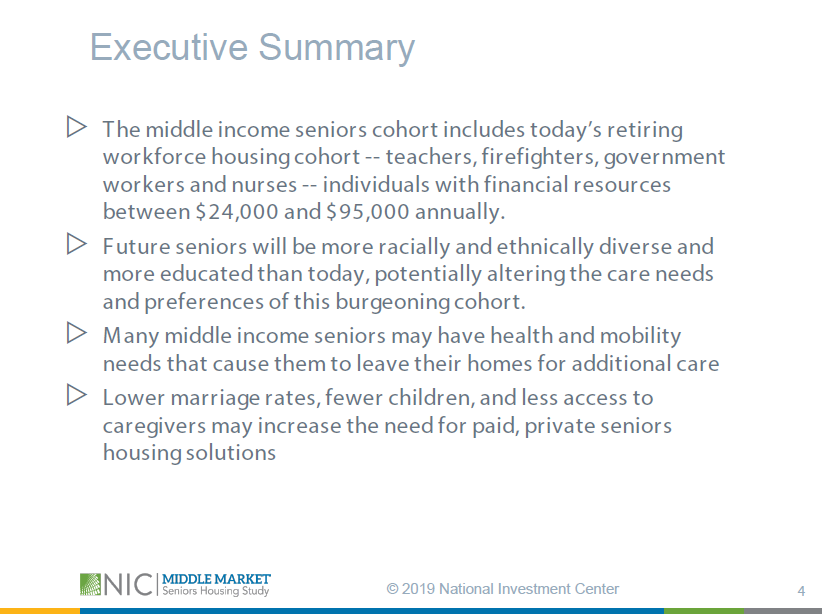
In her presentation, Pearson walked through the methodology and choices that were made in order to understand the resources and demographic nature of middle-class baby boomers. The study was designed to focus on boomers who, when they are over the age of 75, will neither qualify for Medicaid nor be able to afford today’s private-pay seniors housing and care options. The minimum amount that seniors will need in order to afford assisted living as it is priced today, as well as out-of-pocket medical expenses is $60,000. Here are a few key findings: 

  • The number of middle-income seniors will nearly double to 14.4 Million by 2029 (43% of all seniors) 
  • Seniors will be more diverse and more educated than today’s cohort
  • 67% will have3 or more chronic conditions 
  • 60% will have mobility limitations
  • 20% will be defined as “high needs”
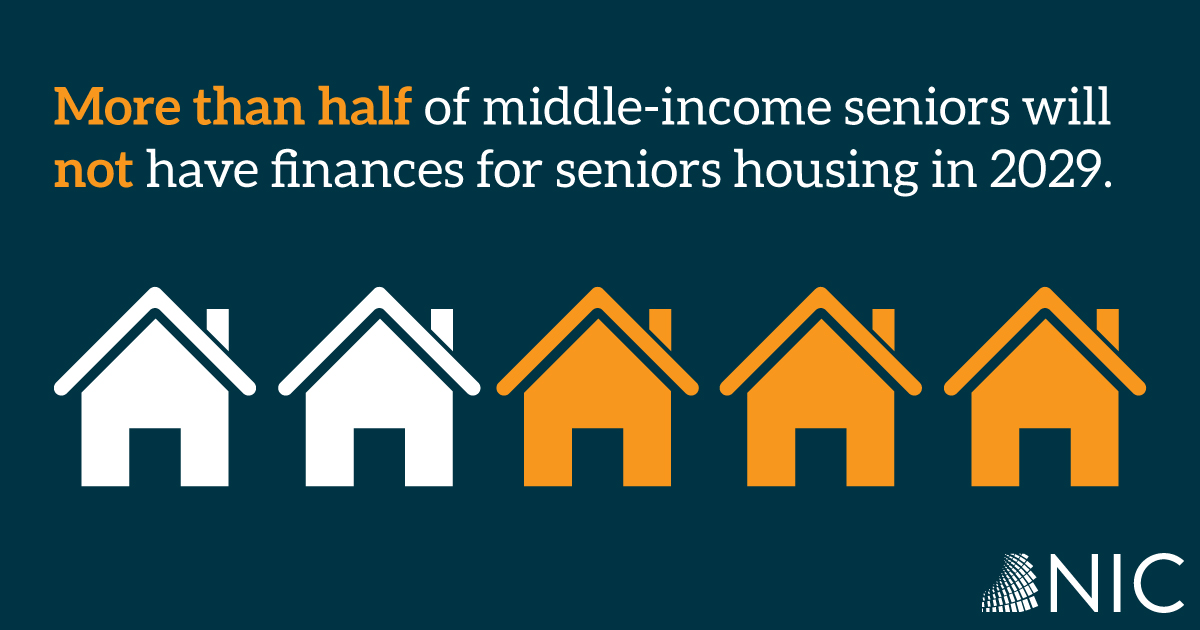
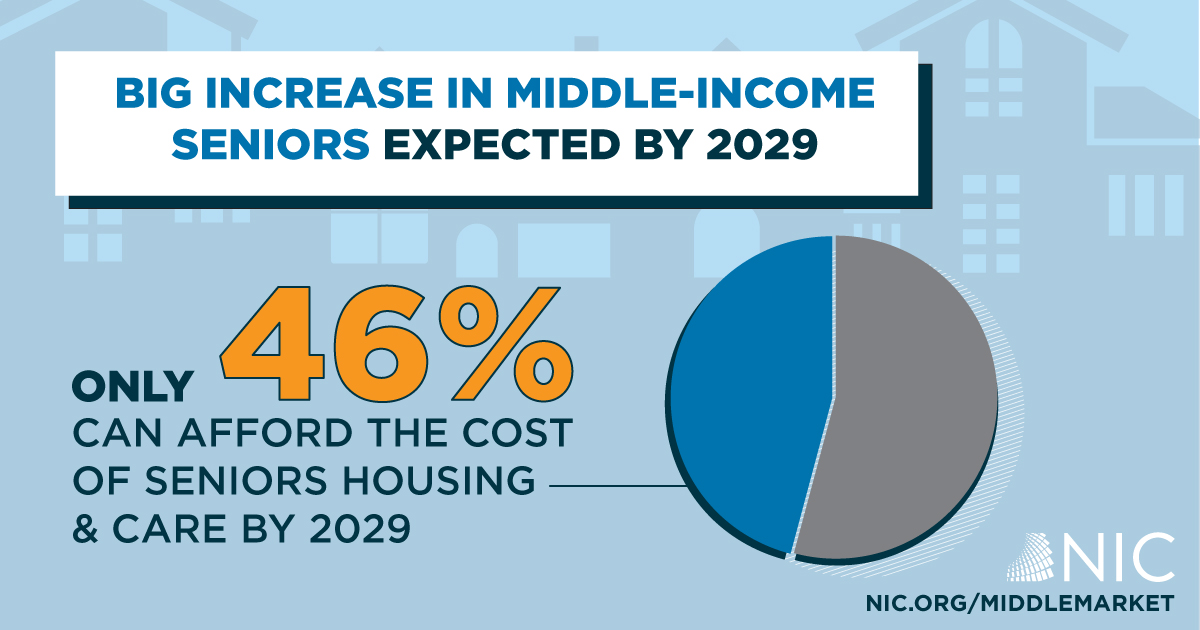
  • 7.8 Million (54%) will have less than $60,000 annual financial resources, even when including housing equity. This group grows to 11.6 Million (81%) when excluding housing equity.

Grabowski acknowledged that assisted living and independent living communities today can help balance tradeoffs between medical care, long-term care and social needs of seniors who can afford them. Financial resources, however, dictate their housing and long-term care options.  

Aging baby boomers’ demographics mean they will face more challenges than prior generations, as they begin to need care. They are less likely to have a spouse, have fewer children to serve as caregivers, and will have less in pension wealth and other savings than preceding generations. Their sheer numbers will also pose a very serious problem. In fact, the study only projects to 2029, the year in which the oldest boomer will only be 83 years old. Peak demand for seniors housing and care services comes from seniors in their mid- to late- eighties. This means this challenge will be significant over a two-decade period, until approximately 2050.  

When Grabowski commented “Good luck with Medicaid. We can’t rely solely on Medicaid as a solution,” a grim laugh rippled through the room. While it came up in the question and answer period, there seemed to be little debate on the ability of the government to handle these problems alone. 

Instead, the study’s authors and several of the panelists urged stakeholders in industry and on the policy side to discuss a range of solutions and to work together. Grabowski, addressing approaches to solutions, recommended, “Not just a private-sector or public sector solution, but a joint public-private partnership.” On the private side, he suggested a number of strategies that might help lower the cost of housing and care for the consumer. Mixed income communities, high tech solutions to lower labor costs, better leveraging family and volunteer caregivers and a la carte pricing were all mentioned. Grabowski went on to suggest, on the public policy side, blending housing and Medicare products, similar to the new flexibility that has just been given to Medicare Advantage plans, and allowing Medicaid to pay a percentage of all services for long-term care, including room and board. He also suggested extending subsidized housing to middle income seniors. 

In addition to the article on the study’s key findings, Health Affairs published two articles with further insight and commentary relevant to the study, as well as a Kramer-authored blog post on the meaning and implications of the study’s findings. Authors John Rowe, Mailman School of Public Health at Columbia University, and Jennifer Molinsky, Harvard University, spoke on their articles, “Challenges For Middle-Income Elders In An Aging Society” and “What Can Be Done to Better Support Aging in Community?” respectively.  

Rowe, commenting on his years of study on aging and society, said “In this town policy makers, when they think of aging, they think of Social Security and Medicare and there the discussion ends.” His presentation focused on the Hartford Aging Index, which measures a senior citizens’ productivity engagement, well-being, equity, cohesion, and security in a given society. 

Molinsky’s presentation focused on the housing and community needs of aging seniors. She pointed out that by 2038 the number of 75-and-over households in America will increase from 14.1 to 28.2 million. Pearson et al.’s findings project that 20% of middle-income adults in this age group will have high needs that will make it difficult to remain at home, but Molinsky focused on the remaining 80%, many of whom will likely attempt to stay in their homes and communities for as long as possible. This group will need homes adapted to their care and well-being, as well as communities that are age-friendly. However, as she pointed out in her remarks, only 3.5% of today’s housing is accessible to scooters or wheelchairs.   

The final panel discussion, focused on policy, and moderated by Weil, featured Debra Whitman, Executive Vice President and Chief Public Policy Officer, AARP, Nancy Eldridge, CEO, National Well Home Network, Kai Hsiao, CEO, Eclipse Senior Living, and NIC’s Kramer. 

Hsiao pointed out that along with the challenges there are some real opportunities. “There’s a lot of opportunity out there. A question for the senior living sector is ‘why is our penetration rate static at 10%?’ Imagine our penetration rate if we built for this group.” 

Eldridge suggested a multi-faceted, broad-based approach to finding solutions: “We shouldn’t create a siloed intervention for this group. What we need for seniors today is nothing short of a robust system to support them. Bring down those silos, and work as a team. We need a lean program that’s very broad.” 

Whitman predicted that the shortage of care-givers would only worsen: “The only safety net for many is family. In 2010 there were seven unpaid caregivers (aged 45-64) for every person over 80. By 2030 there will be four, and by 2050 there will be only three. People today who are in their twenties and thirties have to step out of work to take care of a parent.” 

While the study’s findings shine a light on a substantial set of challenges, panelists expressed hope that, working together, public and private stakeholders would also be able to capitalize on real opportunities. As Kramer stated towards the end of the discussion, “At 10% penetration we’re not doing something right with the product. That’s a huge entrepreneurial opportunity.” 

Please visit https://www.nic.org/middlemarket for more information.  

Key Takeaways from NIC’s First Quarter 2019 Seniors Housing Data Release

NIC MAP® Data Service clients attended a webinar in mid-April on the key seniors housing data trends during the first quarter of 2019.  Key takeaways included the following:

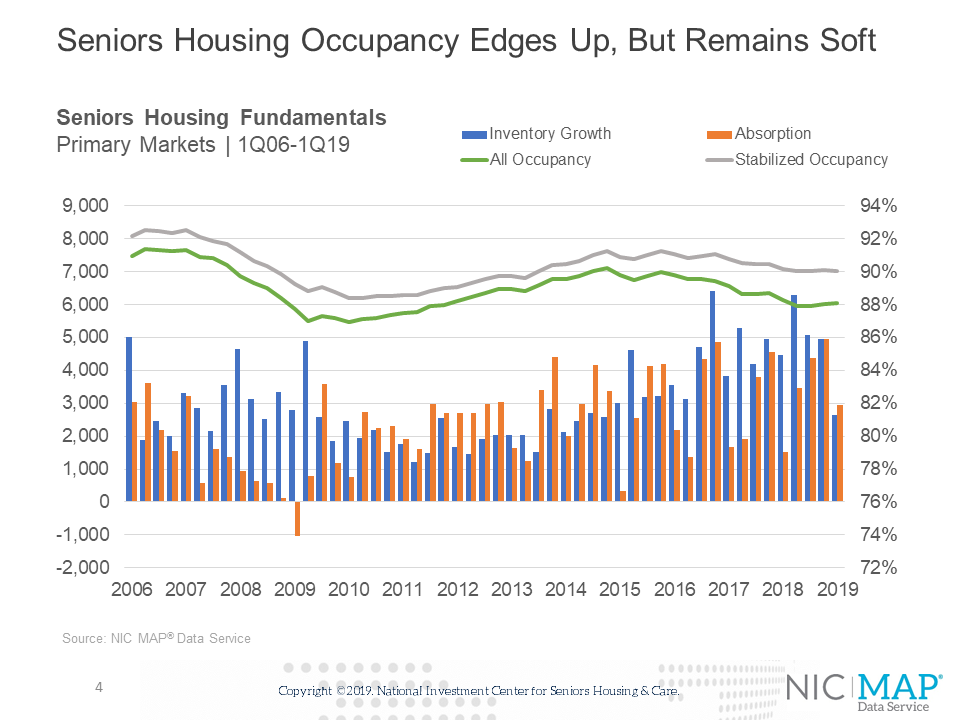
Takeaway #1:  Seniors Housing Occupancy Was Largely Unchanged, but Remained Soft in Q1 2019

  • Based on the quarterly patterns of inventory and absorption, the all occupancy rate for seniors housing, which includes properties still in lease up, inched up to 88.1% in the first quarter, up 20 basis points from the seven-year low of 87.9% in the second and third quarters of last year and up 10 basis points from the fourth quarter. It remained below year-earlier levels by 20 basis points, however.
  • This placed occupancy 1.2 percentage points above its cyclical low of 86.9% reached during the first quarter of 2010 and 2.1 percentage point below its most recent high of 90.2% in the fourth quarter of 2014.
  • It is notable that this was the second consecutive quarter where net absorption exceeded inventory growth (albeit by a small amount in the fourth quarter). This has not happened since late 2015.  Keep in mind that some of this is a timing issue, since new inventory is not instantly taken up and the leasing process is not instantaneous.

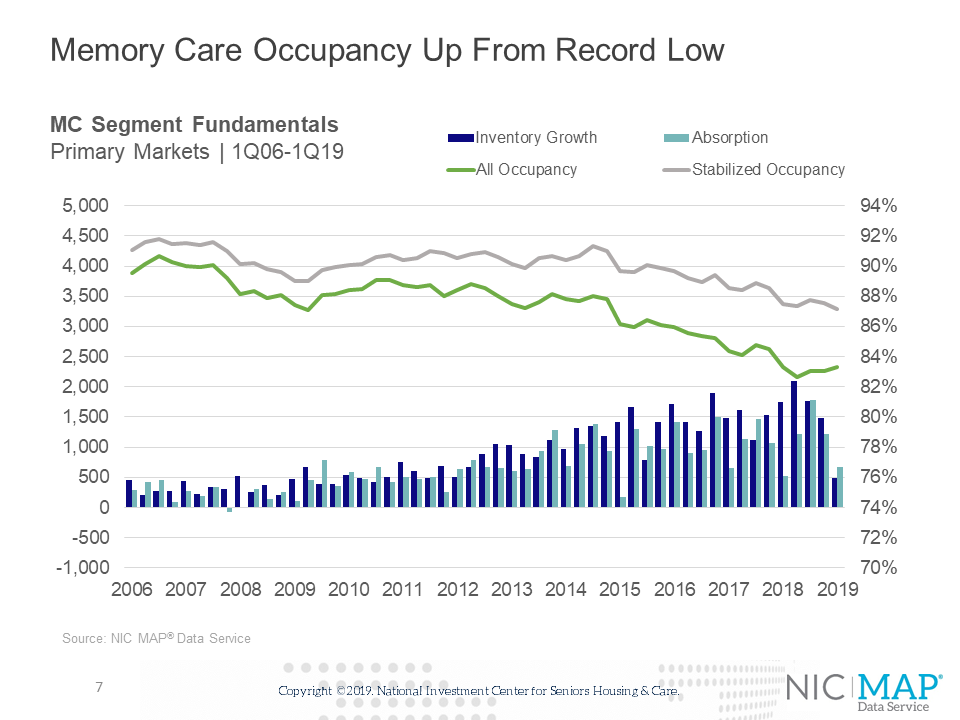
Takeaway #2:  Memory Care Occupancy Up from Record Low

  • The slide below shows the supply and demand fundamentals for the memory care segment. This is a different categorization than the prior slide which showed majority property type.  Segment includes all memory care units that NIC tracks regardless of the property type in which they are situated.   For the 31 NIC MAP Primary Markets, there are a total of 87,035 units of memory care located in free-standing, stand-alone campuses or as part of a continuum of care in an assisted living, independent living or CCRC property.  Roughly one third of all memory care units are in free-standing properties.
  • The occupancy rate was 83.3% in the first quarter, up from an all-time low of 82.7% in the second quarter, but still low. Since its most recent peak occupancy rate of 88.1% in late 2013, there have been nearly 30,000 memory care units added, 35% more than the market has been able to absorb on a net basis.  Note the gap between stabilized and total occupancy is 380 basis points highlighting the large number of units that have been added to inventory, but not yet leased.

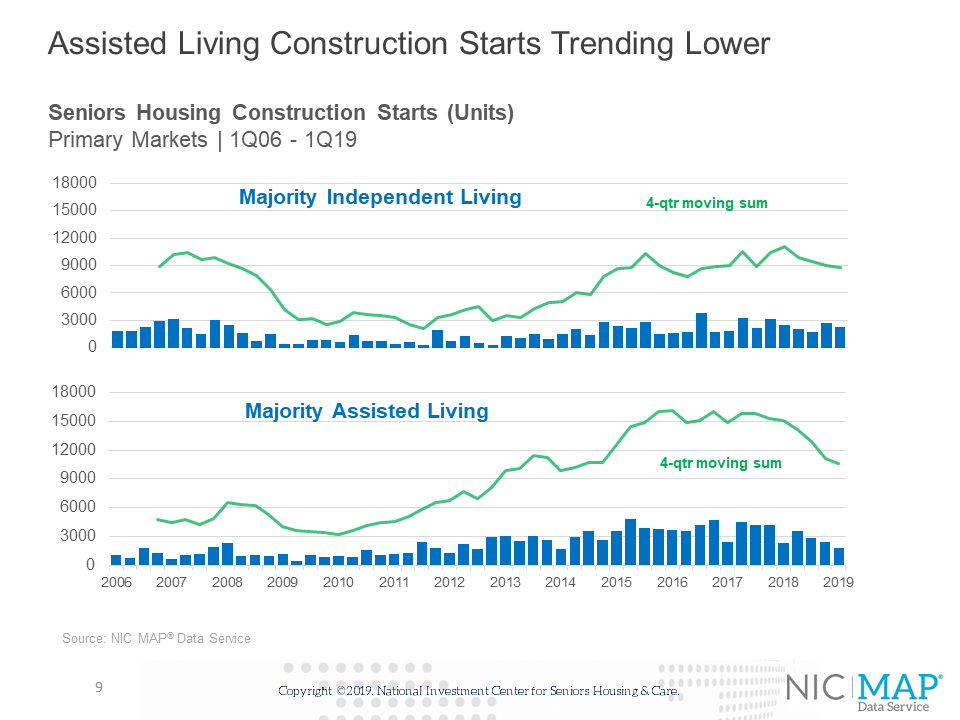
Takeaway #3 Assisted Living Construction Starts Trending Lower

  • Another key takeaway is the slowdown in the four-quarter moving sum of starts for majority assisted living. Indeed, in the first quarter, assisted living starts totaled 1,767 units, the fewest starts since the first quarter of 2014.  On a four-quarter aggregate basis, starts totaled 10,603 units, the fewest since 2014.  As a share of inventory, this amounted to 3.7%, marking the second consecutive quarter that it was below 4%. Other than last quarter, the last time it was below 4% was 2012.
  • While this may look encouraging to those concerned about the construction cycle we are currently in, it is important to note that due to the nature of this data, it is often revised either up or down.
  • For independent living, the pattern is not as clear. Starts on a rolling four-quarter basis, totaled 8,764 units in the first quarter.  As a share of inventory, this equaled 2.6%.

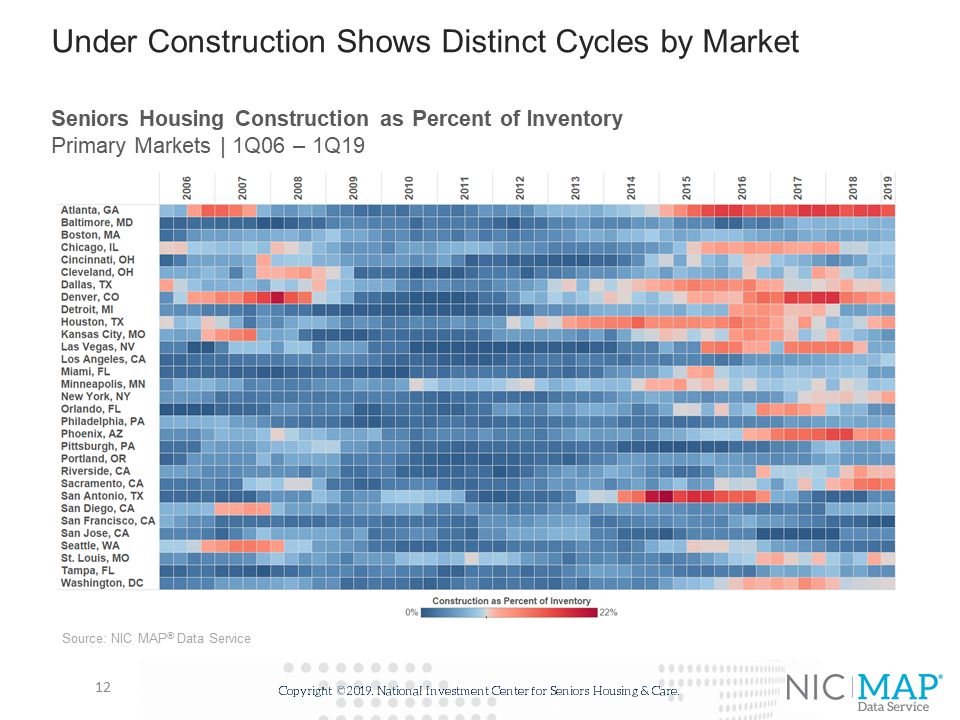
Key Takeaway #4:  Under Construction Shows Distinct Cycles By Market

  • This chart shows a heat map of seniors housing construction as a share of inventory for each of the 31 Primary markets. The scale ranges from 0% — the darkest blue shades—to 22%–the deepest reds.  The chart shows distinct development cycles among the Primary markets.
  • In looking at the far right of the slide for the Q1 2019 period, the five markets with the highest shares of inventory under construction are: Atlanta, Sacramento, Houston, Denver and Phoenix while San Francisco and Seattle are the least active as identified by the darker blue shades.
  • For a deeper dive into one market, Atlanta had 15.1% of its stock under construction as of the first quarter of 2019, the most of any one of the 31 Primary markets, but down from a peak of 17.3% in the third quarter of 2017. This equated to 3,125 units, also the most of any market apart from Chicago (3,139) and NY (3,937), two markets with twice the size of inventory, however.  As an aside, with 3,937 units, NY’s construction vs. inventory ratio is 9.7%, the highest ever.

Takeaway #5:  Wage Growth Exceeds Rent Growth

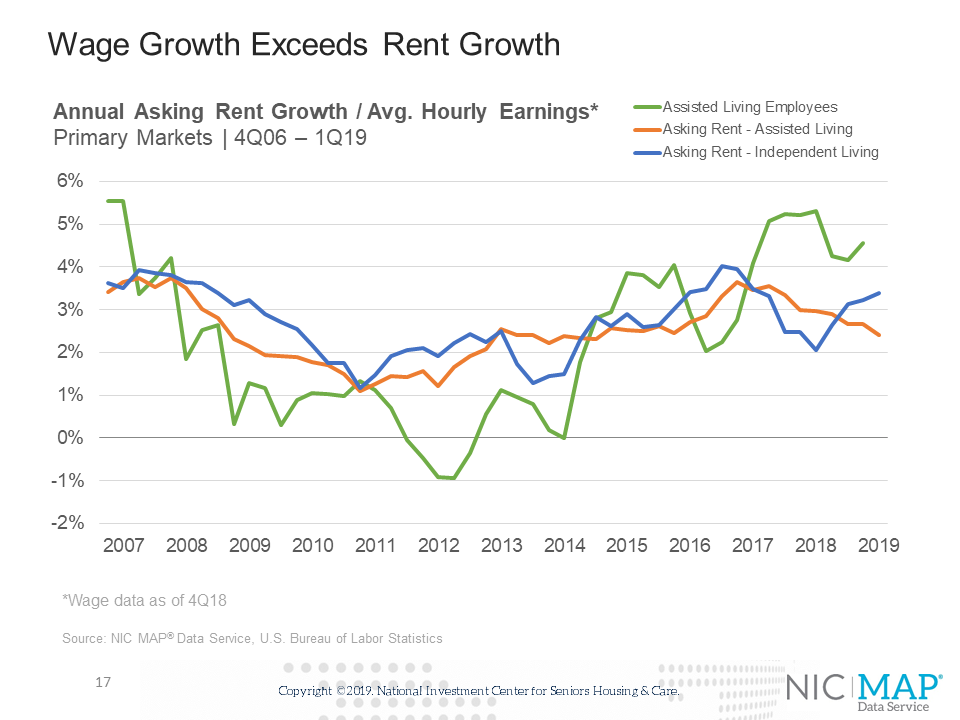
  • Same-store asking rent growth for seniors housing was unchanged in the first quarter, with year-over-year growth of 3.0%. Asking rent growth for assisted living (orange line) was 2.4% for the first quarter, the lowest rate growth since late 2015.  For independent living (blue line), rent growth accelerated back to 3.4% from 3.2% in the fourth quarter.
  • This quarter, we’ve compared asking rent growth to the changes in average hourly earnings for assisted living workers, figures that are tracked and monitored by the U.S. Bureau of Labor Statistics. Average hourly earnings were up 4.6% for assisted living employees as of Q4 2018 (most recent data available), almost twice that of asking rent growth. Together, these lines show the pressure operators may be having as expense growth has been pressured higher, while rent growth has been easing.  For many operators, labor expenses amount to 60% of their expenses.

Key Takeaway #6:  Seniors Housing and Nursing Care Transaction Dollar Volume Down in 1Q 2019

  • Preliminary data shows that seniors housing and care transactions volume registered $2.7 billion in the first quarter of 2019. This includes $1.4 billion in seniors housing and $1.3 billion in nursing care transactions.  The total volume was down 26.5% from the previous quarter’s $3.6 billion and down 27% from the 1st quarter of 2018 when volume came in at $3.7 billion
  • The rolling four-quarter total seniors housing and care volume was down close to 7% from the prior quarter to $13.8 billion.
  • The first quarter of 2019 marks the 22nd consecutive quarter of 100 or more deals closing.
  • Smaller deals of $50 million or less dominated the quarter as they represented 91% of the total.
  • Private buyers made up the majority of dollar volume. Over the past 23 quarters, the private buyer has closed on over $1.0 billion in transactions in every quarter except one which was in the second quarter of 2018. The private buyer represented 55% of all the $2.7 billion in volume closed in the first quarter. However, its volume was down 24% from the fourth quarter of 2018 and down 7% from a year ago in the first quarter of 2018 when volume registered $1.6 billion.