Cautious Optimism: Occupancy Rates Appear to Have Hit Bottom

Senior housing occupancy rates may have reached the low point in February and March of 2021; however, when it will return to pre-pandemic levels remains a question.

While it is still early to say if the seniors housing and care market is showing strong and durable signs of a recovery, several indicators from the NIC MAP® Data, powered by NIC MAP Vision, and from NIC Analytics have sparked cautious optimism and suggest that we may be at least at the bottom of the cycle. Occupancy rates may have reached the low point in February and March of 2021; however, the outlook for when occupancy will return to pre-pandemic levels remains a question.

In this blog, we look at four indicators from NIC MAP data and NIC Analytics that measure occupancy, move-ins and move-outs, overall demand, and lead volumes, which all do seem to point to modest signs of inflection and portray the sector’s current level of performance.

Top Findings:

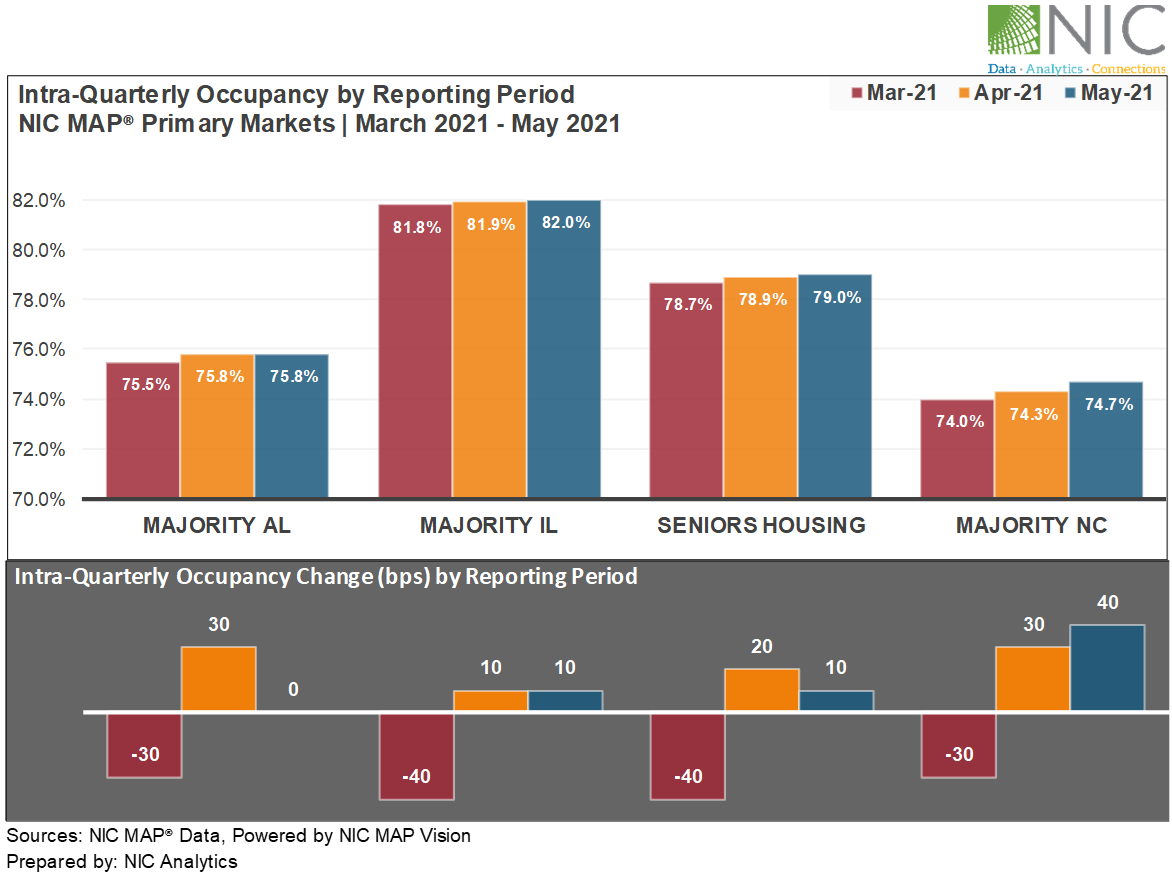
  • The just released NIC Intra-Quarterly Snapshot shared the latest reported NIC MAP data. This data showed that the occupancy rate for seniors housing edged up 0.3 percentage points in the May 2021 reporting period for the NIC MAP Primary Markets on a three-month rolling basis above its all-time low of 78.7% in the March 2021 reporting period, but it remained very low by historic standards.
  • NIC MAP intra-quarterly data showed that majority nursing care (NC) properties had the largest increase in occupancy since March 2021 reporting period, up 70 basis points (bps) but at 74.7%, it is still 11.9 percentage points (pps) below the pre-pandemic March 2020 level.
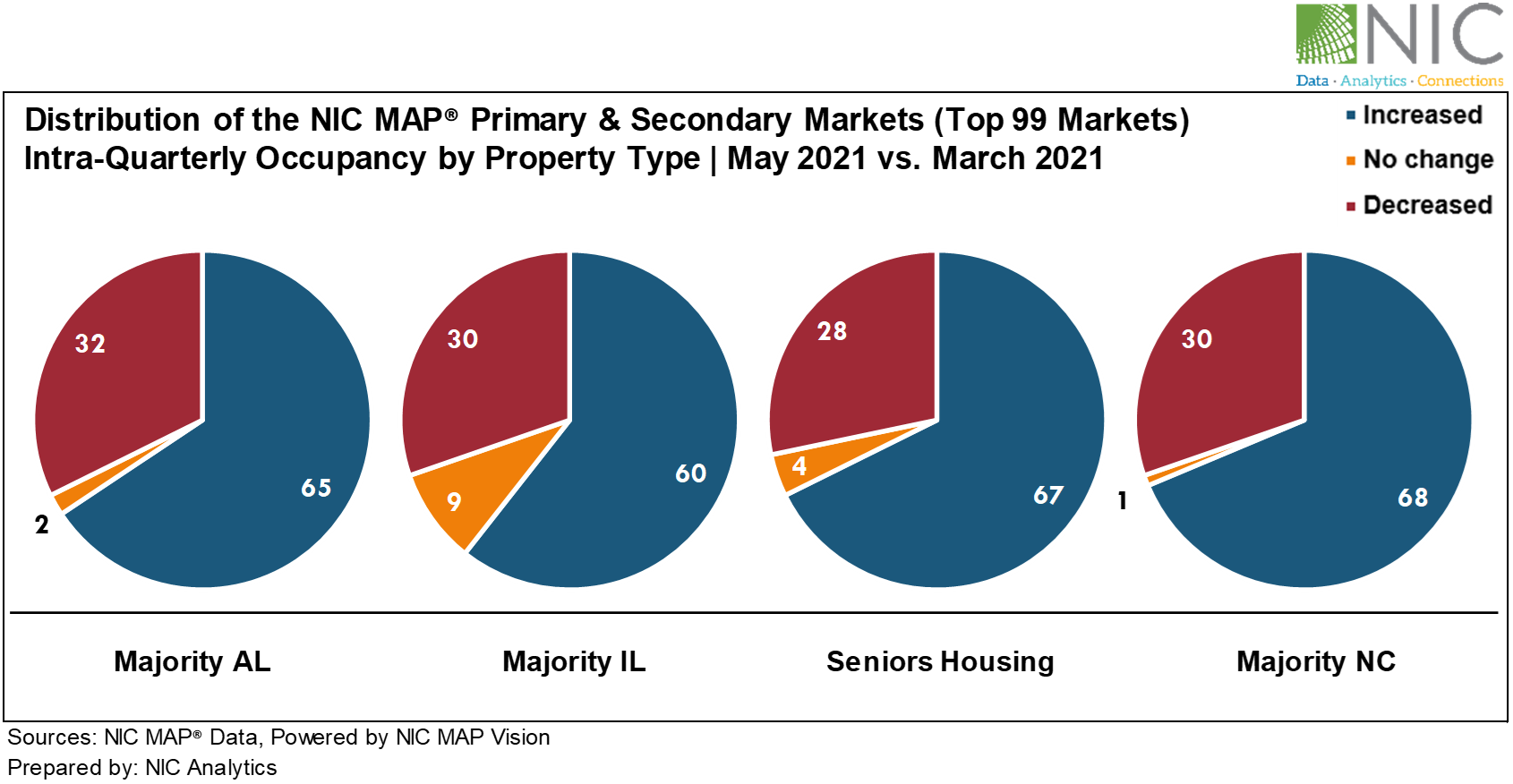
  • Sixty-seven of the 99 NIC MAP Primary & Secondary Markets for seniors housing saw an increase in occupancy since March 2021. Over the same period, sixty-eight markets for majority nursing care experienced an increase in occupancy rates, according to May 2021 NIC MAP intra-quarterly data.
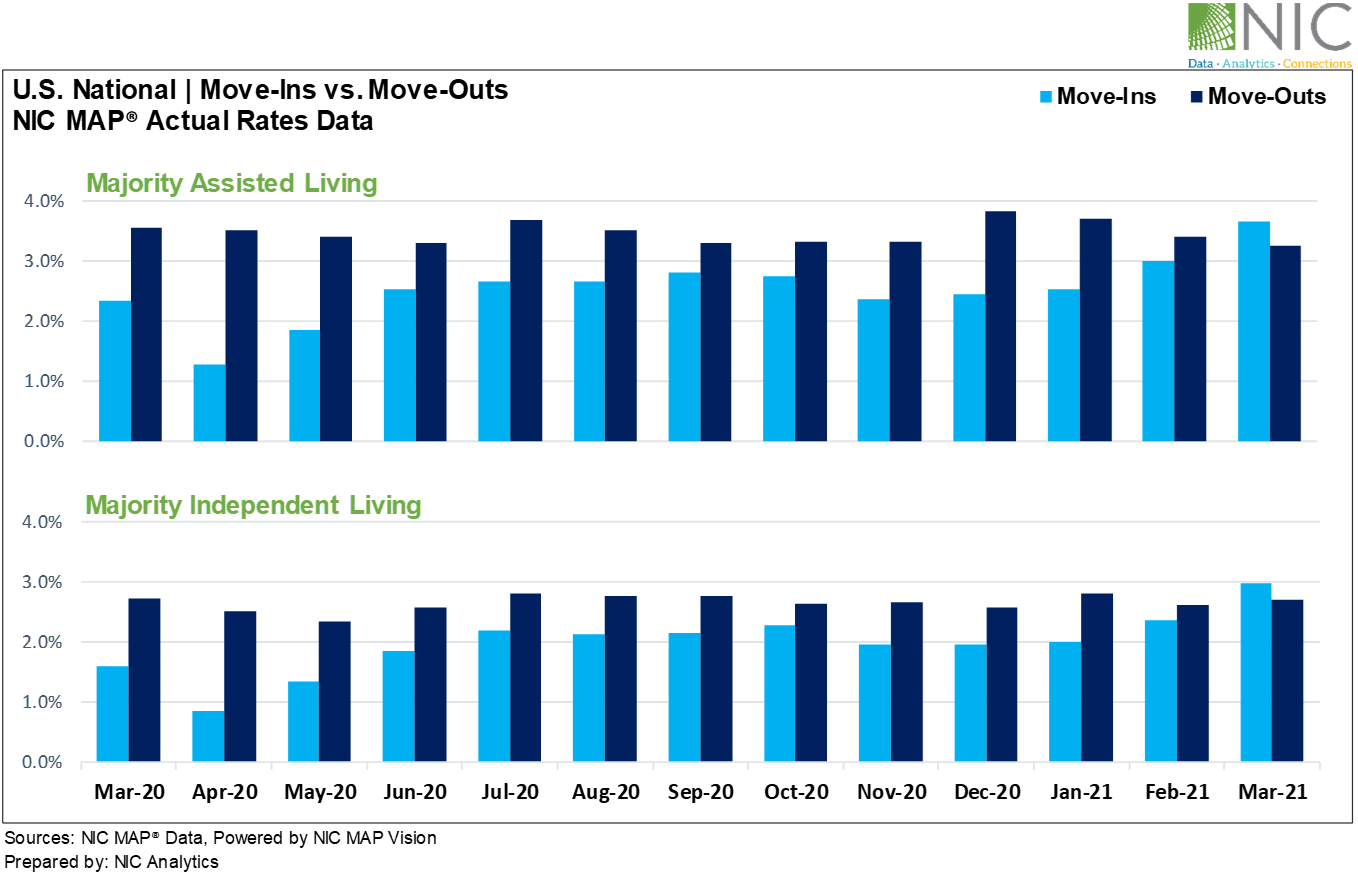
  • The NIC MAP Actual Rates Report showed that move-ins reached new highs in March 2021 for both majority independent living and majority assisted living since NIC began reporting actual rates data in 2015.
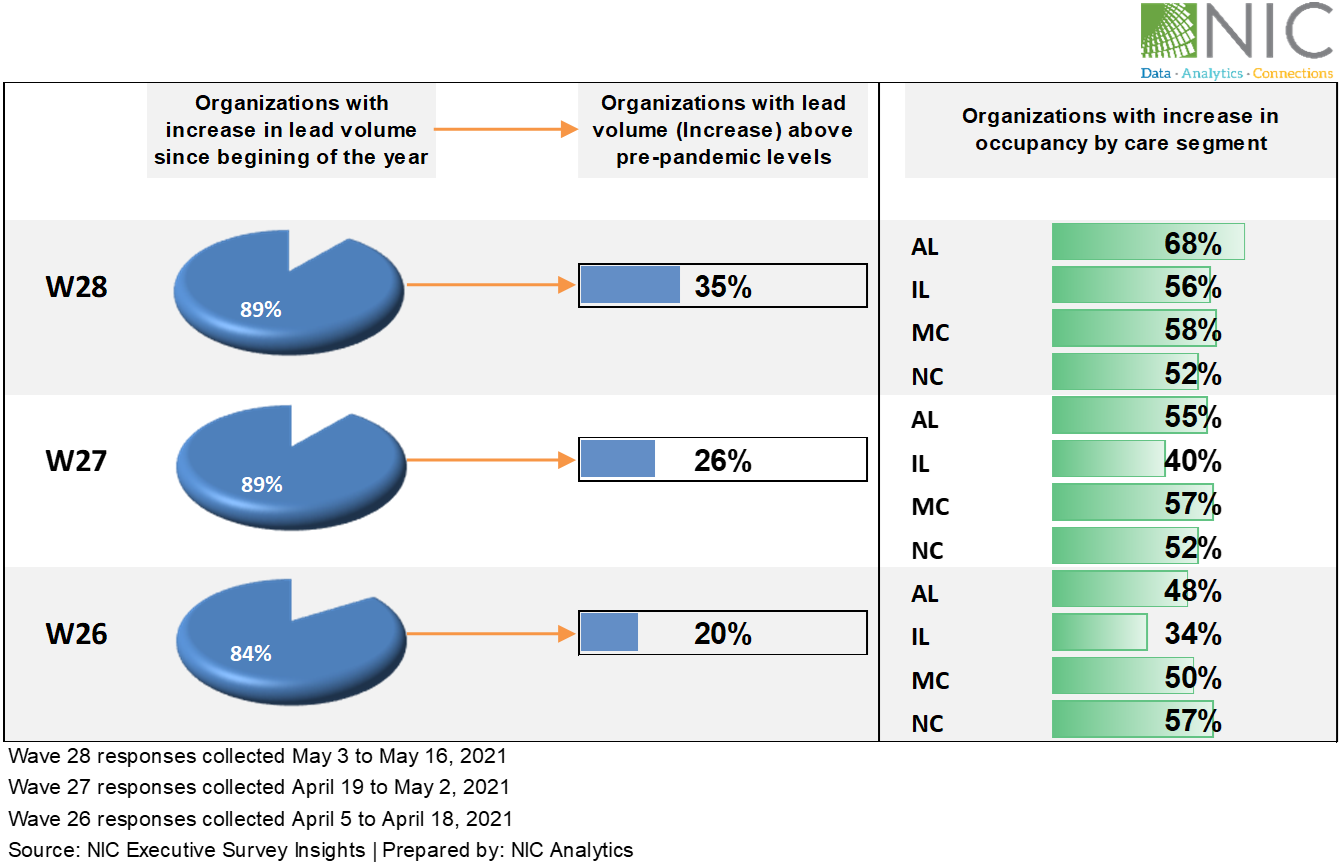
  • Wave 28 of NIC Executive Survey Insights also reported lead volumes increasing and move-ins accelerating for some survey respondents, resulting in gains in occupancy for more than 50% of respondents.
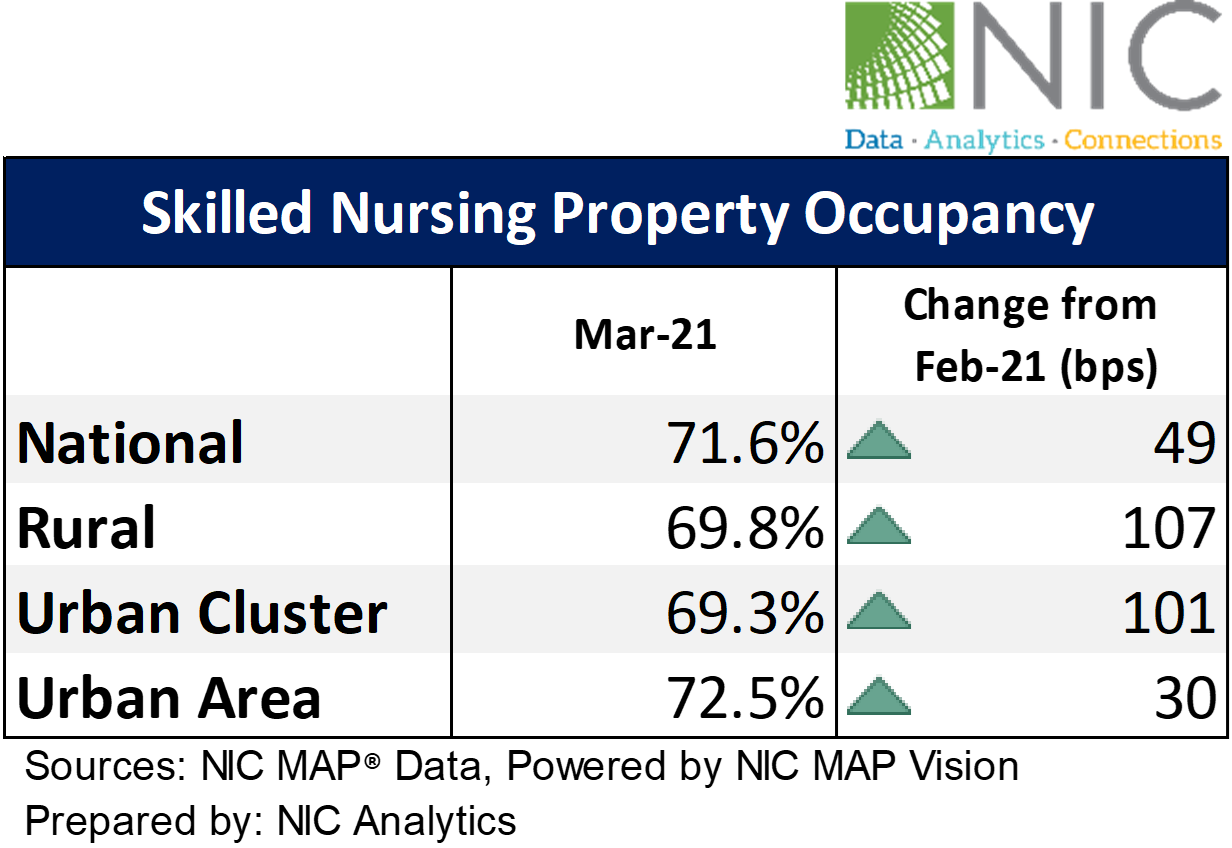
  • The NIC MAP Skilled Nursing Monthly Report, released by NIC MAP Vision, with data through March 2021 showed that skilled nursing property occupancy increased for a second month in a row. It increased 49 bps from February to end March at 71.6%. It is up 89 bps from the low set in January 2021.

NIC MAP Intra-Quarterly Data – As of May 2021

Exhibit 1 below depicts that the all-occupancy rate for seniors housing inched up 0.1 percentage point to 79.0% in the May 2021 reporting period for the NIC MAP Primary Markets on a three-month rolling basis from the April 2021 reporting period. This placed the occupancy rate 0.3 percentage points above its all-time low of 78.7% in the March 2021 reporting period, but it remained very low by historic standards. Prior to the pandemic in the March 2020 reporting period, occupancy was 87.5% — 8.5 percentage points higher than the most recent data point.

Since its low point in the March 2021 reporting period, the all-occupancy rate for majority assisted living (AL) was up 0.3 percentage points to 75.8% for the NIC MAP Primary Markets on a three-month rolling basis, although there was little change from the April 2021 reporting period. Majority independent living (IL) properties saw an increase of 0.2 percentage points since March 2021, with a gain of 0.1 percentage point in both April and May.

Majority nursing care (NC) properties had the largest increase in occupancy since March 2021 reporting period, up 70 bps but at 74.7%, it is still 11.9 pps below the pre-pandemic March 2020 level. The relatively large improvement shows the positive impact early inoculation has had on occupancy rates for majority nursing care properties. In addition, skilled nursing properties have benefitted from the resumption of elective surgeries at hospitals since recuperation and post-acute care from knee and hip surgeries often take place in skilled nursing settings.

The bottom line is that for the overall NIC MAP Primary Markets aggregate occupancy rate, no declines have been reported for two consecutive monthly reporting periods (April and May 2021) across all property types.

Exhibit 1 – Intra-Quarterly Occupancy by Reporting Period – Data as of May 2021
IQ 1


Exhibit 2 below shows that occupancy increased or remained stable in 65 of the 99 NIC MAP Primary & Secondary Markets for AL in the May 2021 reporting period compared to March 2021 levels. Thirty-two markets’ occupancy continued to slip further, and two remained stable.

For IL, 60 of the 99 Primary & Secondary Markets had higher occupancy rates in May 2021 compared to March 2021 levels.

Overall, 67 of the 99 NIC MAP Primary & Secondary Markets for seniors housing saw an increase in occupancy since March 2021. Over the same period, 68 markets for majority nursing care experienced an increase in occupancy rates.


Exhibit 2 – Distribution of the NIC MAP Primary & Secondary Markets (Top 99 Markets)
IQ 2


NIC MAP Seniors Housing Actual Rates Data – As of March 2021

The recently released 1Q2021 NIC MAP® Seniors Housing Actual Rates Report showed that for the first time since the pandemic unfolded in the U.S. and began to influence the seniors housing sector, move-ins outpaced move-outs for both majority independent living and majority assisted living, as shown in Exhibit 3.

Notably, move-ins reached new highs in March 2021 for both majority independent living (3.0%) and majority assisted living (3.7%) since NIC MAP began reporting actual rates data in 2015. This corroborates the increase in lead volume captured in NIC’s Executive Survey Insights, which has been reportedly above pre-pandemic levels for some data contributors.


Exhibit 3 – Majority Assisted Living and Majority Independent Living – Move-ins vs. Move-Outs
AR


NIC Executive Survey Insights (Wave 28 Survey)

Wave 28 of NIC’s Executive Survey Insights also reported lead volumes increasing and move-ins accelerating for some survey respondents, resulting in gains in occupancy for more than 50% of respondents.

Exhibit 4 below depicts that since early April, respondents were asked if their organizations had seen an increase in resident lead volume since the beginning of the year and, if they had, if lead volume is above pre-pandemic levels. As shown in the chart below, about nine out of ten organizations reported an increase in lead volume (89%). Additionally, one-third of organizations report lead volume currently above pre-pandemic levels (35%) compared to 20% in Wave 26 conducted just one month prior. Regardless of reports of notable improvement in lead volume, nearly two-thirds of survey respondents expect their organizations’ occupancy rates to recover to pre-pandemic levels sometime in 2022. This sentiment has remained consistent since first reported in late February (Wave 23). In fact, roughly 50% to 70% reported upward changes in occupancy in the Wave 28 survey. 


Exhibit 4 – Lead Volume and Occupancy by Care Segment According to Data Compiled by NIC Executive Survey Insights (Wave 28 survey)
ESI Final


NIC Skilled Nursing Data Initiative – Data as of March 2021

The NIC MAP Skilled Nursing Monthly Report released by NIC MAP Vision, with data through March 2021, showed that skilled nursing property occupancy increased for a second month in a row. As shown in Exhibit 5 below, it increased 49 bps from February to end March at 71.6%. It is up 89 bpsfrom the low set in January 2021. The expectation was occupancy would increase given the decline in COVID-19 cases across the country. Although occupancy seems to have stabilized, it remains very low compared to pre-pandemic levels. It is 13.2 percentage points below the February 2020 occupancy when it was 84.8%.

Nursing care properties in urban areas reported the highest occupancy rate in March 2021 at 72.5%, followed by rural (69.8%) and urban clusters at 69.3%. The largest increase in occupancy has been reported in rural, up 107 bps from February 2021 levels.

Exhibit 5 – Skilled Nursing Property Occupancy – Data as of March 2021
SNF-Final

These signs are promising and suggest that positive demand is returning. The full recovery from the COVID-19 crisis, however, will likely not be immediate or fast. Operators have not only suffered significant losses due to the COVID-19 pandemic but also had to navigate through the COVID-19-related recession amid slowing rates of move-ins and rising operating expenses to protect their residents. While some entire industries shut down such as restaurants, seniors housing remained open despite a host of proliferating challenges related to PPE, testing, infection control, staffing challenges, a patchwork of disparate regulations, lockdowns, limits on visitation, and social distancing. This agility, in and of itself, shows the resilience and endurance of the seniors housing market through the pandemic.

Thanks to the way vaccines have been distributed and administered, prioritizing the population most vulnerable to the virus, namely older Americans and residents of skilled nursing and seniors housing properties, COVID-19 cases in the U.S. have fallen to levels not seen since March 2020 and virus cases in skilled nursing properties dropped to lowest point in pandemic, according to CMS data compiled by NIC’s Skilled Nursing COVID-19 Tracker. The positive impact early vaccinations have had on the sector started to translate into positive demand, higher lead volumes, and improvements in occupancy rates.

With 15 years’ hindsight, the seniors housing market plays a critical role in supporting and helping America’s seniors age comfortably. The pandemic has revealed hidden and long-standing weaknesses, but also presented enormous opportunities for innovation and growth. Consumer demand and housing needs may have changed but the value proposition of seniors housing care settings in the post-pandemic world have strengthened. High quality care is essential for continuum of care in seniors housing. However, a sense of belonging, socialization, and engagement are the value propositions of a continuum of wellness. This will lead to a healthier resident outcome, a stronger seniors housing market, and a faster recovery for the sector, especially, as demand and the population of seniors increase and the baby boomer generation ages.

Looking ahead with any certainty is always difficult, but there is an air of cautious optimism regarding the future trajectory of seniors housing. The industry will recover if for no other reason than the fact that the industry’s value proposition and product offerings are critical for care and housing options for today’s older adult population as well as for America’s rapidly aging population. Today’s oldest baby boomer is 75 and quickly approaching the age of needing seniors housing (age 82 or more). Additionally, the sector offers compelling and emerging opportunities in both healthcare collaboration and population health management, as evidenced by the pandemic, and as critically needed to stave off staggering societal healthcare costs. And lastly, there is a better understanding of the sector by institutional capital providers who hold significant amounts of investable and targeted capital.

Interested in learning more about NIC MAP data? To learn more about NIC MAP data, powered by NIC MAP Vision, and about accessing the data featured in this article, schedule a meeting with a product expert today. 
Study Shows Care Setting Impact on COVID-19 Mortality

NIC provided a grant to NORC at the University of Chicago to study the disparate effects of the pandemic on different seniors housing and care settings.

NIC provided a grant to NORC at the University of Chicago (NORC) to study the disparate effects of the pandemic on different seniors housing and care settings. The study results have just been released.

The analysis examines mortality rates by property level of care – independent living, assisted living, memory care, and skilled nursing – and provides a comparison to seniors aged 75 and older living in non-congregate settings (single family homes and apartments).

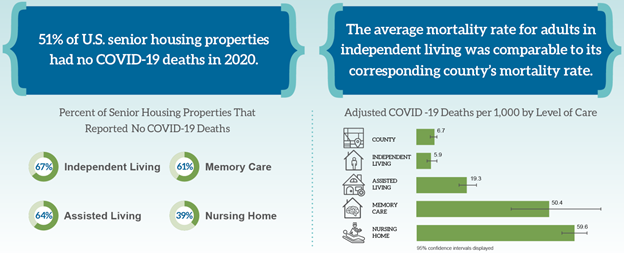
The study focused on data from 3,817 seniors housing properties across 113 counties in five states – Colorado, Connecticut, Florida, Georgia, and Pennsylvania. About two-thirds of independent living properties (67%), assisted living properties (64%), and memory care properties (61%) experienced no COVID-19-related deaths. Thirty-nine percent (39%) of skilled nursing facilities (also known as nursing homes) experienced no COVID-19-related deaths during the same period.

Also, among the study’s key findings is that COVID-19 mortality rates across seniors housing increased as the health and caregiving complexity of residents increased, with the highest percentages occurring in memory care settings and skilled nursing properties. By including a comparison to seniors aged 75 and older living in non-congregate settings in the broader geographical areas, study findings suggest that residents who live in independent living properties were not at higher risk by virtue of their congregate care setting.


Throughout 2020, average adjusted mortality rates from COVID-19 in skilled nursing were 59.6 per 1,000, likely driven by the advanced age, frailty, and comorbidities of the residents. By contrast to skilled nursing, assisted living mortality rates were two-thirds lower at 19.3 deaths per 1,000 residents. Resident deaths in independent living settings were statistically comparable to the experience of older adults living in non-congregate settings in the broader county.

Adjusted mortality rates in memory care were 50.4 per 1,000 residents, which is statistically comparable to skilled nursing. Memory care units faced particular challenges with infection control, since seniors who have cognitive impairments are more likely to require additional care and support for basic needs.

In a secondary analysis that looked specifically at continuing care retirement communities (CCRCs) residents, CCRCs were associated with a significantly lower expected mortality rate when compared to non-CCRCs. The mean expected mortality rates for CCRCs across all care segments was 10.0 per 1,000 as compared to 19.9 per 1,000 in non-CCRCs.

The study also included a dozen interviews with seniors housing operators and eight state affiliates of LeadingAge and Argentum, organizations that serve non-profit and for-profit aging services, to understand the context of the COVID-19 case and death data, and the challenges they faced during the pandemic. These qualitative interviews helped place the study’s quantitative results in context and help readers understand some of the challenges faced in managing COVID-19 in these settings, including PPE shortages, delayed testing results, and a rapidly changing regulatory environment across all levels of government.

A second phase of the study is being planned to build upon these findings by comparing death rates across levels of care while risk-adjusting for age, health status, and demographic characteristics, as well as understanding the impact of COVID-19 on all-cause mortality by care setting. These data findings will be critical to improving the public’s understanding of the safety levels within the various seniors housing care segments. Phase 2 of the COVID-19 research study is expected to be completed by November 2021.

To view the study’s complete findings and conclusions, please see the Final Report and detailed Technical Report by visiting NIC’s COVID-19 study landing page.

Seniors Housing Equity Players Talk Investment Strategy

Seniors housing investors are re-examining their portfolios—as well as their strategies for new transactions in 2021.

Seniors housing investors are re-examining their portfolios—as well as their strategies for new transactions in 2021. Attendees of the latest NIC Leadership Huddle, titled, “Seniors Housing Equity Players Talk Investment Strategy” heard how three equity capital providers are viewing seniors housing as an investment opportunity today. The discussion included real-life examples of recent acquisitions and dispositions, as well as go-forward investment strategies in a post-pandemic world.

may12_huddle_1024

Despite seeing lower occupancies through the pandemic, the investors are seeing some light at the end of the tunnel. “It’s been very refreshing to see some very promising trends in our portfolio,” said Dustin Warner, Director, Harrison Street. He continued, “With the onset of the vaccine rollout, we’ve seen COVID cases down to just a handful of residents in late first quarter of this year.” Leads have increased, too. “They’re at the highest level since the onset of the pandemic,” Warner said. He also is seeing higher move ins, nearly at pre-COVID first quarter of 2020 levels.

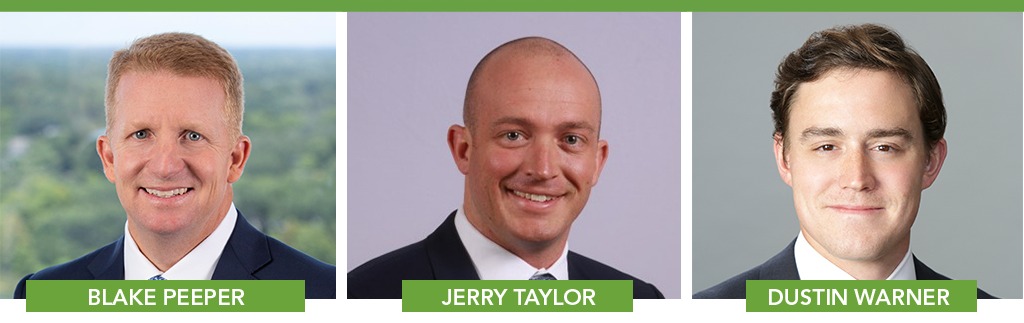
The discussion facilitator, Jerry Taylor, Vice President of Operations, National Health Investors, Inc., pointed out that there is a need for strong operators, particularly in a post-pandemic world. He asked whether there was anything to look for when looking for a quality operator partner. Blake Peeper, Partner/Co-Chief Investment Officer, Bridge Seniors Housing Fund Manager LLC, described how the pandemic drove customer behaviors to change. Prospects were shopping online more, forcing sales departments to adjust and adapt at the corporate level. He looks for larger operators who have the resources and infrastructure it takes to quickly and effectively adapt to new customer behaviors – and to innovate to meet new demands.

Asked whether the pandemic will soon be in the rearview mirror, both panelists expressed cautious optimism. Warner is seeing positive movement in the market – but also pointed out that he feels his operators are now better prepared to handle whatever might come next. He also pointed to a new supply and demand picture. With historically low new construction starts, which he expects to stay low at least in the short term, “You’ve got somewhat of a runway here to work with. You combine that with what we perceive as a pent-up demand, a year of residents that want a place to live, and its kind of a nice, optimistic landscape for the future, in my opinion.”

Peeper shared the optimism. “We’ve observed that the value proposition of seniors housing has really been validated,” he said. “The sharp recovery that we saw in March is indicative of that…it’s a really interesting time in the cycle, whereby we’ve had a real hit to occupancy, yet the medium and long-term outlook from a fundamental perspective is really quite strong. We’re generally bullish.”

On dispositions, and when the market will return to normal, with transaction volumes similar to 2018, the panelists both agreed that it is still too early to tell. Peeper said, “When we get to a point whereby the gap between where we are today and stabilized value shrinks some and shrinks to a point where those types of deals are financeable in a reasonable manner, I think then you really open the market back up.” Peeper said he views occupancy outlook as a key driver, but owners will eventually become sellers, even if they do so a little earlier than they’d like.

Taylor raised the fact there is plenty of capital, with somewhere from $9 billion to $12 billion in liquid assets, or ‘dry powder’ waiting to invest in the sector. For Warner, the acquisition pipeline, which had dried up by late March of 2020, began to see new life as debt markets opened up. “We ended the year with over $1.6 billion in new senior housing investments across development and acquisitions,” he said. Having strong relationships, established long before COVID hit, was a major factor in getting deals done.

New opportunities are also coming from old relationships. “We’ve got 22 different operators across the country,” said Warner. “They’re very intimately involved in their submarkets.” Well established relationships with large institutional players have also yielded some new opportunities for Warner.

Taylor asked whether the panelists were seeing value-add opportunities, given the stresses of the pandemic. “Not every value-add deal is distressed, but, of those that are, there are really two different types of distress that we’ve seen,” Warner said. He described properties that were “truly” distressed due to fundamental issues, such as functional obsolescence, or they might be located in over-saturated markets, or have poorly suited debt structures. Many of these, according to Warner, were, “likely on their way to being distressed prior to COVID.” The other type of distress is less severe and can occur even in quality properties in good markets. He explained that these owners, many of whom are relatively new to the sector, now wish to exit. “They were very slowly leasing up pre-COVID, COVID set them back quite a bit…they just want to get out of their basis.” Those are opportunities worth pursuing.


This and other past NIC Leadership Huddles can be viewed here.

U.S. Jobs Increase by a Moderate 266,000 in April

The Labor Department reported that nonfarm payrolls rose by 266,000 in April.

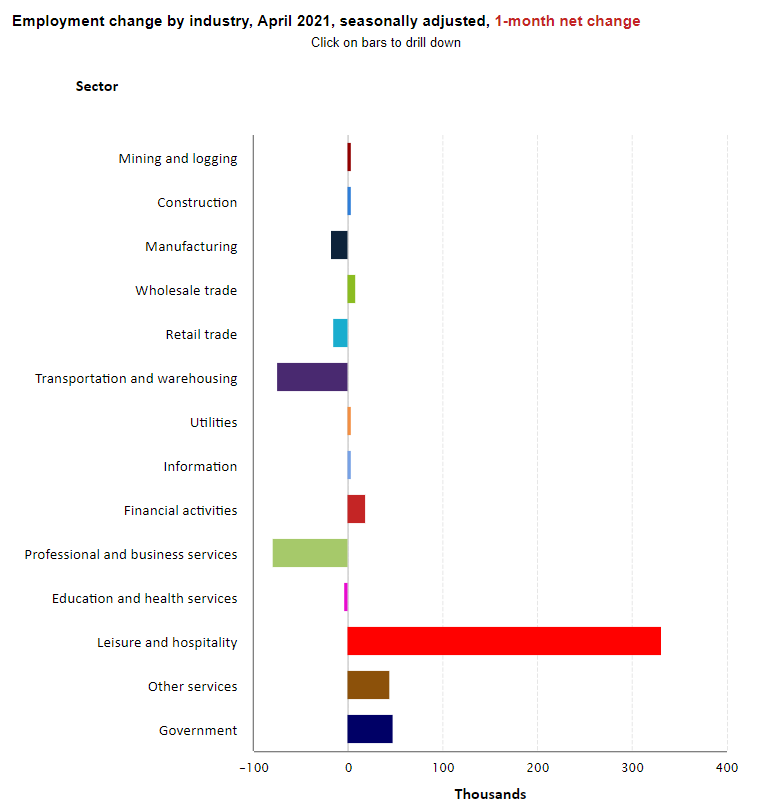
The Labor Department reported that nonfarm payrolls rose by 266,000 in April.  This was a sharp slowdown from the downwardly revised gain of 770,000 in March, originally reported as 916,000. The consensus estimates for April had been for a gain of 1,000,000. Despite the April increase, job levels remain 8.2 million below the pre-pandemic levels of February 2020.

Employment in health care changed little in April (-4,000) as a gain in ambulatory health care services (+21,000) was largely offset by a job loss of 19,000 in nursing care facilities. Health care employment is down by 542,000 since February 2020.  

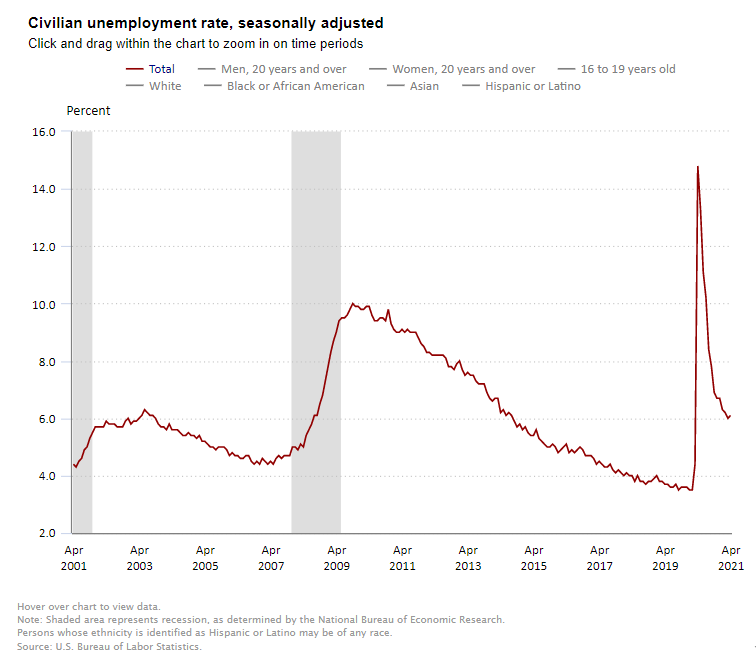
Separately and from a separate survey, the Labor Department reported that the unemployment rate edged up to 6.1% from 6.0% in March. The jobless rate is now 2.6 percentage points above the pre-pandemic level of 3.5% seen in February 2020, but well below the 14.7% peak seen in April.  

The underemployment rate or the U-6 jobless rate was unchanged at 10.4% down from 10.7% in March. This figure includes those who have quit looking for a job because they are discouraged about their prospects and people working part-time but desiring a full work week.  

The number of long-term unemployed (those jobless for 27 weeks or more) was little changed from March at 4.2 million but is 3.1 million higher than February 2020, suggesting that this continues to be a very challenging time for many Americans. Long-term unemployed persons account for 43.0% of the total number of unemployed persons.  

The labor force participation rate, which is a measure of the share of working-age people who are employed or looking for work was steady at 61.7% in April but is 1.6 percentage points lower than in February 2020. Many workers have dropped out of the labor force since the pandemic began to take care of family members or out of fear of working and catching the virus.  

Average hourly earnings for all employees on private nonfarm payrolls rose by $0.21 in April to $30.17, a gain of 0.3% from a year earlier. This was well below the 4.2% annual gain recorded in March. Notably, however, the pandemic has affected the ability to fully interpret the wage data due to the wide swings in employment trends. 

The change in total nonfarm payroll employment for February was revised down up by 68,000 from a gain of 468,000 to 536,000 and the change for March was revised down by 146,000 from 916,000 to 770,000. With these revisions, employment in February and March combined is 78,000 lower than previously reported. Monthly revisions result from additional reports received from businesses and government agencies since the last published estimates and from the recalculation of seasonal factors.

The April data was disappointing after such robust gains in recent prior months. It may reflect ongoing health-related concerns about the pandemic and the need for workers to still take care of family members, especially school-aged children. That said, the ongoing drop in COVID cases, the widespread distribution of vaccines, and a shift in consumer confidence should support a more complete re-opening of the economy and a fuller recovery in jobs in the coming months. The weak April number also suggests that the Fed will continue in its resolve to not alter its stated monetary policy goals and will keep its bond-buying program intact and interest rates low as it pursues its full employment goal.

Congressional Hearings and Confirmations Spotlight Seniors Housing & Care Sector

Over the last month, a series of congressional hearings and confirmations shined a spotlight on the seniors housing and care sector, and areas impacting the industry.

Over the last month, a series of congressional hearings and confirmations shined a spotlight on the seniors housing and care sector as a whole, as well as a number of areas impacting the industry. The hearings followed a tumultuous year of navigating the COVID-19 public health emergencies and subsequent media scrutiny, and covered a wide range of topics, including staffing necessities, private equity investment, quality metrics, home and community-based services (HCBS) funding, reimbursement pressures, telehealth flexibilities, and dual-eligible care coordination.

Below is a summary of key points from each hearing.

Senate Committee on Finance: A National Tragedy: COVID-19 in the Nation’s Nursing Homes

On March 17, the Senate Committee on Finance, chaired by Sen. Ron Wyden (D-OR), held the hearing “A National Tragedy: COVID-19 in the Nation’s Nursing Homes.” The hearing included testimonies from a nursing care certified nursing assistant (CNA), an AARP Director, a long-term care ombudsman, American Health Care Association’s (AHCA) Chief Medical Officer, Dr. David R. Gifford, and University of Chicago Public Health Sciences professor, Dr. Tamara Konetzka.

AHCA’s Dr. David R. Gifford shared testimony that sought to educate the committee on the needs of nursing home residents, the emotional and physical toll the pandemic had on residents and staff, as well as the multitude of challenges operators faced during the public health emergency. These challenges included the constantly evolving and sometimes conflicting guidance from local, state, and federal governments, the lack of reliable and timely testing, personal protective equipment (PPE) shortages, and the workforce crisis that was exacerbated by the pandemic.

With regards to the existing standard quality metrics, Dr. Konetzka of University of Chicago highlighted that “multiple rigorous studies” have found standard quality metrics do not have a meaningful association with COVID-19 outcomes for nursing homes and that even prior infection control citations were not associated with COVID-19 outcomes. Konetzka’s comments echo a 2019 GAO report that quality measures should better align with CMS’s strategic objectives at improving care quality rather than simply additional obligations of providers.

Gifford’s testimony also emphasized that COVID-19 didn’t cause problems that exist in the sector, but rather exacerbated or brought them to light. This is true on the staffing front as well – staffing challenges predate the pandemic. Thus, when the pandemic hit, tight staffing levels went from a strain to a crisis itself. Adelina Ramos, a Rhode Island Certified Nursing Assistant shared key points on this topic, including the often-low starting wages for skilled nursing workers, the prevalence of skilled nursing workers working multiple jobs, and that the often-low staffing ratios themselves tend to feed into the employee turnover challenge.

Konetzka highlighted that “Though community spread of COVID-19 and facility size have proven to be the top predictors of nursing home outbreaks in multiple studies, staffing does have an effect on how a COVID-19 outbreak plays out. More staff did not reduce the chance of outbreaks, but more staff hours meant fewer deaths and cases once an outbreak occurred.”

Dr. Gifford cited a November 2020 survey of skilled nursing providers that found 70 percent of nursing homes had hired additional staff and 9 out of 10 asked staff to work overtime and provided hero pay. Gifford summarized AHCA/NCAL’s actions relative to staffing through the pandemic – developing free online courses to train temporary caregivers, urging Congress to direct financial aid to long-term care properties, and sharing a strategy roadmap with governors to address the workforce shortage. Gifford summarized the sector’s needs by saying, “We need ongoing staff support as this pandemic continues, but we also need a more long-term solution. … We need a comprehensive strategy to recruit more health care heroes to serve in long term care.”

A National Bureau of Economic Research (NBER) study on private equity investment in healthcare made its way into the hearing multiple times. The study included data on 1,674 nursing homes that were acquired by private equity firms in 128 unique deals between 2000 and 2017. The study cited instances of bad outcomes for nursing homes that were acquired by private equity owners. These include elevated risk of death for short-term Medicare patients, higher rates of antipsychotic drug use, and increased taxpayer spending on episodes of care.

The American Investment Council has pushed back on the NBER findings, saying that “private equity firms make long-term investments in…nursing homes to help rescue, build, or grow businesses, often providing much-needed capital to strengthen struggling companies.” The council also said that the NBER research hasn’t been peer-reviewed and doesn’t include data on Medicaid patients, who comprise most long-term nursing home residents. The paper is “inconsistent with recent peer-reviewed academic research that shows that private equity-backed companies are delivering high-quality care to nursing home residents, particularly during the COVID-19 crisis,” it said.

One subcommittee member spoke in favor of the for-profit healthcare system. Rep. Tom Suozzi (D-NY 3rd District) said “I’m not against making money as long as you are taking care of your patients.”

Senate Special Committee on Aging: COVID-19 One Year Later: Addressing Health Care Needs for At-Risk Americans

On March 18, the Senate Special Committee on Aging, chaired by Sen. Bob Casey (D-PA), held the hearing “COVID-19 One Year Later: Addressing the Health Care Needs for At-Risk Americans.” Much of this hearing focused on the disparities in care during the pandemic. Speakers noted the virus had a disproportionate impact on the elderly, people with disabilities, minorities, and rural Americans. While this hearing was not focused on seniors housing or skilled nursing, private equity investment in long-term care was brought up and questions were posed regarding its suitability for the sector.

Comments highlighted the two different types of patients that are found in skilled nursing, and how they don’t necessarily align with each other. Anthony Jackson, senior vice president and chief operating officer of Roper Saint Francis Healthcare, and a former nursing home administrator said “When you look at the viability of a nursing home, they started to move away from the responsibility for which they exist, which is to take care of patients from a long-term perspective. They moved toward taking care of short-term types of disease which provides for quicker turnover and a better reimbursement.”

On HCBS services, Senator Elizabeth Warren (D-MA) said “…the coronavirus has also highlighted the critical importance of providing care safely in home and communities. Here’s the problem: Millions of Americans can’t access HCBS services at home. … We must make HCBS a mandatory benefit in Medicaid and expand Medicare to cover more at-home, long-term care services.” Following this hearing, the American Jobs Plan was announced, which includes $400 billion to expand access to Medicaid home and community-based services.

House Ways and Means Oversight Subcommittee: Examining Private Equity’s Expanded Role in the U.S. Health Care System

A week later, on March 25, the House Ways and Means Oversight subcommittee, chaired by Rep. Bill Pascrell (D-NJ 9th District) held the hearing “Examining Private Equity’s Expanded Role in the U.S. Health Care System.” Skilled nursing and private equity ownership were the central themes for this hearing, again citing the February 2021 National Bureau of Economic Research (NBER) study. Ernest Tosh, an attorney specializing in nursing home abuse and neglect highlighted what he considers to be a lack of transparency in for-profit skilled nursing chains’ use of taxpayer funds. Tosh said “We really have no idea what the financial position of these facilities is. They can be made to look bankrupt, but, in fact, may be making millions and millions of dollars each.” Tosh proposes requiring skilled nursing operators to file consolidated financial statements for entire chains, not just individual properties.

In anticipation of another congressional hearing scrutinizing the sector, AHCA/NCAL’s CEO and President Mark Parkinson proactively released a statement before the hearing highlighting both the shortcomings of government funding coverage and the limited role of private equity within the ownership of skilled nursing properties. Parkinson said “In the long-term care sector, private equity companies own less than 10 percent of nursing homes, and large investor acquisitions are decreasing. However, the small number of nursing homes that have turned to alternative revenue sources underscore the financial and staffing crisis that nursing homes are facing due to the fact that Medicaid does not cover the cost of care.”

Senate Finance Committee Confirmation Hearings: CMS Administrator Chiquita Brooks-LaSure and HHS Director Andrea Palm

On April 15, the Senate Committee on Finance held a confirmation hearing for both the CMS Administrator and the HHS Director, which covered applicable topics of Medicare and Medicaid funding and reform, telehealth, staffing, oversight, and penalty changes for skilled nursing properties.

Senator Mike Crapo’s (R-ID) opening statement on both Brooks-LaSure and Palm touched on the topic of telehealth. “Patients and providers have benefited from expanded access to telehealth and expedited approval of COVID-19 vaccines, diagnostics, and treatments. Going forward, Medicare and Medicaid patients must have the same access to innovative items and services as those with commercial insurance.” Several other senators highlighted the need to ensure that the telehealth boom that started during the pandemic continued. In response, Brooks-LaSure said that she wants to examine what CMS’s authority is to extend the flexibilities that are set to expire at the end of the public health emergency.

Senator Bill Cassidy (R-LA) also commented that “We both know we spend lots of money on duals, and we get miserable outcomes. … One of the issues is that it is difficult for aligning incentives for both state and federal governments.” Brooks-LaSure responded that there needs to be better coordination between long-term care, nursing homes, and hospitals.

The hearing did not highlight any major opposition to either nomination, and likely signals the confirmation of each to their respective roles at CMS and HHS.