NIC MAP in July released second quarter data for the 880 active adult rental communities they track across the U.S. Active adult communities are age-restricted, multi-family rental properties that focus on meeting lifestyle preferences, often offering amenities that emphasize wellness and community.
Key takeaways included the following:
Takeaway #1: Active Adult Occupancy Rate Increased in Second Quarter 2026
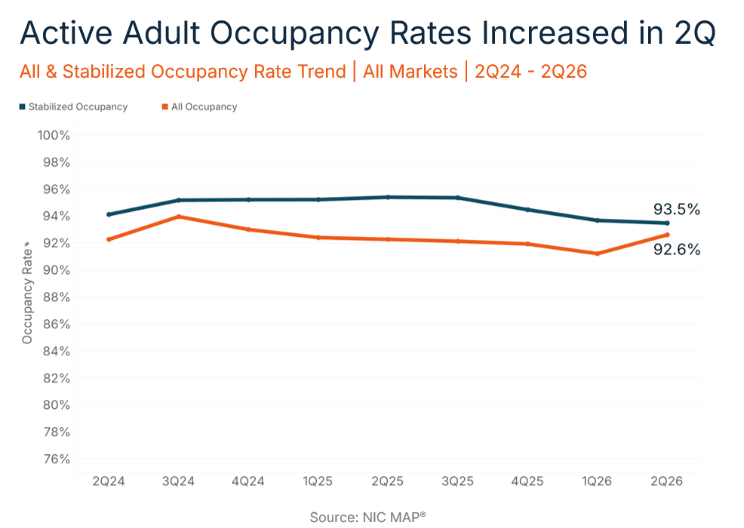
- The average active adult occupancy rate climbed 1.4 percentage points in 2Q to 92.6%, 0.3 percentage points higher than a year earlier.
- For stabilized properties open at least two years, occupancy rates edged down 20 basis points to 93.5%.
- The higher gain in the All Occupancy rate compared to the Stabilized Occupancy rate, as shown below, may reflect an improvement in markets where there was a significant increase in new supply in recent years.
Takeaway #2: Pace of Active Adult Development Has Slowed
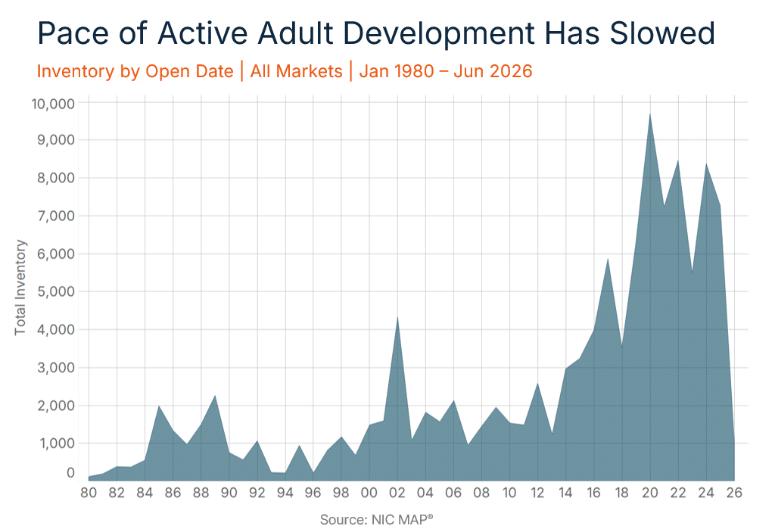
- The chart below illustrates active adult rental inventory by the year these properties opened.
- Active adult is still a relatively new product type, with roughly half of inventory opened in the past 10 years.
- In the first half of 2026, however, NIC MAP tracked only 1,000 new units opening across 880 active adult rental communities comprised of nearly 130,000 units.
- This pace is well below recent years in which openings averaged 7,000 new units per year over the 2023 through 2025 period.
Takeaway #3: Active Adult Sunbelt Markets Improved
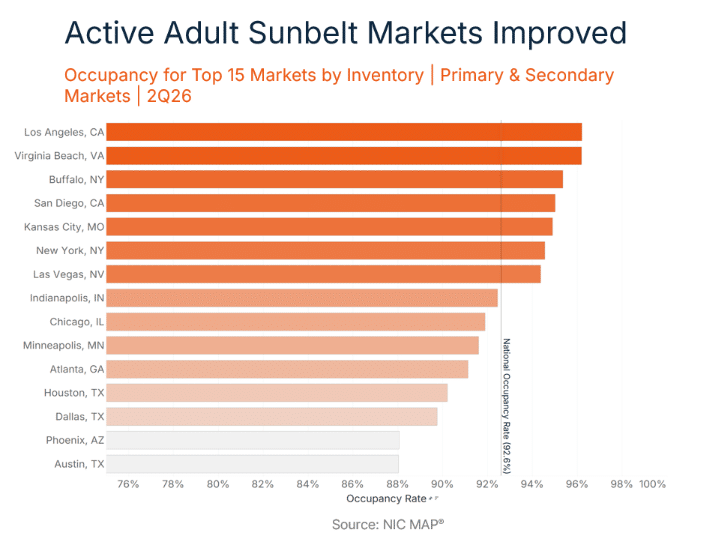
- For the 15 largest active adult rental markets, the bar chart below shows All Occupancy rates, with the U.S. average of 92.6% shown in the dotted line.
- The highest active adult occupancy rates in the second quarter were in Los Angeles (96.2%), Virginia Beach (96.2%), and Buffalo (95.4%).
- Austin (88.0%) and Phoenix (88.1%) still had the lowest occupancy rates but increased 1.1 and 3.0 percentage points from the prior quarter, respectively.