As the active adult sector emerged over the last decade, investors, developers and operators have gained a clearer understanding of the strategies and models that drive success—and those that fall short.
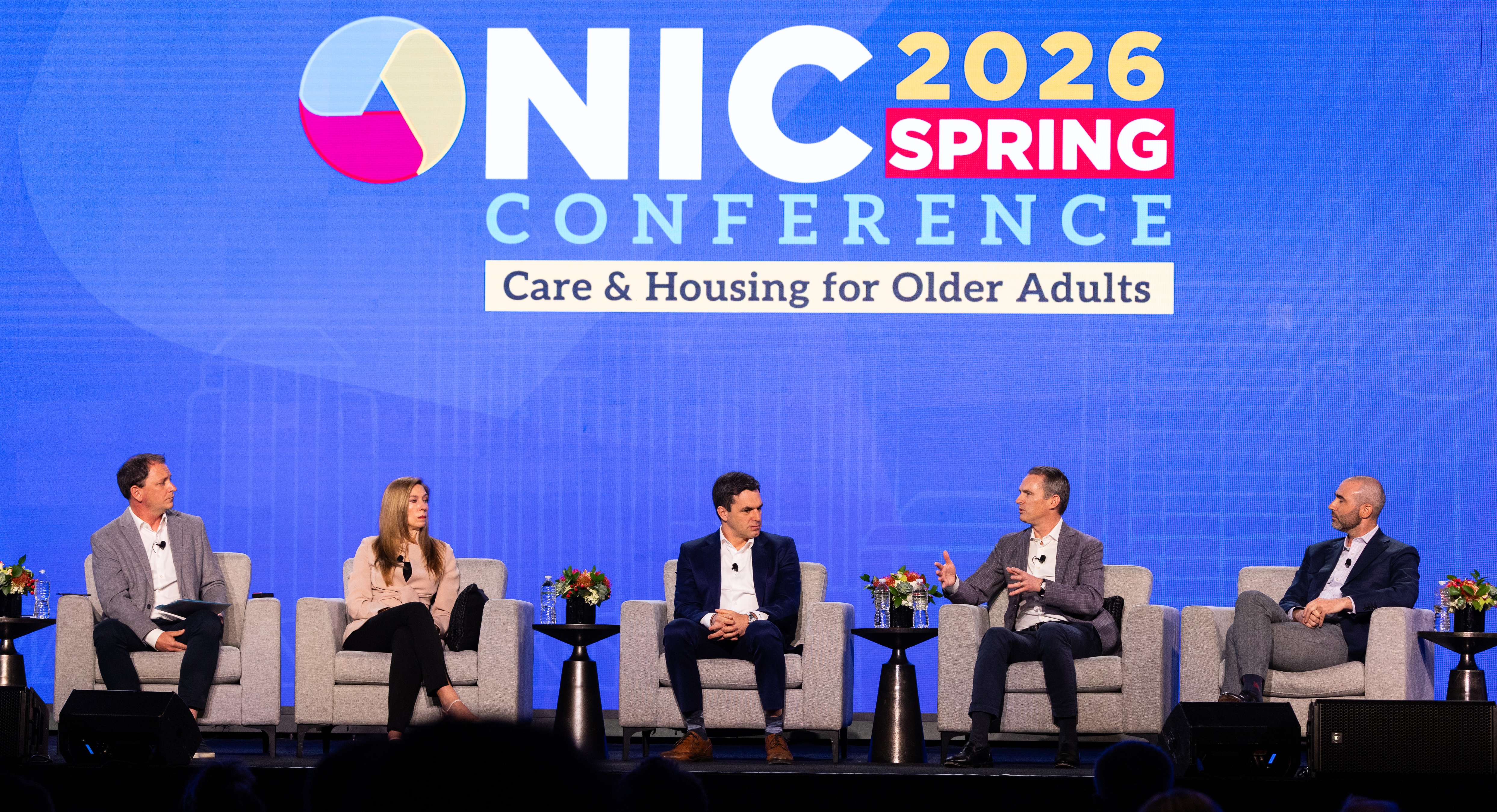
To assess the evolution of the sector, top leaders gathered at the 2026 NIC Spring Conference to discuss lessons learned and new opportunities in the active adult market.
In opening remarks, panel moderator Matt Pyzyk of Green Courte Partners set the stage by reiterating NIC’s definition of active adult properties: age-qualified, market-rate, multifamily rentals that emphasize lifestyle and do not include meal service.
Pyzyk noted that the typical active adult resident is widowed or divorced, in her late 60s or early 70s, downsizing, and may still be employed. He added that the active adult inventory has increased 36% since 2016.
The panel discussion focused on five key insights.
-
Recruit the right talent, create a sense of community. Though active adult communities have many fewer employees than senior housing properties, the on-site staff is key, the panelists agreed. “Staff retention corelates with resident retention,” said Eddy O’Brien of Blaze Capital Partners. “Taking time upfront to get the right staff pays dividends.”
Also key: the community manager must be a sales leader, and lifestyle programming is essential for success. During lease-up, a staffer must spearhead programming to engage residents and demonstrate to prospects that the community offers a full and active lifestyle. Once programming has momentum, residents can typically manage that aspect of operations themselves, according to Jim Lindsey, BVO Capital. “The goal is to make the community self-sustaining,” he said. -
Design and amenities make a difference. Baby boomers prefer modern designs and active environments with communal spaces that promote interaction, such as pickleball courts, rooftop terraces, and open demonstration kitchens. Apartments tend to be larger than conventional multifamily units, but the projects themselves are generally smaller than they were 10 years ago when the product was less well defined.
“We target 165 units,” said Lindsey, describing BVO’s middle market product. These projects are less costly to build than luxury communities and can be leased in a reasonable time period. Amenities are located in the main building, instead of in a clubhouse, so residents don’t have to walk across a parking lot to participate in activities. Ashley Fitzgerald of The Carlyle Group noted that amenity spaces in active adult developments are larger than those in conventional multifamily buildings. But active adult amenity spaces are flexible and can accommodate multiple purposes. “We don’t need a 1,500-square-foot craft room,” she said.
Cottage-type products are being introduced and perform well, according to O’Brien of Blaze Capital Partners. He added that the average age of cottage residents is younger than those in apartments. Cottages also command rent premiums of 20-30%. But, he added, “We think a mix of cottages and apartments is the right combination in a development.” -
Pre-leasing is key. “The duration of the lease-up is the biggest risk,” said Fitzgerald.
Michael Levine of Greystar said that the first year is pivotal. It’s important to show the community is active which requires about 35-40% of the building to be leased. The panelists agreed that market education is needed to reach consumers unfamiliar with the active adult product and its benefits. “We are still a young sector,” said Levine. -
Local conditions drive rent growth. Stabilized active adult communities typically command rents about 5% higher than traditional multifamily properties, the panel agreed. But rents depend on the local housing markets and other metrics. A soft housing market may keep rents in check.
But looking ahead, the panelists expect solid rent growth at active adult communities. Existing multifamily and active adult properties are likely to absorb additional space, and new development is expected to remain constrained. “Rents could go higher in 12-18 months,” said Lindsey. -
Maintain a limited-service model. As residents age, it’s tempting to offer more services. But, Pyzyk cautioned, “Active adult is lifestyle programming.”
Greystar sticks to a staffing model similar to that of multifamily properties. Interestingly though, Greystar is introducing a preventative healthcare program at an active adult community in Missouri because its average resident age is trending higher. But, Levine said, “We are not bringing in meals, home care, or home health. We are not independent living.”