NIC Leadership Huddle | Coping with the Pandemic: Shifting from a Sprint to a Marathon

In NIC’s tenth “Leadership Huddle” webinar, operators, joined by an executive coach, discussed how they are shifting to this new paradigm, and how this longer-term vision of the pandemic will impact psychology, overall costs, and the bottom line.
The COVID-19 pandemic is far from over, and still threatens older adults. Operators are implementing new protocols to keep residents safe, but the future is still very unclear, particularly regarding the duration of the pandemic. As a result, operators are shifting their approach from a sprint, dealing with immediate, life-threatening emergencies, to a marathon without a known finish line. In NIC’s tenth “Leadership Huddle” webinar, operators, joined by an executive coach, discussed how they are shifting to this new paradigm, and how this longer-term vision of the pandemic will impact psychology, overall costs, and the bottom line.

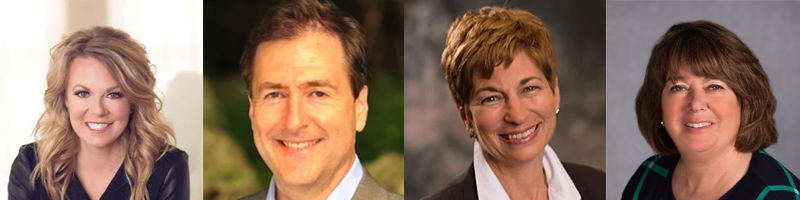
huddle10-speakers

NIC Chief Economist, and moderator, Beth Burnham Mace, began the discussion by acknowledging that, “Many of the challenges that were evident in the early days of the pandemic remain, unfortunately.” She mentioned the continued need for adequate PPE and pointed to the need for timely testing: “In recent weeks we have seen that the turnaround time for test results is inadequate. If tests are meant to be helpful and an effective surveillance tool, we need to act further on this.” She also encouraged operators to continue to improve transparency and trust, by providing data to NIC as part of the effort to track and understand the impact of COVID. “As the COVID-19 pandemic has developed, it has become increasingly clear that the availability of data on seniors housing and skilled nursing communities is vitally important,” she said.

From Sprint to Marathon

The panelists started off by reminding attendees of the scale of the sprint so far. Lynne Katzmann, Founder & CEO, Juniper Communities, by way of introduction, shared some numbers illustrating the effort her organization has put in during the pandemic: “1,500 or more days that associates sheltered in place, the 2,000 separate, different, communications to families that I authored, 5,100 status reports, 6,400 personal calls, and more than 2,500 virtual programs that we put together.”

Katzmann outlined how her organization was moving from that initial sprint to a longer-term challenge, saying, “how we look at the world has shifted.” She outlined a three-phase approach to the pandemic: “phase one is crisis management, phase two is what we’re calling the path forward, and phase three is something that will be a new normal.” Now in the second phase, her organization’s goals are, “to restore profitability while keeping our residents and our associates healthy, safe, and engaged.”

“What’s most noticeable about the paradigm shift is how we look at the world, and I think this is true not just at Juniper but for all of us. I think we can simply say that the new certainty is uncertainty.”

A key to Katzmann’s strategy at this stage is to jump-start move-ins through a variety of adjustments, including doubling the sales team, doubling her digital spend, and changing the way the organization communicates and “packages” its offering to consumers. Underlying the new approach is a new vision, “What’s most noticeable about the paradigm shift is how we look at the world, and I think this is true not just at Juniper but for all of us. I think we can simply say that the new certainty is uncertainty.”

Lori Alford, Co-Founder & COO, Avanti Senior Living, agreed that the sprint has become a marathon, adding, “Now we’ve embraced it being a journey. COVID is here, it’s not going away, there’s not a finish line that we can see anytime soon.” Her company has begun to focus on shifting mindsets. She explained, for example, how sales staff have had to adapt to the loss of the opportunity to walk prospects through their properties: “that’s been taken away from us.” Adapting to such challenges, by employing virtual tours, in this case, needs to be viewed as a new normal, which, she said, “is not wrong, it’s just different.”

Mental Health Impacts

Asked about mental health impacts of the pandemic on staff, Dan Brown, Executive Coach, Arden Coaching, pointed out that the impacts can be severe, particularly on frontline care givers. He discussed the high rate of suicides among doctors, which is double that of the overall population. “This isn’t something that’s abstract or theoretical. It’s actually happening.” In response to high stress levels, operators, administrators, even investors, according to Brown, should be attuned to the signs of high stress amongst frontline workers. He said he listens for maladaptive thoughts, or feelings, and whether they are persistent. “One of the feelings that you really want to listen to, when you’re working with people on the front line, is a feeling of guilt, that ‘I can’t do enough.’”

Another thing to look for is an “incongruence,” such as smiling or laughing upon the loss of a patient or resident. “There could be emotional numbness…that, too, is a worrying sign that something may need to be addressed; that they’ve lost touch with their own emotion, their own humanity.” He suggested gently observing and checking in with staff showing these types of signs of stress. He recommends that his clients, most of whom are administrators, have the national suicide hotline number on hand at all times, for immediate intervention in such cases. He also suggested using wearables to monitor their own stress levels, and techniques such as meditation to help control the impact of stress.

Alford has begun to focus on mental wellness in her company. She said, “families are tired, residents are tired, our teams are extraordinarily tired, not just mentally from all of the changes, but the physical draining of being up late to take calls because families are in panic, or keeping the staff calm…they have a mental fatigue and they have a physical fatigue…COVID fatigue is very, very real.” She has found that traditional team motivations, such as, “high-fiving people, passing out candy bars, passing out kudos, sending flowers and adult beverages to their homes” which were effective pre-COVID, are no longer sufficient.

Taking a different approach to deal with the stresses of COVID, Alford’s home office and executive team are engaging in a six-week coaching program, focusing on individual needs and shifting to a more positive approach to dealing with the new normal. “We’re all learning together and it’s OK. Shifting into this more positive mind-set has been incredible; you can see the team standing taller…they bring that home to their families and so if we can get our key folks in the communities to not only lead their team and residents and families, but can send them home and be that great leader at home too, its just a well-rounded approach and makes a difference.” With the positive results of the program, Alford said the organization plans to extend the program to department heads, and eventually to line staff and nurses. She said, “We’re a lost industry. We’re invisible. Because we don’t work in a hospital or a skilled (nursing community), we often times forget our folks on the frontline. They’re facing it every single day, probably a little bit more than even some of the other healthcare workers, and they need just as much support.”

Katzmann shared that the pandemic, particularly early on, was very hard on her own emotional wellbeing. “I learned that I couldn’t work hard enough, and nothing that I did could control some of the outcomes. The sadness and the feelings of guilt…were really difficult, and I think it’s important for each of us to acknowledge that we have feelings and that this has impacted us at every level. That vulnerability in myself enabled me to accept that vulnerability in others.” She pointed to the “great source of support and strength and solutions,” provided by her peers in the industry, which she said has been very supportive. “You know the hashtag at the beginning of all this was, ‘we’re all in this together’…regardless of what side of the industry you play with every day, we are all in this together. At the end of the day we all benefit when we all do well at the end, so we need to support one another through this.”

The Importance of Testing

Shifting gears, Mace asked the panel, and in particular Katzmann, who she described as “one of the leading experts on how to go about (testing) as an operator,” to share “what you’ve learned about testing, where we are today, and where it needs to get to.” Katzmann described reading about how Asian nations, which experienced COVID-19 ahead of the U.S., instituted mass testing early on, and how effective that proved to be. Speaking of the successful South Korean strategy, she said, “Their strategy is simple: test early and universally, regardless of symptoms.” She explained how that approach identifies who is carrying the virus, which then allows for effective contact tracing and isolation. “If you do it early enough, everyone doesn’t have to be isolated.” Katzmann said that Juniper made the decision in late March to test everyone, and that, at the time, “We thought we would do it once.”

“No one was actively symptomatic in our communities and guess what we found? Roughly 50% of our residents and staff were positive.”

Using a private lab, they tested all their residents and associates in hot spot areas. Katzmann relayed how their first test went: “No one was actively symptomatic in our communities and guess what we found? Roughly 50% of our residents and staff were positive.” Of those, according to Katzmann, “94% of our staff and 72% of our residents were not showing any symptoms, no matter how mild. The vast majority of those never showed symptoms. This was April 4th when we’re getting this information. All of a sudden, we knew that this disease was not being transmitted the way everyone was being told. This disease is transmitted by asymptomatic and presymptomatic individuals.”

With their testing data, Katzmann’s team was able to put together a “battleplan,” which involved creating “bubbles,” and sheltering in place. “We thought we could keep it out and within three weeks COVID would not be an issue,” said Katzmann. Of course, when they realized that wasn’t the case, Juniper, in addition to infection prevention strategies, cleaning, disinfecting, and PPE, realized they would have to test regularly to prevent the spread of disease within their communities. Since then, the company has been testing all associates who have not tested positive in the past, and a number of residents, based on state and level of care. “The thought is that the disease is being transmitted from the outside in, and that if we can catch it early enough, before it spreads within the community, and use proper PPE, we do universal masking, we’re still cohorting, although not at the same level we were earlier, we’ve been able to keep the disease at bay.”

Additional Costs

“we did spend $100,000 a week on testing. So, if you have 1,000 employees and the test is a hundred bucks, you do the math.”

Asked about cost, Katzmann said, “we did spend $100,000 a week on testing. So, if you have 1,000 employees and the test is a hundred bucks, you do the math.” She went on to say, “until there is a vaccine, and not just a vaccine but a vaccine that’s proven, that’s taken by enough people to develop herd immunity, effectively, we must find a way to mitigate the spread of this disease, and I believe rapid, accurate, cost-effective testing is the only way to do that.” She described a number of initiatives designed to streamline the testing process, some of which will also help reduce costs, and suggested new testing technologies will likely drop costs while improving ease-of-use. A new cheek-swab test may soon drop costs to $50-$60 per test. “We’ll be doing it for a long time and eventually it will look like a pregnancy test,” Katzmann summarized, adding, “it’ll be much cheaper and much easier to administer.”

Alford also addressed the impact of COVID costs, likening the new normal of dealing with COVID to the additional preparation, regulatory requirements, and processes in place where hurricanes are a risk. She discussed the likelihood of regulatory requirements which would mandate such things as PPE supplies, testing, cleaning and chemical supplies, all of which would likely impact the cost of doing business.

Questions on the New Normal

NIC Senior Principal, Healthcare, Ryan Brooks posed some attendee questions to the panelists. The first was on hero- or hazard-pay, and how big a role it plays in beating fatigue, and whether it’s cost-prohibitive to offer long-term. In response, Alford said that while her organization used hero pay early on, they have since done away with it. “In order to do that you just have to have a really good culture and programs in place.” Katzmann had a similar position, adding that communication around the issue is critical.

Responding to a question on facility design and architecture, Katzmann discussed the use of ‘neighborhoods’ as a means to cohort and isolate small groups of residents and staff, while providing a degree of socialization. “I think you’re going to see more neighborhood, small house design in the future.”

According to Brooks, many questions centered on the counseling program offered by Avanti Senior Living. “We’ve been fire-hosed with negativity,” responded Alford. “It doesn’t matter what the topic is; it seems every time we turn around the news is just filled with negativity. It’s been really, really hard. So, the focus is really mind-shifting from old habits…how do you shift your mind in a positive way, so that you can reflect inward first, believe in yourself, believe in your company, and then strategize, which then leads to results.” She said, “what we were doing in January doesn’t work anymore,” and suggested that this kind of counseling can benefit entire organizations, saying, “any leader deserves access to that, and it does make a difference, and so we’re looking at actually crafting a program that can be ongoing for our teams.”

Another question addressed the impact of COVID on consumer demand. Katzmann said that Juniper, in the last several weeks, “has seen leads skyrocket to levels that are about 30%-40% above the same period last year,” and suggested the rise is due to immediate need. “How that will translate into the type of demand that we experienced before, a mixture of immediate and longer-term need, will be difficult to know at this point in time.”

Katzmann also mentioned a recent Pro Matura study, which looked at what adult children, particularly eldest daughters, wanted when looking at options for their parents. “They wanted a clean and disinfected environment. They wanted to know that there was regular testing, and they wanted to know that there was access to primary care onsite.” While surprised at the finding, Katzmann sees it as evidence that demand is there. She ended her comments on the subject by asserting that, while it may take time, the industry will be able to restore their bottom line performance, but, Katzmann warned, “We’ll have to be creative, we’ll have to be continuously resilient, we’ll have to adapt, but most importantly…people have to have the cash wherewithal to ride the storm. We are still in the storm and it’s very important to be able to get through it successfully. We can get through it, but people need the support during that process.”


Technology Boosts Contact Tracing Efforts in Senior Living Communities

Contact tracing has emerged as a first-line defense at senior living communities in the fight against the pandemic.

Contact tracing has emerged as a first-line defense at senior living communities in the fight against the pandemic. Knowing who has tested positive for COVID-19 and being able to identify their contacts has helped to keep community outbreaks in check.

While many providers rely on manual systems to conduct contact tracing, new technologies show promise to assist in the process to ensure resident and staff safety.

Take, for example, Kisco Senior Living. The Carlsbad, California-based company installed Accushield touchscreen kiosks at its 20 properties. Everyone entering the buildings—employees, outside providers, and visitors—are screened at the kiosks daily.

Individuals sign in at the kiosk which records the time, date, and, if applicable, who they’re seeing. The individual answers a series of screening questions about their current health condition. The questions can be customized to better identify those who might be at high risk for exposure to the virus. An immediate alert is generated if the individual has tested positive in the last 30 days.

Temperatures are checked manually at the kiosk, though an automated infrared temperature scanner is now being rolled out to expedite the process. Individuals who pass the screening receive a photo badge to wear while on site, an assurance for residents that the individual is authorized to be in the building. Individuals sign out at the kiosk when they leave the building.

Executive directors can log on to a dashboard to monitor data collected at the kiosk. If a home health agency, for example, calls to say an employee of theirs tested positive, Kisco can quickly access the records to determine which residents might have been exposed.

Of course, successful contact tracing relies on the ability to test those at risk. Kisco conducts surveillance testing depending on local mandates and whether the positivity rate in the county is 5% or higher. “We are data driven,” said Ed Ward, vice president of operations at Kisco.

Twenty-five percent of employees and outside providers are tested every two weeks. Residents are tested free of charge if they ask for a test. If a positive test is found, 100% of employees are tested every two weeks until two testing cycles show no positive cases.

“The Accushield system has proved to be exceptionally helpful with contact tracing,” said Ward. “Families and residents have a higher level of security and peace of mind.” He added that the company has initiated a campaign—Kisco Confidence—focused on the wellbeing, safety and security of all residents and associates.

Screening Advances

For years, senior living providers have mostly relied on manual sign-in logs to monitor who is in a building. But using these logs to conduct contact tracing can prove difficult, building operators say. Hand-written logs can be hard to read or may be incomplete. Interviews with staff and residents to recall their contacts may not produce an accurate report.

CarePredict launched an automated contact tracing product March 31 called PinPoint. It is an add on to the company’s monitoring solution that uses wearables and beacon technology to chart resident activity.

The PinPoint product allows facility staff to quickly identify all residents, staff, and visitors exposed to a suspected virus carrier. A report provides a breakdown of contacts, location and duration of contact.

“It’s a tool to break the chain of spread,” said Jerry Wilmink, chief business officer of CarePredict, which has offices in Fort Lauderdale, Florida, and Menlo Park, California.  

Contacts are classified by risk, so the staff can test and isolate those who pose the most significant threat. Another advantage, according to Wilmink, is that the Pinpoint solution reveals which individuals have not been exposed so they don’t have to be isolated. “They can get their life back,” he said.

CarePredict is being used at more than 20 communities, said Wilmink. Inquiries from Arizona, Texas and Florida have increased recently because of the uptick in COVID-19 cases there.

Costs of automated visitor management and contact tracing systems typically include installation and monthly subscription fees.

Many operators use a combination of approaches to trace cases. Montgomery Place, a life plan community in Chicago, has an automated check-in system for employees, visitors and outside service providers. The check-in system was enhanced in the wake of the pandemic with health questions and temperature screens.

COVID-19 cases are tracked manually. But the information is entered into the community data base system to generate email and cell phone alerts for the staff, residents and family members. “We know automated tracing technology is out there,” said Deborah Hart, executive director at Montgomery Place. “But I’m not going ‘Big Brother’ and putting chips on people. I’m not there yet.”  

With different tools available, communities are sorting through the options. “We are debating automated contact tracing,” said Nancy Kao, executive director at The Forum at Rancho San Antonio, Cupertino, California. LCS is the management company. Contact tracing is currently done manually.

The life plan community is undergoing a $100 million repositioning that incorporates a lot of technology. The new memory care building, for example, includes a GPS tracking system for residents.

Kao chairs the Innovation Council at LCS, which manages about 140 senior living properties. The Council evaluates different products and recommends best practices.

“Communities are reaching out for more guidance on technology because of COVID-19,” said Kao. “Every community is in a different place on the adoption of technology.”

Pandemic Strengthens Link Between Healthcare and Housing

Health system takes equity stake in senior living project Prior to the COVID-19 outbreak, senior living providers already recognized the value of forming alliances with healthcare providers. Easy access to good healthcare helps residents live well and longer. On-site clinics and insurance plans for residents have been growing in popularity over the last several years. […]

Health system takes equity stake in senior living project

Prior to the COVID-19 outbreak, senior living providers already recognized the value of forming alliances with healthcare providers. Easy access to good healthcare helps residents live well and longer.

On-site clinics and insurance plans for residents have been growing in popularity over the last several years. But the pandemic has put an exclamation on the point that caring for a frail, elderly population requires close collaboration with healthcare providers. Residents cannot be kept safe without rigorous protocols and the input of experts on infection control.

Two new projects by Belmont Village Senior Living, in Florida and California, are examples of how healthcare partnerships are key today. The projects also show how the healthcare sector has growing appreciation for the value of collaboration with senior living.

In June, the City Commission of Coral Gables, Florida, approved Belmont Village Coral Gables, a mixed-use senior living community. Press reports estimate the project value at $100 million.

What’s different here is that Belmont’s equity partner isn’t a private investment firm or REIT. Instead, the partner is Baptist Health South Florida, the largest nonprofit healthcare organization in the region.

It’s not unheard of for health systems to own seniors housing, but the approach has not been widespread, and the projects tend to be limited in scope. For example, CentraState Healthcare System, a nonprofit provider in Freehold, New Jersey, operates three senior living communities.

Belmont Village Coral Gables will offer 232 apartments for independent living, assisted living and memory care, along with a three-story garage and more than 18,000-square-feet of retail and commercial space.

The ground floor of the new building will include a Healthy Living Center by Baptist Health. The Center will provide services and programs to residents as well as elders in the wider community.

“This is the first partnership of its kind,” said Patricia Will, co-founder and CEO of Houston-based Belmont Village. “Our joint venture was created to reimagine the integration of hospitality and healthcare in seniors housing.” She added that the equity stake by Baptist Health aligns the financial interests and broader missions of both organizations.

The Coral Gables project is expected to break ground in late 2020 and open near the end of 2022. It is the first in a series of communities planned for the region by Belmont Village and Baptist Health South Florida.

Commenting on the project, Will said her company never saw a dichotomy between great healthcare and great hospitality. Both elements are vital to the success of a senior living community.

The pandemic highlighted the importance of Belmont’s dual focus, said Will. For example, a number of years ago, the company partnered with the University of California, San Francisco, to develop protocols to mitigate the spread of seasonal flu.

That collaboration helped Belmont pivot and put effective processes in place to combat the COVD-19 outbreak. “When you have those kinds of partnerships going in, you are better prepared for what to do when clinical challenges present themselves,” said Will.

Collaboration takes many forms

In June, Belmont Village and residential developer Greystar broke ground on a new 17-story project in La Jolla, California. Belmont Village Senior Living of La Jolla will offer 180 units of independent living, assisted living and memory care. Harrison Street Real Estate Capital is the equity partner.

The project is Belmont’s third in the San Diego area. The company already has ties to the University of California San Diego School of Medicine. The new project is located around the corner from UCSD’s main campus.

Belmont plans to collaborate with UCSD’s Center for Healthy Aging which will have input on programming at the property. Last year, the Center launched a study on how to improve the resilience of seniors. Residents at the two existing Belmont projects in San Diego were included in the research. Results show that certain individual activities can improve the resilience of an elderly population. “We can enhance their experience,” said Will, adding that the lessons learned were carried over to residents during the lockdown.

“COVID-19 was life interrupted,” said Will, reflecting on the broader implications of the pandemic. “But we are growing our capabilities through collaboration.”


Silver Linings in a Crisis

Despite the pandemic, senior living providers have inspiring and heartwarming stories to share.

No dining room service. Family visits on Zoom. Routine caregiver tasks transformed into something out of a science fiction movie.

Despite the enormous obstacles, senior living providers have a lot of inspiring and heartwarming stories to share.

Case in point: Police officers and firefighters recently rolled up to Aspired Living of Westmont with horns and sirens blaring to honor the anniversaries of two couples who were married on the exact day 69 years ago. Fellow residents and team members at the assisted living community in suburban Chicago joined in with noisemakers of their own. The mayor of Westmont FaceTimed with the couples offering his well wishes. The staff baked anniversary cakes and gave live piano serenades of old favorites such as “Let Me Call You Sweetheart.”

The celebration looked different than traditional anniversary parties because of the COVID-19 lockdown. But it’s just one example of the good things happening at communities upended by the coronavirus. “We’ve never seen anything like this,” said Mike Ulm, vice president of culture and brand loyalty at Pathway to Living, the operator of Aspired Living. “We’re all in this together.”

The pandemic does have some silver linings.

In many cases, the wider community has stepped up to help which has created new and lasting ties. Bonds have been fortified between residents and staff. They’re more like family. And creative approaches have introduced an element of fun.

Above all, corporate culture has been strengthened by a shared mission to keep residents safe, according to senior living providers. Managers can’t say enough good things about the dedication of the frontline staff under stressful circumstances.

“I am so proud of our team members,” said Lori Alford, a co-founder and COO at Houston-based Avanti Senior Living. The company owns and operates assisted living and memory care properties in Texas, Louisiana, Florida and Arizona. She recalls the uncertainty faced by operators at the start of the outbreak. ‘We didn’t know how this would shake out.”

But the Avanti care teams came through, said Alford. In fact, the company has experienced its lowest absentee rate and the least amount of overtime among workers during the lockdown than at any other time in company’s history. “This pandemic has shined a light on our culture,” she said.

To support staffers, Avanti offered them free telehealth services typically only available to residents. “It was a good way to show the team that we wanted to take care of them,” said Alford.

The pandemic has also galvanized the work culture at Avista Senior Living, according to Kris Woolley, founder and CEO at the Mesa, Arizona-based company. “It’s been a scary, uncertain, isolating, frustrating and nerve-racking period of time for everyone,” he admitted. But it’s also united his team to fight a common enemy that they were determined to overcome. “It’s brought out a lot of goodness in us,” said Woolley, noting how the staff stepped up to cover shifts for each other. “We’ve been pleased and comforted to see that humanity come out.”

The Grand at Twin Lakes, an assisted and independent living community in Palatine, Illinois, offered its workers themed goodie bags weekly. The “movie night” bag included chips, popcorn, soda and candy. Executive Director Melissa Cosentino said it’s a small gesture of thanks and commented that the pandemic has brought the staff closer together. “Our culture has only gotten stronger.”

Pathway to Living created an “inspiration team” to boost worker morale. The team developed an ongoing communications program—the “Voice of Viva.” Team members receive encouraging messages three times a week. Sunday’s message is inspirational. Wednesday is humor day. Friday features success videos, such as a family member praising the staff.

Other positive approaches at Pathway include Zoom trivia and Bingo competitions for the staff and thank you stations with giveaways. “We wanted to create a fun, safe way to connect,” said Ulm.

Connections to the wider community have been strengthened too. Avista posted requests on JustServe.org. a website that links volunteers and good causes.  Local volunteers created gift baskets and hand-sewn face masks for the residents and staff at Avista communities.  

While resident safety is the top priority, it feels good to have fun.

During the lockdown, Avista residents made dance videos on the social media platform TikTok. To facilitate visits, window chats positioned resident inside and their loved ones outside. Residents use a telephone to talk to their families. It’s been a great way to show off milestones like a new grandchild or learning to ride a bike.

Outdoor parades have lightened the mood. Motorcycle, antique car and pet parades have been popular. Community groups perform outdoor concerts for residents.

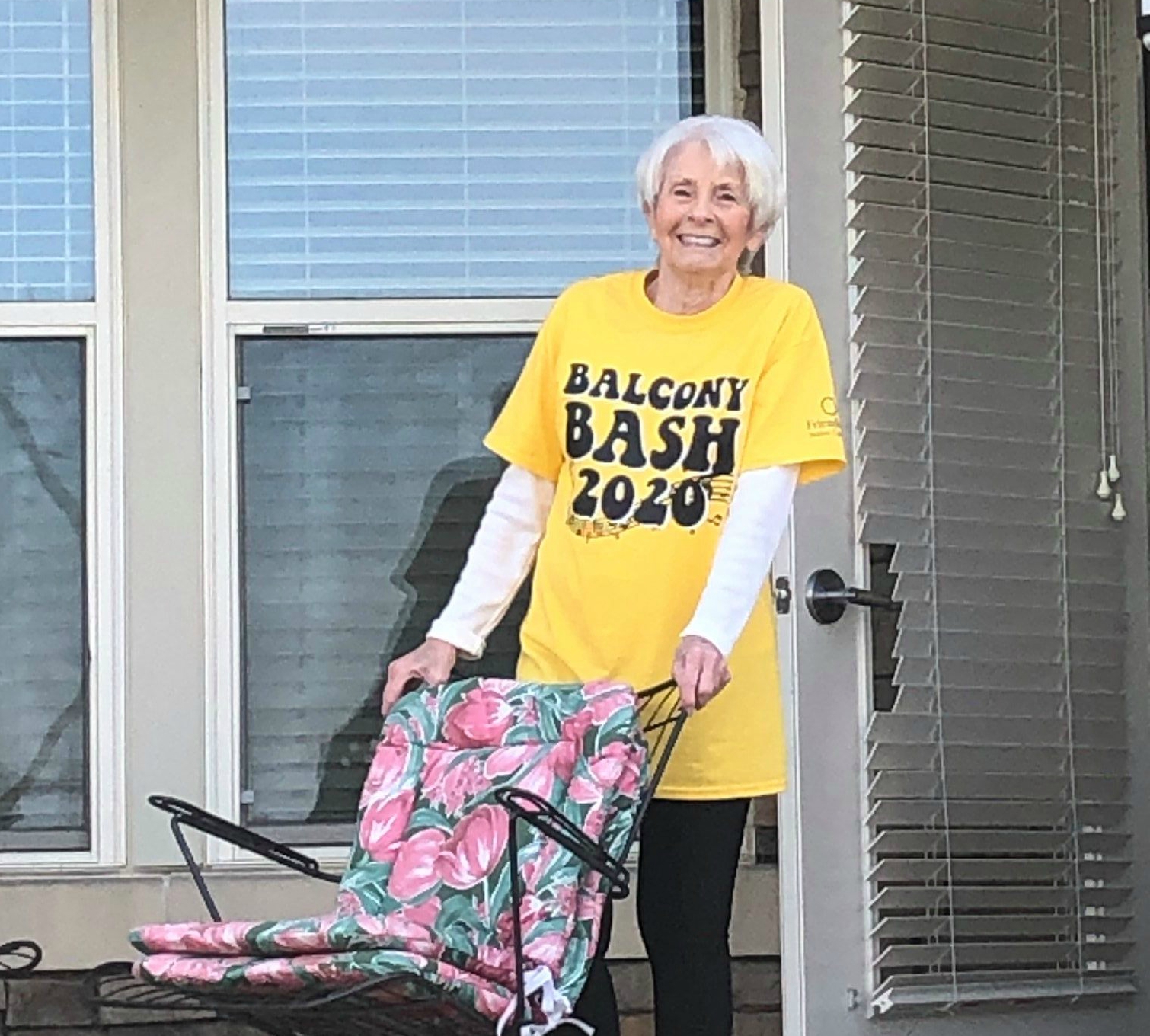
balconybash5GreenFields of Geneva, a life care community near Chicago, held a “balcony bash.” Six different bands were stationed around the property, including an orchestra and Elvis impersonator. Residents received bright yellow “balcony bash” t-shirts to wear while they enjoyed the concert from their patios and balconies. The staff delivered refreshments to the residents’ apartments.

Family drive-bys help everyone feel better. At Avanti’s Houston project, Augusta Pines, a car parade included family, friends and local community groups. Residents came outside to watch a stream of cars decorated for the occasion and filled with smiling and waving loved ones. “It was really cool,” said Alford. “As I was leaving, a resident said the parade was one of the best days of her life.”   


{{cta(‘05843e86-7aea-4b9a-9eb8-25a86f116f95’)}}

New Solution Taps Healthcare Dollars to Fund On-Site Services

Pandemic underscores impact of social determinants of health Before the pandemic hit three months ago, one of the hottest industry topics was the social determinants of health. Recognition has been growing over the last several years that a huge amount of healthcare costs is driven by people’s lives outside of the doctor’s office. Factors such […]

Pandemic underscores impact of social determinants of health

Before the pandemic hit three months ago, one of the hottest industry topics was the social determinants of health. Recognition has been growing over the last several years that a huge amount of healthcare costs is driven by people’s lives outside of the doctor’s office. Factors such as food insecurity, isolation, and lack of access to services are just a few of the social elements that contribute to healthcare outcomes. A frail elder without social support is unlikely to manage the intricacies of a complex healthcare system.

The pandemic has drawn even more attention to the link between health and life circumstances. Communities that face social challenges, particularly those of color and the frail elderly, have been hit hard by the disease.

“People’s needs are spiking,” said Michael Monson, senior vice president of Medicaid and complex care at Centene, a St. Louis-based insurer and the nation’s largest Medicaid managed care organization.

While living conditions are widely recognized as a health factor, a big question for seniors housing operators has been how to pay for support services that impact health. Should health systems, or insurers, pay seniors housing operators to track the health habits of their residents and provide interventions?

“We do not have sustainable flows of funds from the healthcare sector to seniors housing,” said Monson.

Piece-meal solutions are slowly emerging. Some Medicare Advantage plans are starting to offer benefits that address the social determinants of health, such as meals and exercise plans. Pilot programs test new approaches but are not widely available.

Because of its impact on vulnerable groups such as seniors, the pandemic could accelerate the push for more social services, experts say. But collaboration will be key to success.

How to link healthcare and housing

In 2019, Centene launched a new subsidiary called Social Health Bridge. Monson is the CEO. Social Health Bridge acts as a financial and interventional layer between the healthcare sector and community organizations, including housing providers. The goal is to improve health outcomes and lower healthcare costs by providing social supports and access to critical services for residents.

Social Health Bridge offers a market-based solution for seniors housing operators, explained Monson. “This is a way to create a regular funding stream to pay for certain services.”

Here’s how it works. Residents sign up to join the Social Health Bridge Network. It includes local health systems, hospitals and physician groups in value-based arrangements that tie compensation to certain performance measures. Residents can have any kind of insurance, whether a Medicare Advantage plan, Medicaid, or a private plan.

The Network pays for a resident service coordinator on-site at the building. The service coordinator links residents to needed services and interventions on behalf of the healthcare providers. Typical services include case management, transportation, and other social supports. A long-term program goal is to place doctors and nurse practitioners on-site with office hours to fill care gaps.

The idea harkens back to the 1960s when HUD-financed senior apartments introduced service coordinators on-site. Centene beefed up that model and introduced standardized protocols, policies, technology systems and oversight. “We give them the tools they need to improve quality health scores while lowering healthcare costs,” said Monson.

Lower healthcare costs result in savings which fund the program. “Seniors housing pays us nothing,” said Monson, adding that many assisted and independent living properties don’t have the budget for an on-site service coordinator. It’s important to note that the seniors housing operators bear no insurance risk, he added, in contrast to programs where the housing operator forms its own Medicare Advantage plan.

The program is suited for independent and assisted living communities, not skilled nursing facilities.

The business model works best with a large risk pool of participants, probably 10,000 individuals or more, said Monson.  To reach that scale, Centene seeks markets where it already has a strong customer base.

Last January, Centene launched its first community partnership in New Orleans with an affordable housing provider. The first step is to assess residents and find them access to care, though Monson said the pandemic has slowed the process. An agreement with a seniors housing community is in the works.

“We are in early days,” said Monson, commenting on the roll-out of Centene’s program. “But this is an option to bring together the seniors housing provider and health system network.”