660,000 Reasons to Rethink the Senior Housing & Care Workforce

Workforce challenges in senior housing and care are not simply operational hurdles but are long-term signals of broader shifts across the entire care economy. Both residents and staff are central to the success equation.

NIC recently kicked off a webinar series focused on one of the most pressing challenges facing the senior housing and care industry: the workforce.

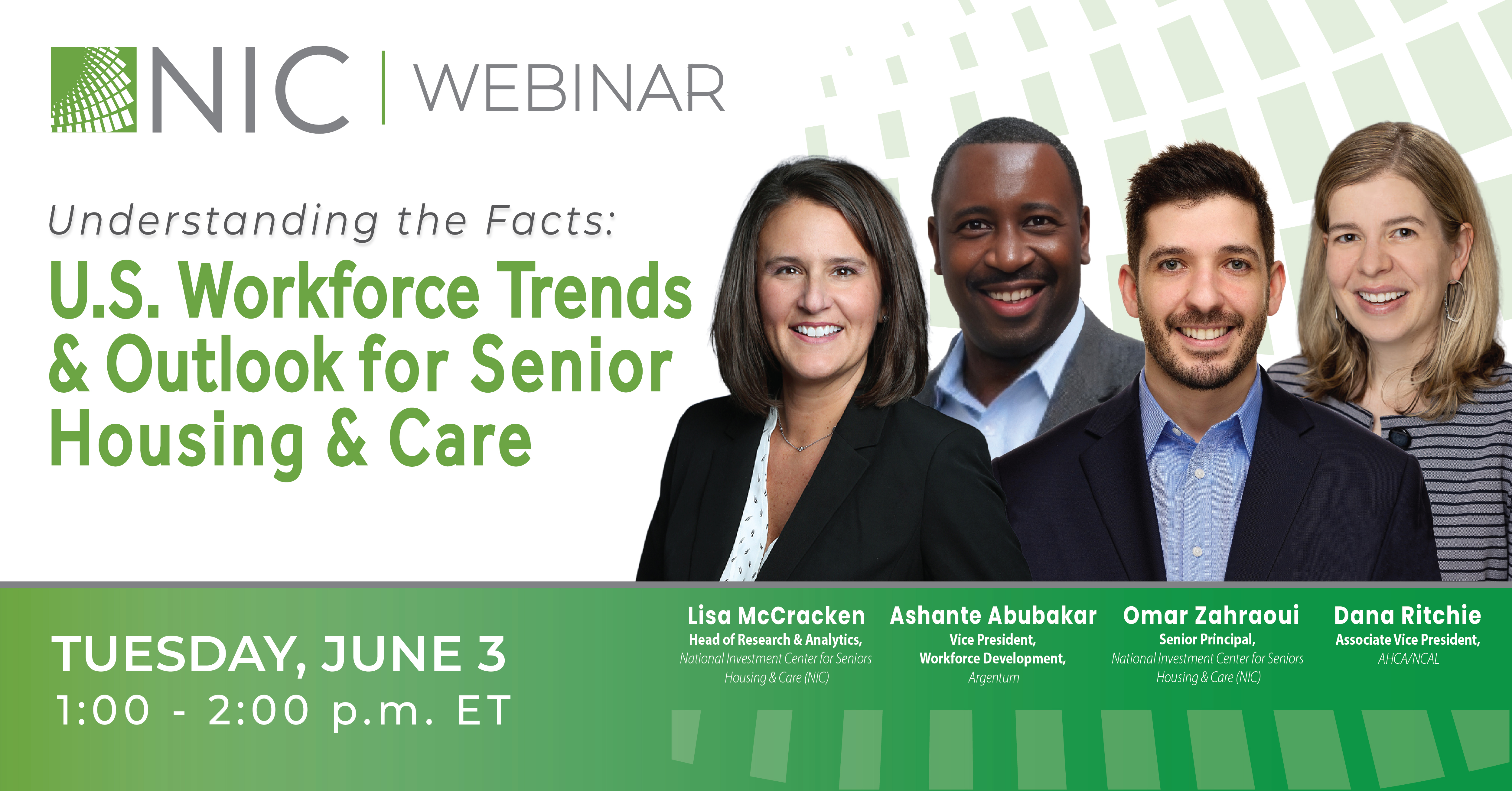
As part of the first webinar, hosted on June 3rd, NIC Analytics shared data-informed insights showing how workforce dynamics are changing in senior housing and skilled nursing. From shifts in employment across care settings to the projected need for hundreds of thousands of new direct care workers, the numbers tell a powerful story.

This article highlights the top takeaways from that session, insights that point not only to the scale of the challenge but to the opportunity to rethink job design, attract new talent, and build a more resilient workforce model for the decade ahead.

Key Takeaways:

  • For the first time, assisted living has surpassed CCRCs and home health has overtaken skilled nursing in the total workforce of production and nonsupervisory employees. CCRCs and skilled nursing still have not returned to pre-pandemic workforce levels, while their adjacent counterparts have not only recovered but expanded.
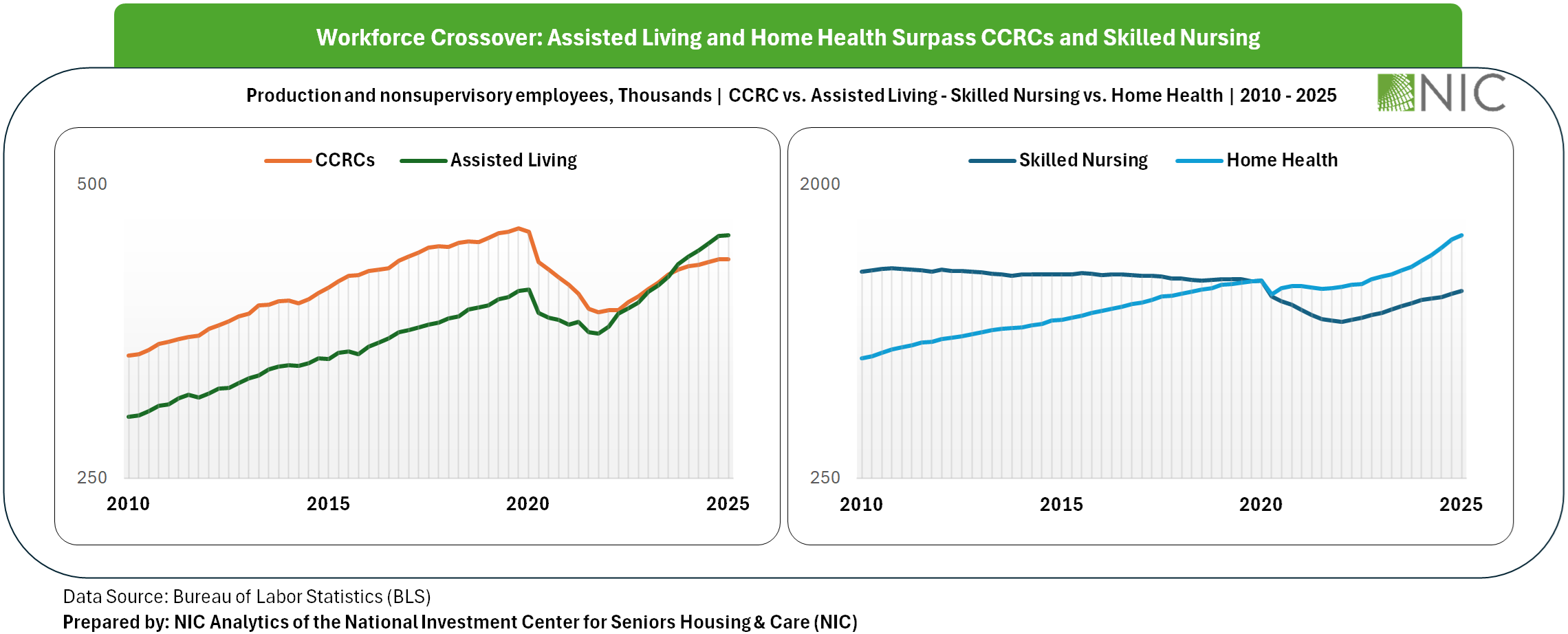
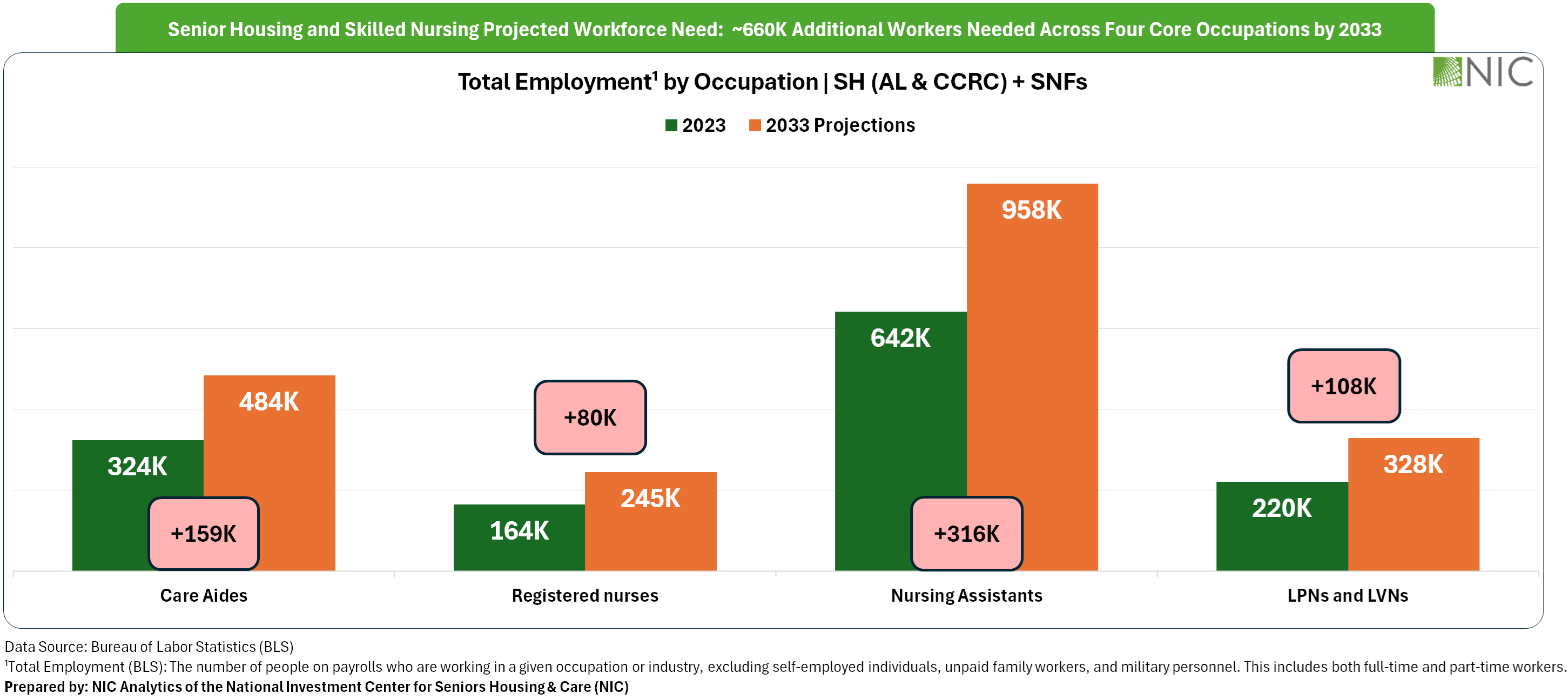
  • More than half of the workforce in the senior housing and skilled nursing sectors is made up of four care roles (care aides, nursing assistants, LPNs/LVNs, and RNs), making staffing models highly dependent on healthcare-specific roles.
  • Senior housing and care competes with multiple sectors for the same talent but holds a smaller share of the national workforce. The top occupations in senior housing and nursing care are also in high demand in home health, individual and family services, and hospitals.
  • Over 87% of these four care roles are women, and more than half are mothers with children under 18, highlighting the central role of family dynamics in staffing stability.
  • There is a potential untapped opportunity to engage more men in caregiving roles. Given the decline in male workforce participation, senior housing and nursing care can design new pathways to attract and retain men in care roles, an underutilized labor pool in the space.
  • Workforce demand is rising faster than population growth. While the U.S. population is projected to grow just 4% by 2033, the 75+ population and senior care resident base are expected to grow nearly 50%. By 2033, the U.S. will need 660,000 more workers in just four core roles – care aides, RNs, LPNs/LVNs, and nursing assistants – to meet projected senior housing and skilled nursing demand.
  • While wages in senior housing and care have generally remained competitive with adjacent healthcare sectors, long-term workforce growth is not just about pay. However, rising wages, especially since 2021, have tightened margins especially for high acuity settings.
  • Senior housing is well-positioned to lead. Compared to institutional healthcare, senior housing has more flexibility to pilot new scheduling models, part-time pathways, or hybrid roles, appealing to caregivers, mothers, men, and older workers.
  • Automation is not a full solution, but it is part of the answer. AI and technology cannot replace hands-on care, but they can improve efficiency, reduce burnout, and allow staff to focus on residents, not paperwork.
  • The future will not be built on higher pay alone, it will be built on better work. The opportunity ahead is not just to compete for talent, but to redefine what it means to build and belong to a senior housing and care workforce, invest in fast-track training pipelines, and create the kinds of jobs people want to stay in.

Thanks again to everyone who joined the webinar, and to my fellow speakers – Lisa McCracken, Head of Research & Analytics, NIC, Dana Ritchie, Associate Vice President, AHCA/NCAL, Ashante Abubakar, Vice President of Workforce Development, Argentum – for a great discussion.

Watch the full webinar replay here. Download the slide deck here for more insights and data.
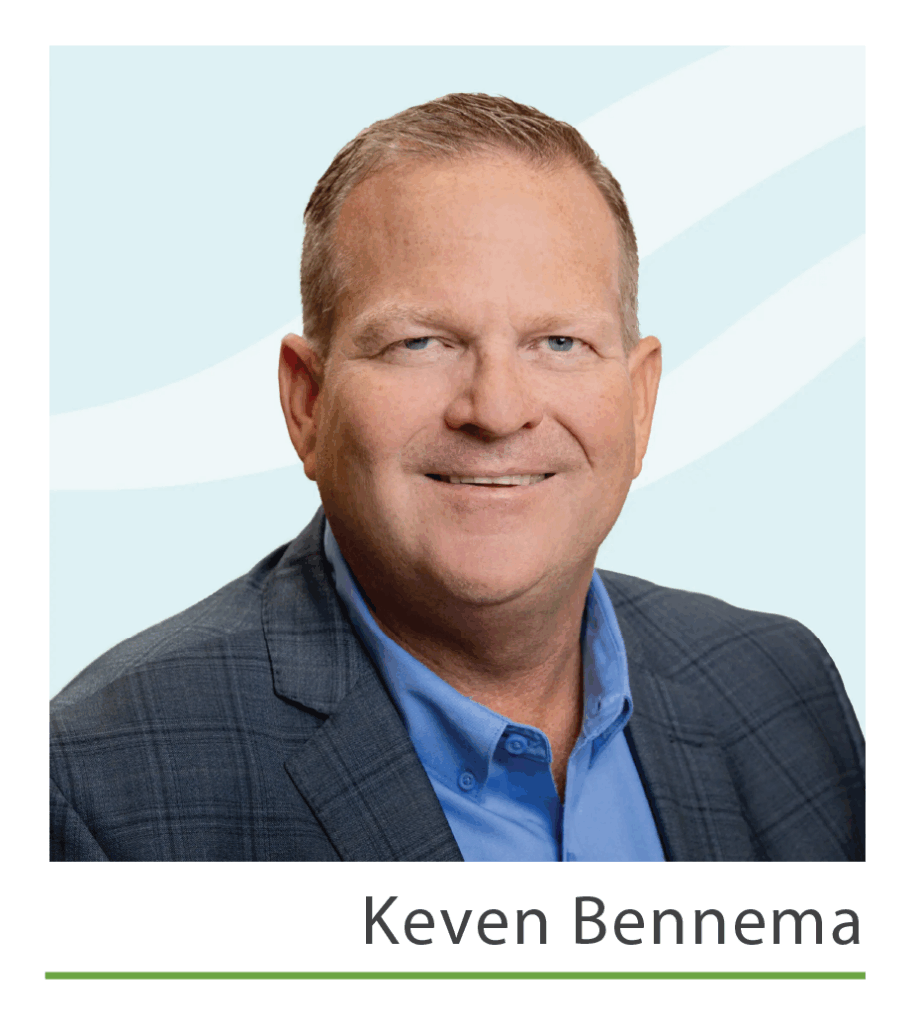
Industry Legacies: Parents Pass the Baton to the Next Generation: A Conversation with Keven and Zack Bennema

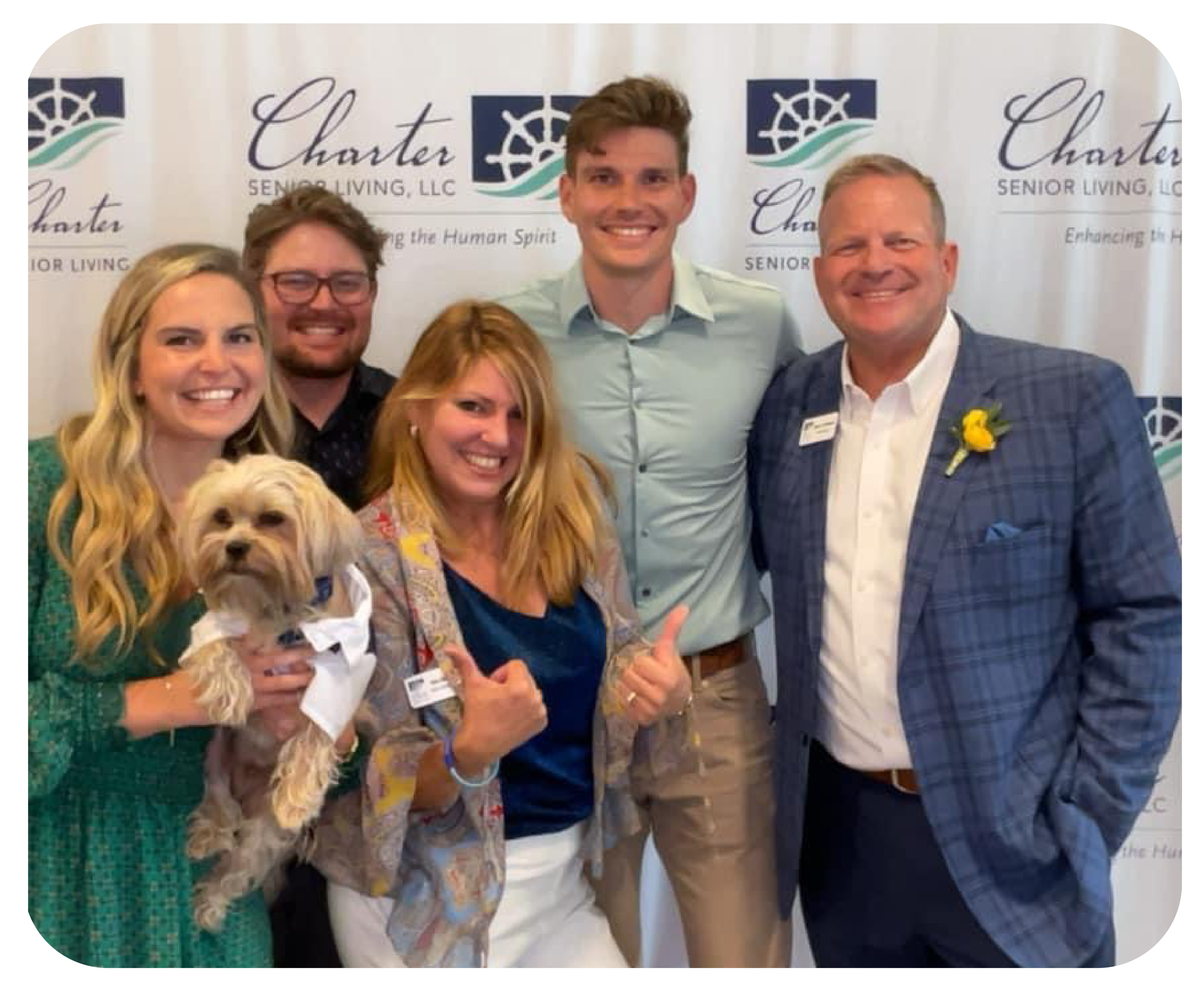
This article is the eighth in a series showcasing parent/child dynamics across the senior housing and care industry. My conversation with father and son duo Keven Bennema, CEO & Co-Founder, and Zack Bennema, Senior Financial Analyst, Charter Senior Living, explores how our industry has become a family affair.

Tell us about yourself and your work.

Keven Bennema: I’ve been in the senior housing space for 30 years starting in 1993 when I was a caregiver. After being out of college for a year, I wound up being reintroduced to a family member who I hadn’t seen since I was a toddler. He was a pioneer in the senior living space in northwest Ohio, running a Frank Lloyd Wright-designed memory care unit and long-term acute hospital. At the time, his projects were at the cutting-edge, offering levels of care that were not common in those days.

During my time with him, I got married, started having kids and really learned the nursing home business from the ground up. It was an amazing experience seeing every aspect that goes into a long-term care setting with some very innovative product lines. Walking into a family business making $10 an hour was the best thing that could have ever happened to me.

Next, I served as executive director for Marriott Senior Living in Naples, Florida for about a year and a half. I was then hired by Somerville Senior Living 2001 to be a regional director of operations where I remained for five and a half years. There I became familiar with the financial side, site selection, and how deals get structured. In 2007, I joined Senior Lifestyle Corporation in Chicago as COO. Those nine years were really my springboard to launching Charter Senior Living, which I cofounded with my wife in March 2016.

We wanted to create something unique, so we developed a completely decentralized office with a corporate structure that outsourced all back of house support. It was an innovative model in 2016. By not having a corporate office, we end up spending more time in our communities. Charter’s mission is to enhance the human spirit. We believe that if we take care of our people, they will take better care of our residents.

When COVID-19 hit, we were validated because we already had remote work going strong. That’s when we really started to grow. Today, we have 64 communities. Several companies have since used our back-of-house model.

Zack Bennema: I’m the middle child. I played quarterback at Baylor University for four years. When I graduated in 2019, the stars aligned for me to join Charter and help with their finance needs. Coming out of college, I was not eager to work at my family company and had plans to leverage my football connections instead. But in the end, I couldn’t be happier with my decision to move back to Chicago and work as a financial analyst at Charter. COVID hit nine months later, so I was especially grateful to already be working from home. Now, as a senior financial analyst, it’s been a breath of fresh air to watch our team grow.

How do you keep separation between church and state?

Keven: All three of our kids have been involved in the business. Their growth has been amazing to watch. It really was up until last year that Zack, and to a certain extent my older son Jake, were doing the budgets, KPIs, and other financial work critical to the company. It’s a huge credit to them for the things they were able to accomplish with so little manpower. As we took on more development, we expanded and grew their teams.

Family time is critical when you’re running a business, but family can’t just be about work, so we end up seeing our kids a lot.

Zack: We talked pretty much every day in the first few years, but we have a strong relationship outside of work that doesn’t revolve around work. During COVID I stayed with my parents in Florida for nine months, which was a great opportunity to balance work and life. Now that I have a team, I have less daily communication with my dad for work, which is probably a good thing.

Overall, it’s been a blessing to work for the family business. Having my dad as a mentor and leader and watching him grow over the last five years has been special. Generally, I’ve found that when you’re working for your family business you have a lot more pride in what you do. Culture at our company is the real deal. Our mission is to enhance the human spirit. We mean it and go out and do it.

What advice do you have for the generation before us?

Zack: Conduct business rooted in trust and integrity. Everyone looks to their leader to be reliable. People should believe the things a leader tells them. When you are good-hearted, that runs through the business. Be who you are and exemplify what it means to be a positive model for the younger generation.

What advice do you have for the next generation or those thinking about joining the industry?

Keven: I grew up on the south side of Chicago. My family was always very loving but ultimately the key qualities they instilled in me were humility, appreciation, and work ethic. There were a lot of advantages to growing up in an environment where there wasn’t a lot of money lying around. I learned the benefits of hard work and ultimately goal orientation. That’s where my inner motivation to be a leader was seeded.

When I think about what motivates young people these days, I think about the phrase ‘people care what you know, when they know that you care.’ Charter cares greatly about culture. Not having a corporate office allows us to stay very connected to our people. It’s important to be in our communities with our associates and senior teams learning about people and getting to know them. I would pass this insight on to the next generation— you must show up as a leader and model behavior.

Titles are all well and good, but at Charter we come together as one big team. We’re passionate and driven by how we treat each other, and that ultimately has a positive impact on how residents are cared for in our community. 

*Interviews edited for length

Why 3,000 of the Top Senior Housing & Care Leaders Will Be in Austin This September

Prepare to elevate your insights and strategy at the upcoming 2025 NIC Fall Conference in Austin, Texas, September 8-10. This event will bring together the industry’s most influential voices to unpack the most critical topics impacting the sector, while building relationships and driving innovation in an evolving market. 

By the Numbers 

NIC continues to raise the bar in convening senior-level executives: 

  • 70%+ of registered attendees are C-suite or VP-level decision-makers 
  • 12% growth in attendance over last fall’s conference (YTD) 
  • 700+ unique companies are sending key influencers to Austin 

Key Takeaways 

  • Powerful Networking 

Whether you’re a capital provider, developer, operator, or product and service provider, NIC creates the space to connect with the right people—all in one place. The scale and caliber of attendees makes it a premier environment for sparking high-value conversations and building long-term relationships. 

  • Insightful Learning 

Hear directly from leading experts on the trends shaping the future of the sector—from demographic shifts and capital flow dynamics to new models of care and service delivery. 

  • Real-Time Deal-Making 

Looking to raise capital, source new partners, or expand into new markets? NIC is where business gets done. Countless introductions and strategic conversations happen during ‘The NIC’s’ expansive networking opportunities, setting the foundation for growth and innovation. 

Data-Driven Decision-Making in Focus 

NIC is known for delivering data, analytics, and insights that drive smart decision-making. This year’s Innovation Labs and Signature Sessions will spotlight the tools and technologies reshaping how leaders approach growth, performance, and value creation. Below are a few featured sessions that can help you make better data-driven decisions. 

Data-Driven Insights for Faster, Smarter Decision-Making (Innovation Lab) 

Real-time analytics and predictive modeling are giving senior housing operators a competitive edge—helping them deliver better outcomes while meeting investor expectations. Learn how operators are implementing integrated data strategies that enable swift decisions and meaningful results. 

Speakers: 

  • Susan Barlow, Co-Founder & COO, Blue Moon Capital Partners LP 
  • Holly Belter-Chesser, CEO, Atria Senior Living 
  • Morgan Graphman, Director of Business Intelligence, Ascent Living Communities 

Real-World AI Solutions for Smarter Decisions (Innovation Lab) 
AI is no longer optional—it’s a strategic imperative. This session explores how operators are deploying AI to streamline operations, reduce admin burden, and improve decision-making across their organizations. 

Speakers: 

  • Joel Rosenberg, VP of Data and Analytics, LCS 
  • Joe Velderman, Chief Strategy Officer at K4Connect 
  • Michael Pittore, Co-CEO, Agemark 

Capital Markets & Valuations (Signature Session) 
A conference favorite, this high-profile session brings together leading voices from across the capital landscape to analyze current conditions, deal activity, and the outlook for investment in senior housing. 

Moderator: 

  • Ben Firestone, CEO, Blueprint Healthcare Real Estate Advisors 

Panelists: 

  • Matthew P. Gourmand, President, Omega Healthcare Investors 
  • Morgin Morris, SVP, KeyBank 
  • Curt Shaller, Co-Managing Partner, Focus Healthcare Partners LLC 

With sessions that dive deep into economic forecasting, capital strategies, AI, and data-driven performance, the NIC Fall Conference delivers the knowledge and connections that drive real results.  

View the full program here.  

Whether you’re navigating today’s challenges or preparing for tomorrow’s opportunities, there’s no better place to align your strategy with where the industry is headed.  

Don’t miss your opportunity to engage with senior housing’s most forward-thinking leaders and gain the insights you need to move your organization forward. 

Secure Your Spot Today 

Focus Area Committees Help Enable Engagement

In the Fall of 2022, the NIC Board of Directors adopted a Strategic Plan which included objectives to “expand the tent” into five Focus Areas over the next five years. These Focus Areas were becoming increasingly important for the senior housing and care industry to understand because of their impact and influence on our customers, operations, and capital structure.

Active Adult: an emerging property type targeting our older adult residents. What can the senior housing industry learn from Active Adult and how can we best engage with this growing property type to better serve our customers?

AgeTech: innovative technologies present an opportunity to improve health outcomes of older adults, modernize operational systems, and optimize staffing effectiveness and efficiency. NIC stakeholders need to be familiar with these technologies and develop strategies for adoption.

Capital for Operations: the senior housing industry has been reliant upon real estate secured capital to grow. High leverage and capital costs have contributed to distress in the industry. Can we access unsecured capital as part of the capital structure to fuel growth, especially to support operational investments such as technology and staffing?

Middle Market: NIC identified the “forgotten middle” in seminal research in 2019. These older adults do not qualify for social subsidies and lack the income and wealth to afford traditional private pay senior housing. Can the senior housing industry develop sustainable models to serve this group?

Partnering For Health: the growing importance of wellness and health care to our customers impacts senior housing operations. How can we effectively incorporate wellness and value-based care to meet our customers’ needs?

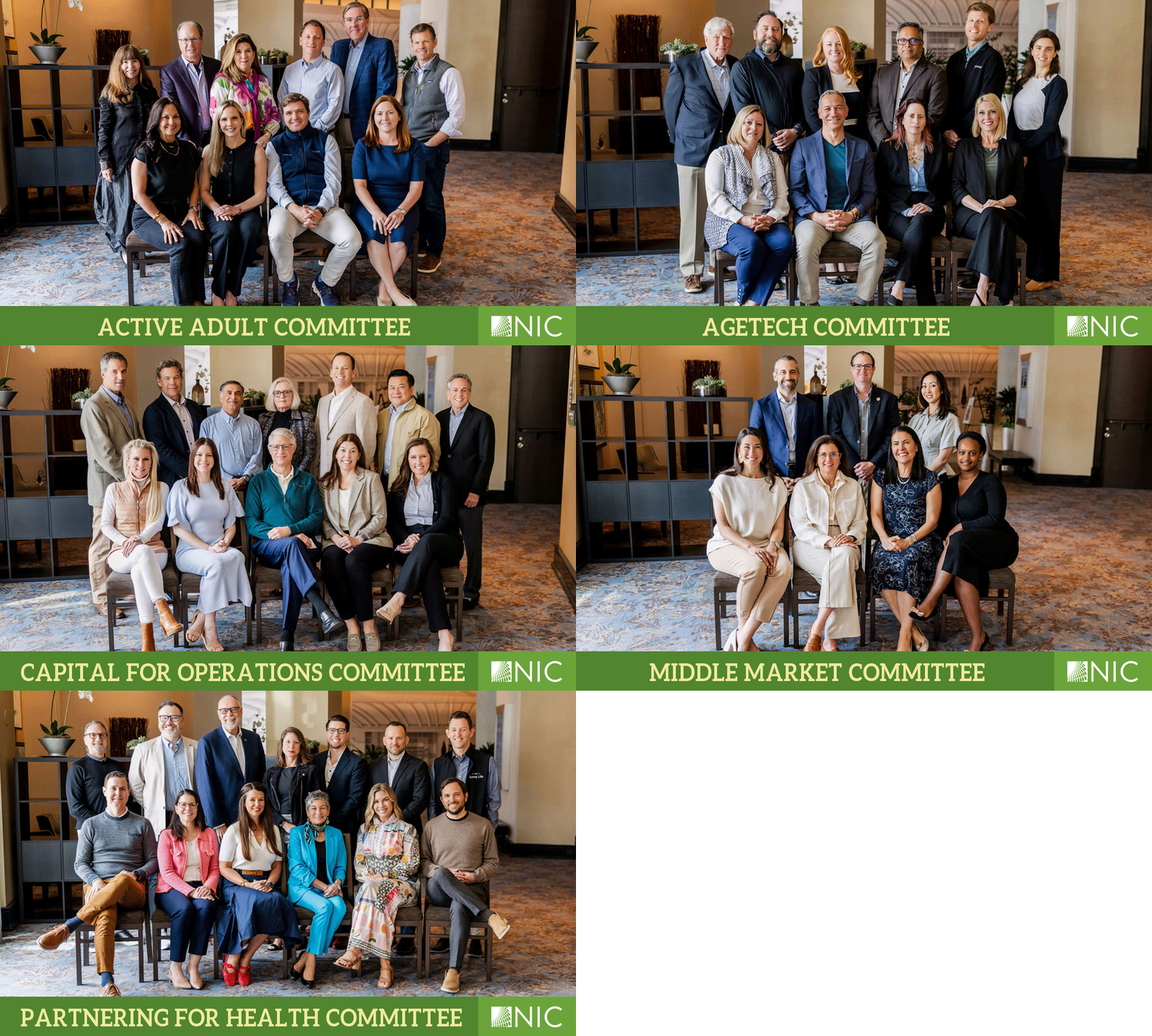
In 2024, Focus Area Committees (FACs) were created to help answer these questions. They are led by Chairs Mitch Brown and Jane Arthur Roslovic (Active Adult), Michael Kurliand and Sarah Thomas (AgeTech), Fee Stubblefield and Madisen Medley (Capital for Operations), Matt Ruark and Sophia Lukas (Middle Market), and Jim Lydiard and Joelle Poe (Partnering for Health).

Thanks to the initial efforts of all the volunteer leaders on the FACs, we have made considerable headway into incorporating the focus areas into everything NIC does including conference sessions, case studies, industry definitions, and new educational offerings like our NIC Academy Value-Based Care Course and upcoming Active Adult Boot Camp.

This year, the FACs are focused on helping NIC engage with target audiences. Our goal is to develop engagement strategies to interact with stakeholders in each area to inform them of the opportunities available in senior housing and care, as well as learn about their view and understanding of our industry.

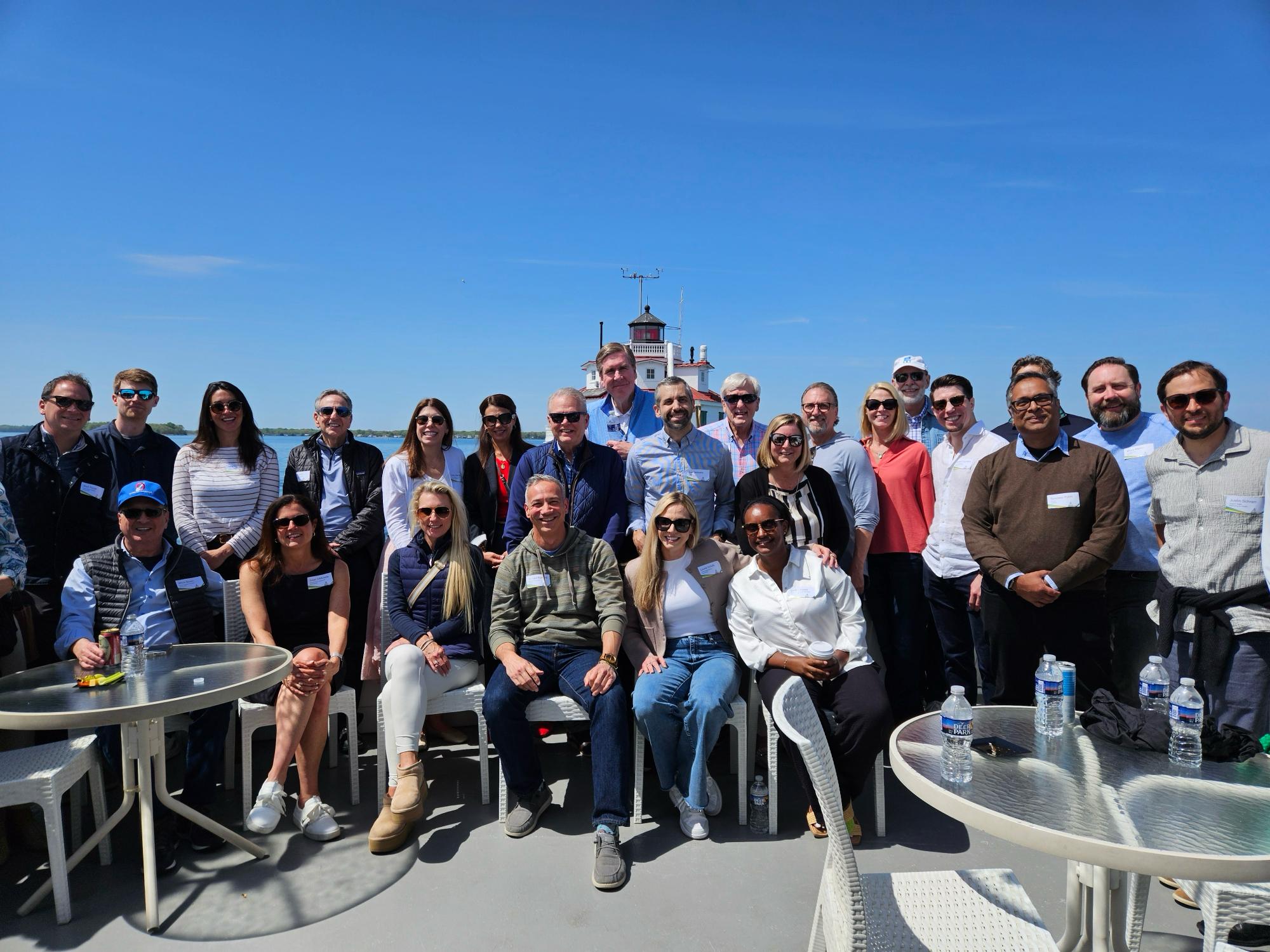
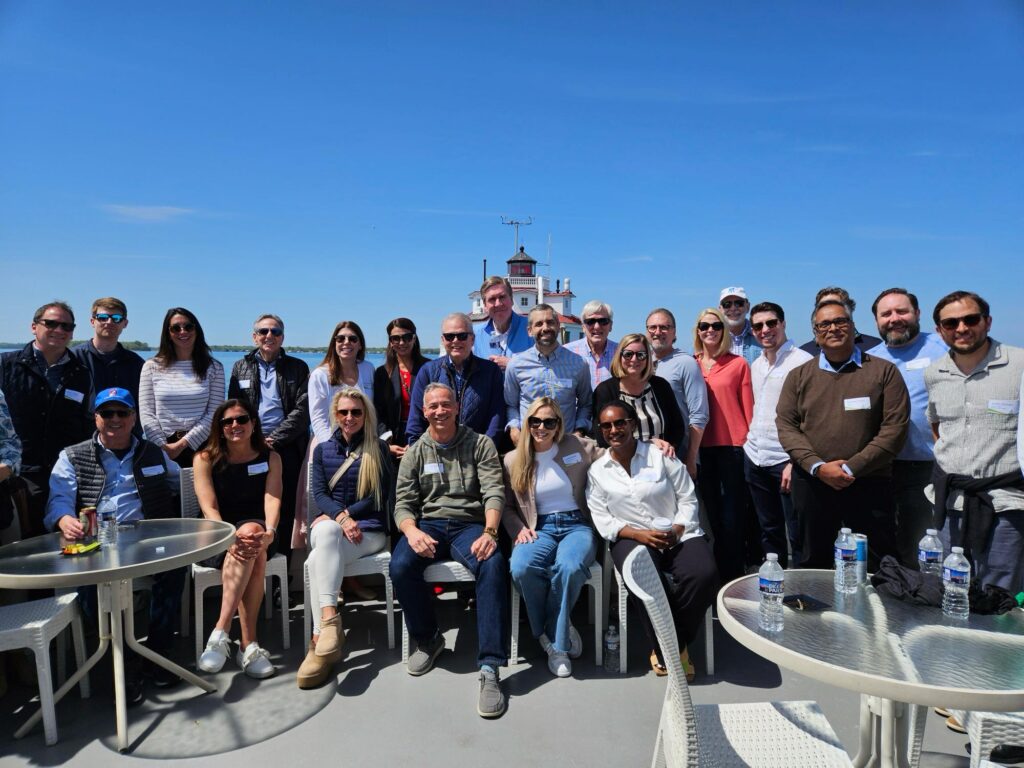
The FACs met in Annapolis, MD on April 23-24th. NIC hosted a boat tour, reception and dinner on day one. On day two, the committee members took part in a general session and then participated in individual committee meetings. To conclude the day, all attendees reconvened and  reported highlights from individual FAC discussions and also took part in a brainstorming session on the intersection between FACs. The FACs are now working with their Staff Liaisons to finalize engagement plans which will be implemented throughout 2025.

NIC thanks all the FAC volunteers for providing their insight and expertise as we work together to accomplish the strategic objective of “expanding the tent” to each of the focus areas.

Cautious Optimism Grew as Loan Volume Held Steady and Delinquencies Eased in 2H 2024

NIC Analytics released the NIC Lending Trends Report for the second half (2H) of 2024. This complimentary report includes data trends over eight years for senior housing and nursing care construction loans, mini-perm/bridge loans, permanent loans, and delinquencies from third quarter 2016 through fourth quarter 2024. The report is based on survey contributions from 18 participating lenders.

During 2H 2024, the Federal Reserve initiated a long-anticipated pivot in monetary policy with a series of interest rate cuts aimed at easing financial conditions amid moderating inflation and slowing economic momentum. Beginning in September, the Fed implemented three consecutive cuts, one each in September, November, and December, bringing the federal funds rate down to a target range of 4.25% to 4.50% by year-end.

Survey Comments from the Field:

NIC’s lending survey gathers both data for inclusion in the Lending Trends report and commentary on what is driving those trends. A summary of that commentary is provided below.

As noted by contributors, credit standards largely held steady in 2H 2024, with most lenders maintaining their approach from earlier in the year, while a few reported loosening requirements. Several noted increased competition, thinner spreads, and a greater appetite for growing loan balances, especially from banks.

While many lenders continued focusing on existing relationships, there was also evidence of renewed deal flow and selective onboarding of new clients, particularly for senior housing stabilized assets. Improved operating performance and rising occupancy rates supported lending confidence, although debt-service constraints remained a limiting factor amid persistent staffing challenges and cost pressures. Overall, the fall 2024 interest rate cuts helped restore cautious optimism and contributed to a more constructive lending environment heading into year-end.2024

New Permanent Loan Volume Closed Maintained Momentum Built Earlier in the Year

New permanent loan volumes remained relatively strong in 2H 2024, sustaining the momentum begun earlier in the year. For senior housing, volumes reached more than $2.8 billion in the second half of the year, keeping overall activity in the year 2024 well above any level observed since 2020.

Nursing care lending also outperformed recent years, with volumes reaching nearly $2.8 billion in 2H 2024 ($1.46 billion in Q3 and $1.31 billion in Q4), notably above historical norms. While borrowing costs remained elevated for much of the year, the Federal Reserve’s late-year rate cuts provided some relief, helping to support continued deal flow. This suggests a more stable lending environment, driven by improving property fundamentals, increased lender confidence, and a stronger appetite for long-term investments heading into 2025.

New Mini-Perm/Bridge Loan Activity Remained Cautious, With Signs of Improvement in Nursing Care

Bridge and mini-perm loan activity remained relatively low for senior housing in 2H 2024, with volumes still well below historical norms. After reaching $290 million in the third quarter, senior housing bridge loan volume fell to $200 million in the fourth quarter, highlighting the sector’s ongoing caution around short-term financing.

In contrast, nursing care saw a notable shift, with fourth quarter bridge and mini-perm loan volume surging to $619 million, marking a notable increase in the time series. This surge reflects renewed lender interest in select skilled nursing opportunities, buoyed by improved Medicaid rates and continued operational stabilization.

While borrowing costs remained elevated for much of the year, the Fed’s late-2024 rate cuts began to ease pressure, helping unlock more lending activity. Even so, short-term lending remained concentrated among stronger credits, with lenders favoring sponsors with demonstrated performance and lower risk profiles.

Construction Lending Still Soft/Subdued Despite Isolated Upticks

Construction loan activity remained subdued in the 2H 2024, with senior housing volumes continuing to trend below historical norms. After a brief uptick in the third quarter, volumes dropped once again in the fourth quarter, showing persistent lender caution toward new development. The number of senior housing units under construction remained near decade-low levels, reflecting ongoing hesitancy driven by cost pressures and overall economic uncertainty.

In nursing care, construction lending showed its first sign of life in over seven quarters, with a modest $38 million in volume recorded in the fourth quarter. While activity remained very limited, even this small uptick signals a marginal thaw in what has long been a stagnant development pipeline, although it remains consistent with pre-2020 levels where new construction was historically minimal. Despite recent interest rate cuts, lenders and developers appeared to be taking a conservative stance in 2H 2024, with most new capital directed toward existing assets rather than ground-up projects.

Senior Housing Delinquencies Eased Further as Nursing Care Shows Signs of Peaking

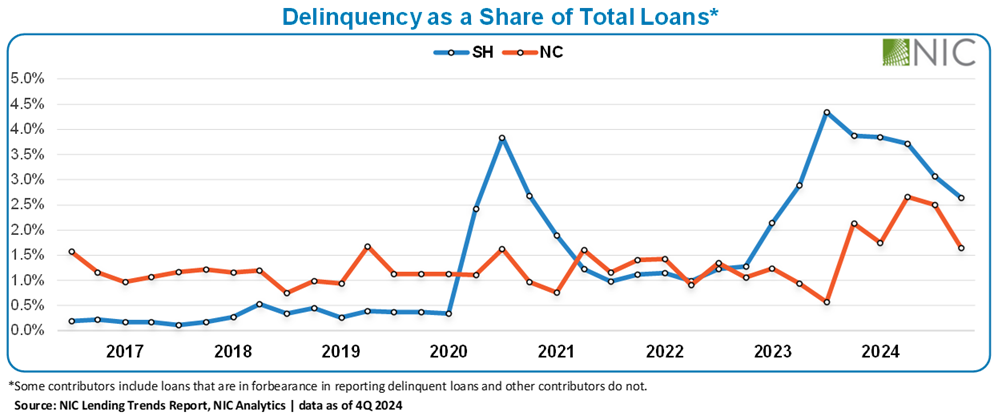
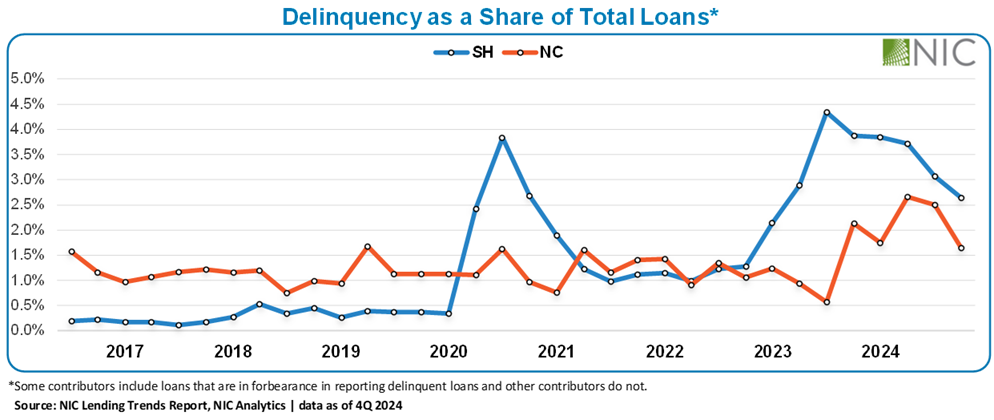
Delinquency rates for senior housing continued their downward trajectory in 2H 2024, marking five consecutive quarters of improvement since peaking in the third quarter of 2023. By year-end, delinquencies had fallen to 2.6% of total loans, well below earlier levels. (Note: loans in forbearance are included in the delinquent loan data for some debt providers, slightly influencing these figures.)

In contrast, nursing care delinquency rates remained relatively elevated through much of the year but showed a meaningful decline in the fourth quarter (1.6%), suggesting they may have peaked in the second quarter (2.7%). Despite this late improvement, the nursing care sector still faces notable financial strain, underscored by $98 million in reported foreclosures in 2H 2024 compared to $26 million for senior housing.

Download the complimentary 2H 2024  NIC Lending Trends Report for full details on these and other trends in senior housing and skilled nursing lending. 

Note: This data is not to be interpreted as a census of all senior housing and skilled nursing lending activity in the U.S. but rather reflect lending activity from participants included in the survey sample only. 

The NIC Lending Trends Report for the first half of 2025 is scheduled for release in December.

Interested in participating? The NIC Lending Trends Report helps NIC Analytics deliver on NIC’s mission to enable access and choice by further enhancing transparency of capital market trends in the senior housing and care sectors. We very much appreciate our data contributors. This report would not be possible without them. 

If you would like to participate and contribute your data to future lending trends surveys, please contact us at analytics@nic.org. As a courtesy for providing data, data contributors receive this report before publication on the website. The information provided as part of the survey will be kept strictly confidential. Individual answers will be combined with all other responses. Data acquired from this survey will only be reported in the aggregate, and therefore, the resulting aggregated data will not be attributed to you or your company upon distribution.